
I remember sitting in a small, dimly lit hospital room during a particularly long winter shift, listening to a man describe how he felt utterly untethered from the world. He wasn’t looking for a textbook definition of social cohesion; he was looking for a way to belong. It struck me then that we often treat the study of early communities and their practices as if we are dissecting ancient, perfect specimens under a microscope, searching for some lost blueprint for utopia. We romanticize their simplicity, yet we completely ignore the messy, grinding friction that occurs when actual human beings try to live in close quarters.
I have no interest in selling you a polished version of history that suggests these people had it all figured out. Instead, I want to look at the scars. I intend to walk through the actual mechanics of how these groups functioned—the rituals that actually worked, the hierarchies that inevitably failed, and the places where their systems simply ran out of steam. You won’t find any easy slogans here, only an honest account of what it looks like when people try, and fail, to hold one another together.
The Weight of Ancient Social Structures
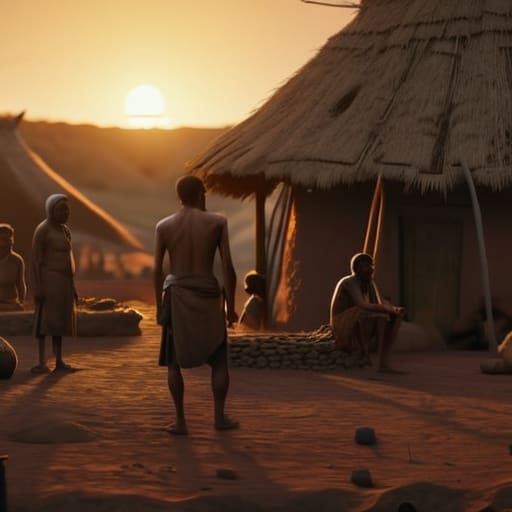
When I look at the archaeological evidence of community life, I am struck less by the grandeur of their monuments and more by the sheer effort required to stay together. We often romanticize the past, imagining a seamless tapestry of shared purpose, but the reality was likely far more strenuous. These ancient social structures weren’t just frameworks for survival; they were heavy, often suffocating, sets of expectations that governed every waking moment. To live in such a group was to be constantly seen, constantly measured against the standard of the collective.
I suspect that the evolution of tribal customs was driven as much by the need to suppress individual impulse as it was by a desire for harmony. There is a certain unspoken pressure in any tight-knit group, a weight that comes from knowing your survival depends on your conformity. We see glimpses of this in the way certain patterns repeat across different geographies—a way of binding people through shared labor and shared loss. It wasn’t always a joyful cohesion; sometimes, it was simply the only way to endure the silence of the wilderness.
Where Early Human Settlement Patterns Faltered
When we look at the archaeological evidence of community life, we often fall into the trap of seeing a seamless progression toward order. We want to believe that as soon as people gathered in larger numbers, they found a way to make it work. But the soil tells a more fractured story. I have often found that the very thing that draws people together—the need for shared resources and protection—is precisely what begins to pull them apart. There is a certain tension in early human settlement patterns that we tend to gloss over; the more people you add to a circle, the harder it becomes to hear everyone’s voice.
It wasn’t just a matter of physical space, either. As these groups grew, the old ways of settling disputes through simple consensus began to buckle under their own weight. We see traces of this in the way certain primitive ritualistic behaviors became more rigid and defensive over time. It seems that when a community reaches a certain threshold, it stops being a collection of neighbors and starts becoming a machine of regulation. The transition from kinship to bureaucracy is rarely a clean one; it is usually a messy, desperate attempt to prevent the whole structure from collapsing inward.
The Limits of Ritual
We often look at the rituals of those who came before us as if they were sturdy scaffolding, but I see them more as a desperate kind of stitching—a way to hold together a fabric that was always, inevitably, beginning to fray.
Alasdair Renwick-Hale
The Lessons in the Cracks
Looking back at these early experiments in living together, I find myself less interested in their grand designs and more preoccupied with their failures. We have seen how rigid social structures, intended to provide stability, often became the very weight that crushed the individual, and how settlement patterns that seemed logical on a map frequently ignored the messy, unpredictable realities of human need. It is easy to admire the architecture of an ancient community from a distance, but when we examine the points where their systems began to fray, we see a mirror of our own struggles. These weren’t just historical footnotes; they were painful, lived attempts to solve the eternal problem of how to belong without being consumed.
Perhaps the most vital thing I have gathered from these dusty records is that perfection was never the goal, nor was it ever truly achievable. Instead, the strength of a community is often found not in its ability to remain unbroken, but in its capacity to acknowledge its own fragility. As I sit here with my pens and my old books, I am reminded that we are still, even now, just trying to find a way to hold one another up. We must learn to build with the understanding that the glue will always crack, and that our task is not to engineer a world without fissures, but to learn how to live kindly within them.