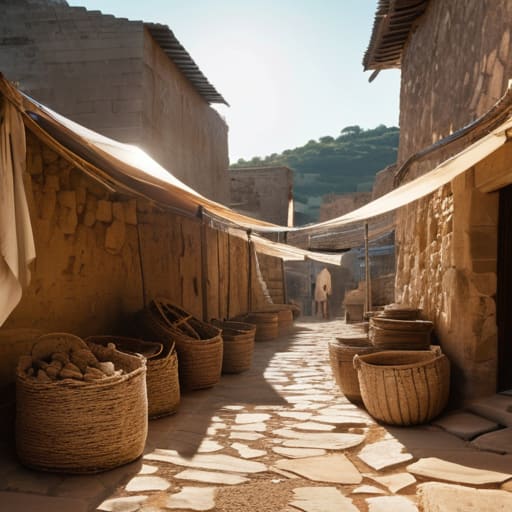
I’ve spent far too many afternoons in quiet libraries, watching well-meaning scholars attempt to map out the early church as if they were designing a modern corporate flowchart. They love their neat diagrams and their tidy hierarchies, but they always seem to miss the human grit underneath. There is a certain polished, academic arrogance in the way people discuss how the first centuries organised, as if these communities were built on grand blueprints rather than the desperate, messy necessity of survival. We tend to forget that they weren’t trying to build an institution; they were simply trying to find a way to stay together when the world felt like it was collapsing.
I have no interest in giving you a sanitized version of history that fits neatly into a textbook. Instead, I want to look at the cracks in the foundation—the places where their logic actually worked and, more importantly, where it simply failed. I won’t offer you any easy, comforting slogans about a golden age of perfect order. What I can promise is an honest account of their fragile architecture, drawn from the texts they left behind and the lived reality of what it actually takes to sustain a community in the dark.
The Drift From Tribal vs State Structures
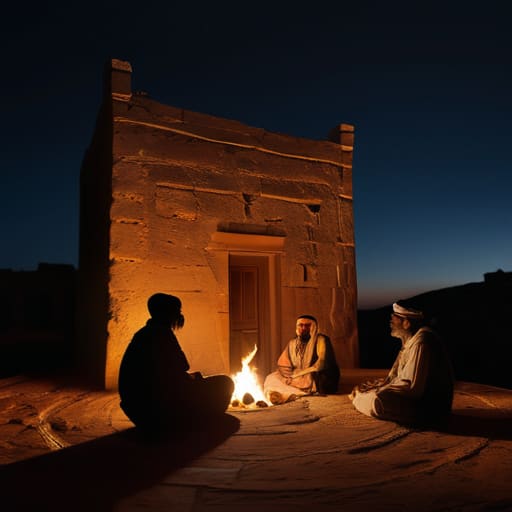
In my time reading through the dusty accounts of the Levant and the Mediterranean, I’ve often felt the tension between two very different ways of being human. On one hand, you have the intimate, almost breathing connection of kinship—the old ways of living where your identity was tied to the person standing next to you. On the other, there is the cold, rising shadow of the state. It wasn’t a sudden shift, but a slow, aching transition from these kinship-based circles toward more rigid early civilization governance models.
I find myself thinking about the cost of that transition. When we moved from the fluidity of tribal vs state structures toward something more centralized, we gained efficiency, certainly, but we lost a certain kind of soul. The old ways relied on a shared, lived morality; the new ways relied on the ledger and the decree. As these ancient societal hierarchies began to crystallize, the individual was no longer a member of a family, but a subject of an administration. It is a distance I have seen mirrored in modern life, too—that quiet, lonely gap between being known and being governed.
Where Early Human Settlement Patterns Faltered
I’ve often sat by the bedside of those whose lives were unraveling, and it strikes me how much our modern sense of “order” relies on the assumption that structures are permanent. When we look back at early human settlement patterns, we see a similar, perhaps more visceral, struggle for stability. These communities weren’t just building walls; they were trying to solve the terrifying problem of how to live together without consuming one another. They experimented with various early civilization governance models, trying to find a middle ground between the intimacy of the hearth and the cold necessity of the law.
However, these experiments frequently hit a wall. The transition from kinship to something more formal often led to a brutal kind of social stratification in antiquity. As settlements grew, the informal handshakes of a village were replaced by the rigid, often heavy-handed, demands of a central authority. I see it in the texts I study: the moment a system becomes too efficient at collecting grain or enforcing tribute, it begins to lose the very human pulse that made the settlement worth defending in the first place. The architecture of survival often became the architecture of oppression.
The Myth of the Blueprint
We often look back at those early centuries searching for a master plan, as if they were architects working from a clean desk, but that isn’t how it felt on the ground. It was less a design and more a series of desperate, beautiful improvisations—people trying to stitch something lasting together with nothing but frayed thread and the hope that the knot would hold.
Alasdair Renwick-Hale
The Scars of Early Order
Looking back at these first few centuries, I find myself less interested in the grand blueprints and more in the places where the glue failed to hold. We’ve seen how the tension between tribal loyalty and the cold machinery of the state created a constant, grinding friction, and how the very settlements meant to provide security often became the sites of their greatest collapses. It wasn’t a smooth transition from one way of living to another; it was a series of clumsy, often desperate improvisations. We see that organization was never a finished product, but rather a fragile negotiation between what people needed to survive and what the structures of power demanded of them.
Perhaps there is a quiet comfort in realizing that these foundational eras were just as uncertain as our own. We often look to the past as if it were a solved equation, but the historical record shows us a landscape of people trying, failing, and rebuilding in the ruins of their own mistakes. If we can learn anything from their struggle, it is that true community is rarely found in the perfection of a system, but in the stubborn persistence of people who keep showing up to mend the gaps. We are all, in some sense, still learning how to live together without breaking one another.