
I remember sitting in a sterile hospital room years ago, watching a young man stare at a monitor that was providing him with more data than he knew what to do with. He was looking for a miracle in the numbers, a way to bridge the gap between what the machines could measure and what his soul was actually experiencing. We often treat the concept of science and its historical relationship with the rest of human experience as if it were a clean, surgical separation—a tidy divorce between the laboratory and the chapel. But if you look closely at the ledger of our past, you’ll see that this separation is a relatively recent, and perhaps deeply flawed, invention.
I have no interest in giving you a lecture filled with polished timelines or the triumphant slogans of progress. Instead, I want to look at the messy, unvarnished truth of how our pursuit of empirical facts has often bumped up against the very things that make us human. I promise to offer you an account of where our certainties have held firm and, more importantly, where they have failed us. We won’t be looking for easy answers, but for a more honest understanding of how we arrived at this complicated moment.
The Evolution of Scientific Thought and Its Human Cost
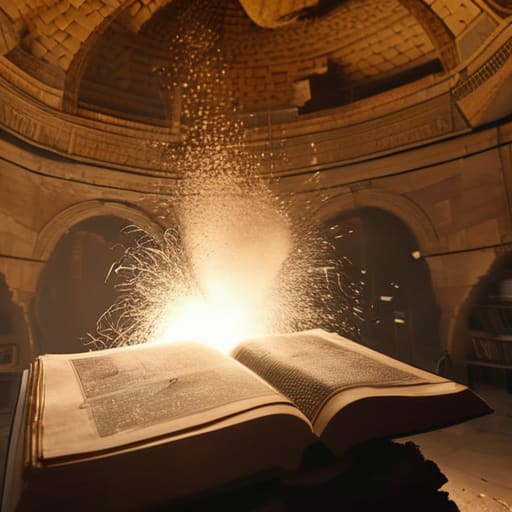
When we speak of the evolution of scientific thought, we tend to treat it like a grand, inevitable march toward the light. We picture the great thinkers standing atop a mountain of facts, looking down at the fog of superstition. But from where I sit, looking back through the dusty lens of history, it feels less like a march and more like a series of violent ruptures. These paradigm shifts in science rarely arrived with a polite knock; they arrived like storms, unsettling the very foundations of how people understood their place in the cosmos.
There is a particular kind of grief that accompanies these shifts. When we moved from a world of inherent meaning to one of cold, empirical observation, we gained precision, but we lost something of our shared vernacular. The scientific revolution impact wasn’t just measured in new equations or better telescopes, but in the quiet, often unacknowledged way it stripped the sacredness from the mundane. We traded a sense of belonging to a purposeful creation for the ability to dissect it, and I often wonder if we have yet learned how to live with that trade-off.
When Paradigm Shifts in Science Shatter Old Comforts
I remember sitting in a quiet corner of a hospital ward, listening to a man struggle to reconcile his lifelong faith with a diagnosis that felt, to him, like a betrayal of the divine order. It struck me then that we rarely discuss how paradigm shifts in science do more than just update our textbooks; they tear at the very fabric of how we find meaning. When we moved from a geocentric universe to one where we are merely a speck orbiting a common star, we didn’t just change a mathematical formula. We lost a sense of being at the center of the story.
This tension in the history of science vs religion isn’t merely a debate between “truth” and “superstition.” It is a much more visceral collision between our need for a coherent world and the cold, indifferent mechanics of reality. Every time a new discovery dismantles an old certainty, it leaves a vacuum where comfort used to reside. We like to celebrate the scientific revolution impact as a triumph of reason, but we often forget to sit with the people left standing in the wreckage of their old certainties, wondering if anything is actually solid anymore.
The Weight of the Unseen
We often treat the history of science as a triumphant climb toward the light, but I have found it is more often a series of quiet, necessary losses—a slow, sometimes painful shedding of the stories we once used to keep the dark at bay.
Alasdair Renwick-Hale
The Horizon of What We Know
We have spent much of this reflection tracing how science has both liberated us and, at times, stripped away the very scaffolding that held our sense of meaning together. We have seen that progress is rarely a clean, upward climb; it is a messy, often bruising process of shedding old certainties to make room for more complex truths. From the shifting paradigms that redefine our place in the cosmos to the heavy human toll that often accompanies rapid discovery, it is clear that our relationship with knowledge is not merely intellectual. It is deeply, fundamentally visceral, often leaving us standing in the wreckage of what we once thought we understood.
Perhaps the goal is not to find a final, unshakeable foundation, but to learn how to live well within the gaps. If history teaches us anything, it is that our most profound moments often occur not when we have all the answers, but when we find the courage to sit quietly with the questions. We must strive to hold our discoveries with a disciplined humility, recognizing that every light we strike only serves to cast a longer shadow. In that shadow, in the space between what is proven and what is felt, is where we find the true depth of our humanity.