
I remember sitting in a sterile hospital room late one Tuesday night, watching a man stare at a mountain of unopened, expensive gadgets he’d ordered to soothe a grief that no delivery truck could ever touch. There is a pervasive, polished lie circulating in our culture that we can solve internal voids through external acquisition, a myth that treats consumption and its consequences as mere line items in a budget rather than a slow erosion of the soul. We are told that if we just find the right product, the right lifestyle, or the right upgrade, the restlessness will finally subside.
I have no interest in offering you a new shopping list or a clever way to “consume better.” Instead, I want to look at the wreckage left behind when the novelty wears off and the hunger remains. I intend to share what I have learned from decades of sitting with people at their most vulnerable, offering an honest account of where the pursuit of more meets its inevitable end. This isn’t about slogans or easy fixes; it is about understanding the actual cost of our appetites.
The Hollow Promise of Resource Depletion and Demand
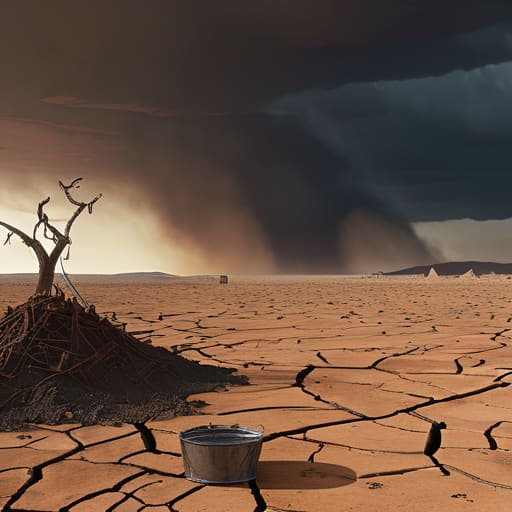
I recall a conversation with a young man in the hospital years ago; he was gripped by a frantic, restless need to possess, as if the next purchase might finally quiet the static in his head. We see this same restlessness mirrored in our global systems, where the frantic cycle of resource depletion and demand operates like a fever that refuses to break. We treat the earth as if it were an inexhaustible well, forgetting that every time we pull up a bucket, the water level drops just a little more. It is a strange, modern sort of madness to believe we can sustain a lifestyle built entirely on the act of taking.
The machinery behind our comforts is often invisible, tucked away behind the seamless convenience of a screen. We rarely stop to consider the global supply chain disruptions that occur when we push these systems to their breaking points, or the human cost of keeping the gears turning. We have become experts at ignoring the fraying edges of our world, hoping that if we simply keep consuming, the cracks won’t show. But a house built on a vanishing foundation cannot stand forever.
Where Global Supply Chain Disruptions Meet Human Cost
I remember sitting in the hospital gardens with a man who had spent forty years in logistics. He spoke of the world not as a map of nations, but as a fragile web of moving parts, constantly straining under the weight of our collective impatience. When we talk about global supply chain disruptions, we often treat them as mere inconveniences—a delayed parcel or a vacant shelf. But behind those delays lies a more profound, quiet friction. It is the sound of a system being pushed past its natural capacity to accommodate the sheer velocity of our desires.
When the gears grind to a halt, we see the true face of our interconnectedness. It isn’t just about the economic effects of mass consumption or the fluctuating prices at the supermarket; it is about the people at the very end of the line who bear the brunt of the sudden stops and starts. We have built a world that demands constant motion, yet we rarely pause to consider what happens to the human spirit when that motion becomes a frantic, unsustainable race. We are learning, quite painfully, that a system built on perpetual motion has a way of breaking those who keep it running.
The Weight of the Unseen
We tend to speak of consumption as if it were a transaction between a person and a shelf, a clean exchange of coin for object; but I have learned that nothing is ever truly finished, only moved. Every thing we pull into our lives leaves a shadow somewhere else—a debt of exhaustion in a field, a quiet erosion in a community, or a hollow space in our own restless hearts that no amount of acquisition can ever quite fill.
Alasdair Renwick-Hale
The Weight of What We Carry
We have spent these pages tracing the jagged edges of our modern appetite, from the invisible fractures in our global supply chains to the quiet, heavy toll taken on the souls of those at the very beginning of the line. It is easy to look at these disruptions as mere logistical failures or economic hiccups, but my time in the hospital wards taught me that there is no such thing as a detached consequence. Every demand we make ripples outward, often landing in the lives of people we will never meet, creating a fragile interconnectedness that we are only just beginning to understand. We are finding, quite painfully, that the cost of our convenience is rarely paid by us, but rather by the stability of the world itself.
Perhaps the remedy is not found in a new policy or a more efficient way to distribute goods, but in a fundamental shift in how we inhabit our lives. I often find myself sitting with my bookbinding tools, realizing that the most beautiful things are those that are mended, held together with intention and care, rather than those that are simply replaced. We might find a way forward by learning to value substance over speed and presence over possession. It is a difficult, unhurried path, but it is the only one that leads toward a life that actually feels substantial enough to hold.