
I spent three decades in hospital wards, sitting by bedsides where the grand, sweeping narratives of history usually went to die. When people talk about the global shifts in the twentieth century, they tend to reach for these massive, polished maps of geopolitical movement and economic theory, as if history were a game of chess played by giants. But I have never found much truth in those tidy diagrams. To me, those shifts weren’t just lines on a map; they were the sudden, quiet ruptures in a family’s stability, the way a border drawn in a distant room could overnight turn a neighbor into a stranger, or how a new ideology could hollow out a community’s sense of belonging.
I am not here to offer you a lecture or a series of confident slogans about how the world “evolved.” Instead, I want to look at the wreckage and the regrowth left in the wake of those massive changes. I intend to share what I have gathered from both the old texts and the lived experiences of those who had to navigate the fallout. My promise is simple: I will offer an honest account of where our grand historical explanations run out, and where the actual, messy human reality begins.
Industrialization and Economic Growth a Promise Unmet
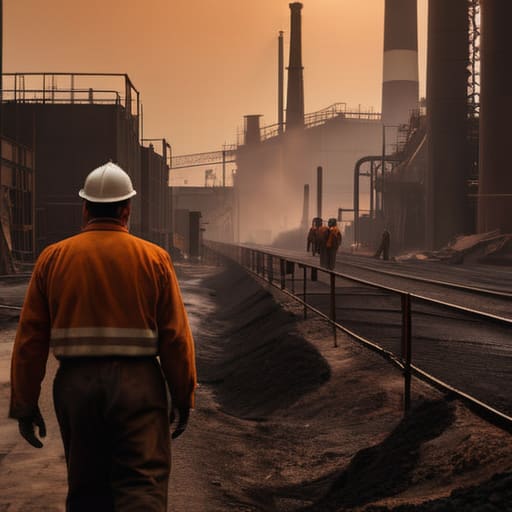
We were told, quite convincingly at the time, that the engine of industrialization and economic growth would eventually lift every soul out of the muck. There was this pervasive sense that if we could only refine the machinery, perfect the assembly line, and accelerate the pace of production, we would engineer a world without scarcity. I remember watching the old factory towns change; the soot seemed to settle not just on the brickwork, but on the very spirit of the people working the shifts. We mistook the sheer velocity of production for actual progress, forgetting that a faster machine doesn’t necessarily build a better community.
As the decades rolled on, these technological revolutions in the 20th century promised a liberation from toil, yet they often felt more like a new kind of tether. We traded the seasonal rhythms of the earth for the relentless, artificial pulse of the clock. While the numbers on a ledger might show an upward climb, they rarely account for the quiet erosion of the human scale. We became masters of efficiency, but in the process, we often lost our grip on the meaning of the work itself.
Technological Revolutions in the 20th Century and Their Costs
We tend to view the technological revolutions in the 20th century as a series of triumphant leaps—the flight of the Wright brothers, the splitting of the atom, the birth of the digital age. On paper, the progress is staggering. But when I look back through the lens of those decades, I don’t just see the shiny gadgets or the soaring speeds; I see the quiet erosion of presence. We traded the slow, deliberate pace of human connection for a frantic, electrified efficiency that often left the soul feeling quite left behind.
There is a specific kind of loneliness that comes with being hyper-connected yet profoundly isolated. As we mastered the machine, we inadvertently began to treat one another with a similar, mechanical detachment. The tools meant to bridge distances often ended up creating new, invisible walls. It wasn’t just about the hardware; it was about the social and cultural transformations that occurred when we began to value what could be measured and optimized over what could only be felt and endured. We gained the world, perhaps, but I often wonder what we surrendered in the transaction.
The Weight of the Turning Tide
We tend to map the twentieth century through the rise of empires and the fall of currencies, but those are just the movements of the machinery. If you look closer, at the quiet spaces between the headlines, you see that the real shift wasn’t just in how we lived, but in how much of our shared certainty we were forced to leave behind in the wake of it all.
Alasdair Renwick-Hale
The Long Shadow and the Light Ahead
Looking back across the wreckage of the last hundred years, it is tempting to see the twentieth century as a mere sequence of grand, mechanical movements—the rise of the factory, the split of the atom, the sudden shrinking of the world through wires and waves. But as I reflect on the stories I heard in hospital corridors and quiet parlors, I realize those shifts were never just about economics or engineering. They were about the profound dislocation of the human spirit. We traded the slow, predictable rhythms of the old world for a frantic, interconnected velocity that often leaves us feeling more isolated than ever. We gained incredible power, certainly, but we frequently lost our sense of where we actually belong in the midst of it all.
Perhaps the lesson isn’t to mourn the loss of the old ways, nor to blindly embrace the new, but to learn how to stand upright in the middle of the storm. The twentieth century taught us that progress is not a guaranteed upward slope; it is a jagged, difficult climb that often requires us to leave something vital behind. Yet, even in the gaps between our grandest failures, there remains a stubborn, quiet capacity for grace and reconstruction. If we can learn to look at our history without the comforting lies of easy slogans, we might finally begin to build something that isn’t just faster or larger, but something that is actually deep enough to hold us.