
I remember sitting in a sterile hospital corridor late one Tuesday, the smell of floor wax heavy in the air, listening to a man describe how a digital forum had “saved his life” during his darkest week. It was a beautiful sentiment, but as I sat there in the quiet, I couldn’t shake the feeling that something vital was being left out of the equation. We talk so much about the instant connection of the internet, yet we rarely pause to discuss online groups and their limits—specifically, that strange, hollow sensation of being “heard” by a thousand strangers while remaining entirely unseen in your own living room.
I have no interest in selling you a digital utopia or telling you that a smartphone can replace the weight of a hand on a shoulder. What I want to do is look closely at where the screen ends and the actual, messy work of human companionship begins. I intend to offer an honest account of what these digital spaces can truly provide, and more importantly, where they inevitably run out.
Where Virtual Group Dynamics Fail the Lonely
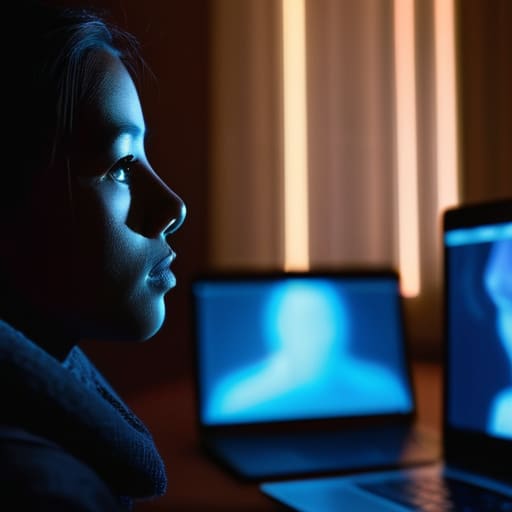
There is a peculiar kind of exhaustion that comes from performing one’s grief or joy for an audience of avatars. In my years at the hospital, I learned that true presence requires a certain unfiltered vulnerability—the kind that doesn’t care if the lighting is right or if the phrasing is poignant. In the realm of virtual group dynamics, however, there is an unspoken pressure to curate the self. We find ourselves managing a digital presence rather than simply existing, which creates a strange barrier between the person and the personhood of others.
When the crisis hits at three in the morning, a notification is a poor substitute for a hand on a shoulder. I have noticed that social media group constraints often force our most complex sorrows into neat, digestible threads. We mistake the rapid exchange of “likes” or empathetic emojis for actual communion, but these are merely echoes in a hollow chamber. There is a fundamental limit to how much a screen can carry; eventually, the weight of a human life becomes too heavy for the software to hold.
The False Warmth of Digital Presence Management
There is a particular kind of exhaustion that comes from performing a version of oneself that is palatable for a screen. In my years at the hospital, I learned that true connection often happens in the quiet, unpolished gaps—the heavy silences or the trembling hands. But in the realm of digital presence management, we are coached to curate. We polish our grief, we edit our frustrations, and we present a version of our struggle that fits within the tidy parameters of a status update or a thread. We end up managing an image of ourselves rather than actually being ourselves, which is a lonely business indeed.
This constant curation creates a strange sort of friction. We mistake the rapid-fire exchange of affirmations for actual intimacy, yet we rarely encounter the raw, unmanaged edges of another person’s soul. These social media group constraints demand a certain level of performative stability; if you are too messy, too unpredictable, or too deeply unravelling, you risk breaking the aesthetic of the group. We find ourselves performing a role, carefully navigating the boundaries of what is acceptable to share, until the digital connection feels less like a lifeline and more like a stage.
The Limits of the Screen
There is a particular kind of exhaustion that comes from being seen by a thousand eyes but felt by none; we have mistaken the frantic glow of digital consensus for the quiet, heavy work of actually standing beside someone in the dark.
Alasdair Renwick-Hale
The Weight of the Real
We must be careful not to mistake the flicker of a notification for the steady warmth of a shared life. As I have argued, these digital spaces often lack the visceral weight required to carry a person through true grief or profound isolation. They offer a curated sort of connection, one that bypasses the messy, unscripted friction of physical presence and the heavy silence that often accompanies real suffering. While they can serve as a useful bridge or a way to find information, we cannot let them become a substitute for the uncomfortable, unpolished reality of being truly seen by another human being in the same room.
Perhaps the goal isn’t to abandon the digital world, but to treat it with a healthy, measured skepticism. Let the screen be a starting point, a way to find a name or a shared interest, but do not let it be the destination. True solidarity is found in the places where we cannot simply log off when the conversation turns difficult. I have found that the most profound healing often happens in the quiet, unmonitored moments—the shared cup of tea, the heavy silence in a hallway, or the simple, unfiltered act of showing up. We need the digital to find one another, but we need the physical to hold one another.