I remember sitting in a dim hospital ward during my final year of chaplaincy, listening to a man describe a life that sounded nothing like the tidy, heroic biography his family had prepared for the funeral. It struck me then, as it does now when I pore over dusty parish registers, that we have a terrible habit of polishing the edges off a human life until the truth is gone. We treat bias in historical accounts as if it were some academic error to be corrected by a better spreadsheet, but it is something far more visceral. It is the deliberate silence of the grieving, the pride of the victor, and the quiet erasure of anyone who didn’t hold the pen.
I am not here to offer you a lecture on historiography or a list of academic jargon to make you feel clever at dinner parties. Instead, I want to share what I’ve gathered from decades of reading between the lines of old chronicles and sitting with the messy, unvarnished realities of human suffering. We are going to look at how to spot the gaps where the story stops being told, and more importantly, how to find the human heartbeat that persists even when the official record tries its best to bury it.
The Fragility of Primary Source Objectivity
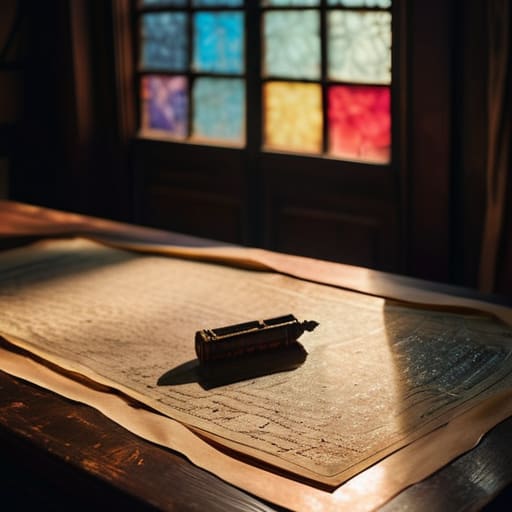
We often fall into the trap of treating a diary entry or a government decree as a window into the past, as if we were simply looking through clear glass. But in my years studying the old chronicles, I’ve come to see that a primary source is rarely a window; it is more like a stained-glass window, colored by the specific light and shadows of the person holding the pen. Even the most meticulous scribe is tethered to their own era. When we discuss primary source objectivity, we are often chasing a phantom. Every witness is, by necessity, a filter, processing the chaos of life through the narrow lens of their own survival, status, and faith.
This is where the work of historiography and source criticism becomes so vital—and so exhausting. It isn’t just about spotting a lie; it’s about understanding the quiet, unconscious assumptions that a writer never thought to question. A soldier writing home to his mother doesn’t set out to deceive, yet his account is shaped by a deeply ingrained sense of duty that renders his description of the “enemy” fundamentally incomplete. We must learn to read not just what is written on the parchment, but the heavy silences left in the margins.
Unreliable Historical Narratives and the Lost Voices
When I was working in the hospital, I often found that the most important parts of a patient’s story weren’t the ones they shouted from the bed, but the quiet things they left unsaid. History functions much the same way. We tend to mistake the loudest, most well-preserved accounts for the whole truth, forgetting that unreliable historical narratives are often the result of someone simply choosing not to look in a certain direction. We inherit the chronicles of the literate, the powerful, and the settled, which means the voices of the displaced or the weary are frequently treated as mere background noise.
To truly understand the past, one must engage in a certain kind of historiography and source criticism that feels less like academic study and more like an act of listening for the silence. It isn’t enough to simply read what is on the parchment; we have to ask who was standing behind the scribe, and more importantly, who was forced to stand outside the room. Finding the truth requires us to look for the shadows cast by those who were deemed too insignificant to merit a permanent record.
The Silence of the Archive
We tend to treat history as a solid foundation, but after years of listening to the dying and the desperate, I’ve come to see it more like a weathered tapestry; the threads that hold the pattern together are often the very ones that have been pulled loose by the hands of those who held the pen.
Alasdair Renwick-Hale
The Quiet Work of Remembering
We cannot simply scrub the ink from these old pages and expect a pristine version of the past to emerge. As I have explored, the bias inherent in our primary sources isn’t just a flaw to be corrected; it is a fundamental part of the human condition. Whether it is the selective memory of a victor or the deliberate silence surrounding the marginalized, we must accept that history is rarely a mirror and more often a stained-glass window—distorting the light even as it shapes the image. To study the past is to engage in a constant, necessary negotiation with what has been left out, learning to recognize the weight of the silences as much as the clarity of the written word.
Perhaps the goal isn’t to find a version of history that is perfectly, sterilely objective, for such a thing likely does not exist. Instead, I find hope in the messy, difficult work of looking closer. When we acknowledge the gaps, we aren’t just being skeptics; we are becoming more compassionate witnesses to the lives that were lived. It is in those very cracks in the record that we find the permission to ask better questions and to listen for the echoes of those who never had the chance to write their own stories. We owe it to them to keep looking, even when the truth is hard to find.