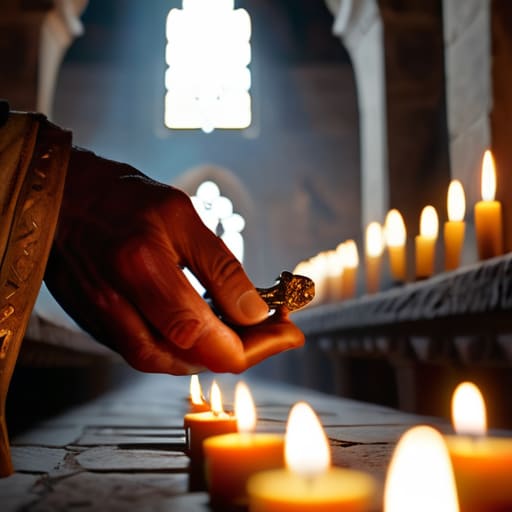
I remember sitting in a dim hospital chapel years ago, watching a woman press her forehead against a small, glass-encased fragment of bone with a desperation that felt almost physical. There is a certain kind of modern commentator who looks at such scenes and sees only superstition, or worse, a way to commodify the divine for profit. They speak of relics and popular devotion as if they are mere curiosities or psychological crutches, missing the profound, aching human need to touch something that has survived the centuries. To them, it is all illogical; to those of us sitting in the quiet of a sickroom, it is simply the way we reach out when our hands are empty.
I have no interest in defending the grand, sweeping theological justifications that often mask a lack of real understanding. Instead, I want to look at what these objects actually do for the soul when the slogans fail. I won’t offer you a polished defense of every gilded casket, but I will offer an honest account of why people cling to these pieces of the past. We will explore where the history ends and where the genuine, messy encounter with the sacred begins.
Where Hagiography and Saintly Remains Meet Human Need
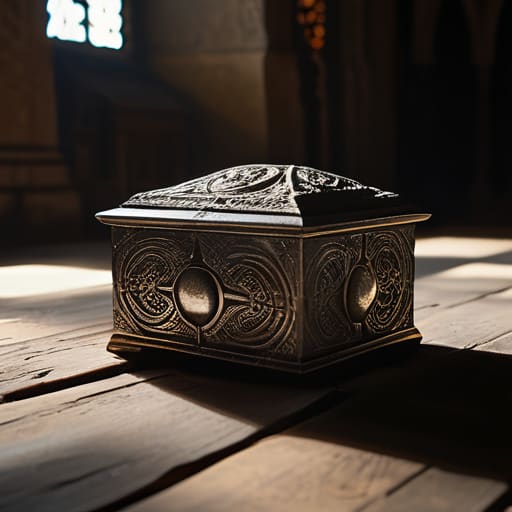
When I look at the old lives of the saints, I find myself caught between the polished, almost marble-like perfection of their official biographies and the messy, physical reality of what is left behind. There is a tension there. The hagiography and saintly remains we encounter often exist in two different worlds: one is a literary ideal of holiness, and the other is a collection of weathered bone or a scrap of cloth. Yet, for the person standing in a drafty cathedral, these two worlds collide. They aren’t looking for a lecture on the cult of the saints history; they are looking for a point of contact.
I recall a woman in the hospice who spoke of a small, faded medal as if it were a lifeline. To a scholar, it might be a mere object of the veneration of sacred objects, but to her, it was a bridge. We often try to intellectualize these things, but human need doesn’t work in abstractions. We need something we can touch, something that suggests that the divine might actually have a weight to it in a world that often feels terrifyingly hollow.
The Weight of the Cult of the Saints History
When I look back through the centuries, I see that the cult of the saints history is not merely a list of dates or a collection of dusty bones in gilded boxes. It was, for the vast majority of people, a way of mapping the divine onto the physical world. In an era where life was often short, brutal, and profoundly unpredictable, the veneration of sacred objects provided a bridge. People didn’t just want to believe in a distant, abstract God; they wanted a patron, someone who had walked the earth, felt the sting of mortality, and had somehow made it to the other side.
This wasn’t a matter of superstition in the way we often dismiss it today. Rather, there was a profound liturgical significance of relics that anchored the community. These objects acted as lightning rods for the divine, turning a local parish into a destination for those seeking more than just a sermon. I think of the sheer, exhausting scale of the historical role of pilgrimage—the miles walked, the feet blistered, all for the chance to stand in the presence of something that felt truly permanent in a world that was constantly shifting beneath their feet.
The Tangible Edge of Grace
We often mistake the relic for the miracle itself, but after thirty years in hospital wards, I’ve learned that people don’t usually seek the bone because they believe in magic; they seek it because, in a world that feels increasingly hollow and abstract, they desperately need something heavy, something real, to hold onto while they wait for God to answer.
Alasdair Renwick-Hale
The Presence in the Absence
In looking back at the history of these objects, we see that they are rarely about the bone or the cloth themselves, but rather about the human ache for proximity to something eternal. We have traced how hagiography turned these remains into vessels of hope, and how the weight of tradition has carried them through centuries of shifting dogma. Yet, we must be careful not to mistake the container for the grace it seeks to hold. Relics are not shortcuts to the divine, nor are they magical charms; they are, quite simply, tangible anchors in a world that often feels terrifyingly ephemeral.
Ultimately, I find myself thinking of the many people I sat with in hospital rooms who reached for a rosary or a small scrap of cloth when words had long since failed them. They weren’t looking for a theological lecture; they were looking for a way to touch the hem of something larger than their own suffering. Perhaps the true value of devotion lies not in the physical object, but in the courage it takes to believe that even in our most broken, material states, we are still capable of being part of a much longer, much deeper story.