
I remember sitting in a dim hospital corridor late one Tuesday, listening to a young man weep because he felt the scriptures he’d been raised on were somehow incomplete. He wasn’t looking for a lecture on textual criticism; he was looking for the pieces of the story that seemed to have been scrubbed clean by the centuries. People often treat the study of apocrypha and different traditions as if it were a dusty academic puzzle to be solved with a checklist, but for those of us standing in the wreckage of a crisis, it feels much more like searching for lost limbs. We tend to pretend that the official canons are seamless, when in reality, the most profound truths often reside in the uncomfortable gaps between what was kept and what was cast aside.
I have no interest in giving you a tidy, sanitized summary that pretends these ancient disagreements have been settled. Instead, I want to walk through the messy, unpolished reality of how different communities have grappled with these “hidden” texts over the years. My promise to you is simple: I won’t offer easy slogans or pretend to have a definitive map. I will only offer an honest account of what these texts reveal about the human struggle to find meaning, and where our institutional stories eventually run out of breath.
The Messy Truth of the Biblical Canonization Process
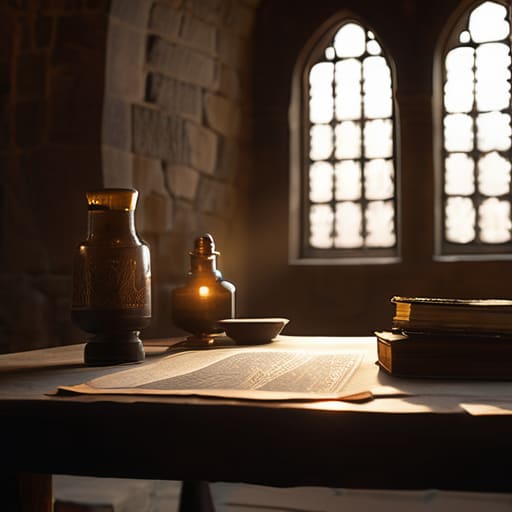
When I look at the history of how we decided what belongs in the Bible, I don’t see a tidy committee meeting in a well-lit room. Instead, I see a slow, often stumbling historical development of scripture that felt more like a long, communal conversation than a legal decree. It was a process of testing, of seeing which voices resonated in the liturgy and which fell silent in the quiet of a chapel. There was no single moment of “clicking into place”; there was only the gradual weight of tradition settling upon certain writings.
This is where things get complicated, particularly when we look at the rift between the Protestant vs Catholic canon. For many, the distinction feels like a technicality, but for those of us who live within the tension of these texts, it represents a fundamental difference in how we view the edges of revelation. We often find ourselves caught between the Greek nuances of the Septuagint and the Hebrew precision of the Masoretic text, realizing that the “official” story is often shaped by which language a community chose to hold most dear. It is in these gaps that the most honest questions usually reside.
Where the Septuagint vs Masoretic Text Diverged
I remember sitting in a quiet hospital chapel, watching an elderly man pore over a worn Bible, his finger tracing lines that seemed to bridge the gap between his world and something much older. He was looking at a passage that simply wasn’t in the English translation he had grown up with. It’s a quiet, personal kind of confusion, but it points to a massive historical fracture: the tension between the septuagint vs masoretic text. You see, the Septuagint—that Greek translation used by the early Church—carried a certain breadth, a collection of voices that felt expansive. But when the Masoretic Text became the standard for the Hebrew tradition, certain books were left on the periphery, creating a divide that still shapes how we define sacredness today.
This wasn’t a sudden, dramatic excision; it was a slow, tectonic shift in the historical development of scripture. As different traditions solidified their boundaries, they had to decide which voices were essential and which were merely echoes. For some, those echoes became the foundation of their liturgy, while for others, they were seen as distractions from a more streamlined truth. It’s in these gaps, these textual discrepancies, where we find the most honest reflection of how we choose what to remember and what to let slip into the silence.
The Edges of the Map
We tend to treat the canon like a finished building, sturdy and complete, but I’ve come to see it more like a coastline; the apocrypha are those jagged, salt-sprayed rocks where the official tide retreats, marking the places where the human struggle with the divine refused to be neatly contained by a single book or a single decree.
Alasdair Renwick-Hale
The Unfinished Margin
Looking back at how we arrived here, it becomes clear that the division between the canon and the apocrypha wasn’t a sudden, clean break, but a slow, often bruising process of negotiation. We’ve seen how the divergence between the Septuagint and the Masoretic text created these different spiritual landscapes, and how the historical weight of tradition shaped what each community eventually chose to hold close. To treat these texts as mere historical curiosities or, conversely, as threats to be discarded, is to miss the point entirely. They are the necessary echoes of a faith that was always far more complex and contested than our modern, neatly bound volumes often suggest. We must accept that the boundaries of sacredness have always been somewhat porous.
In my years sitting by hospital beds, I learned that people rarely find comfort in a closed system or a perfect, airtight doctrine. They find it in the truth, even when that truth is frayed at the edges. Perhaps we ought to view these “extra” texts not as errors to be corrected, but as invitations to sit longer with the mystery. There is a certain grace in acknowledging that our collections are incomplete. By embracing the silences and the margins, we might find a deeper kind of honesty—one that doesn’t demand we have all the answers, but simply asks us to remain present in the questions.