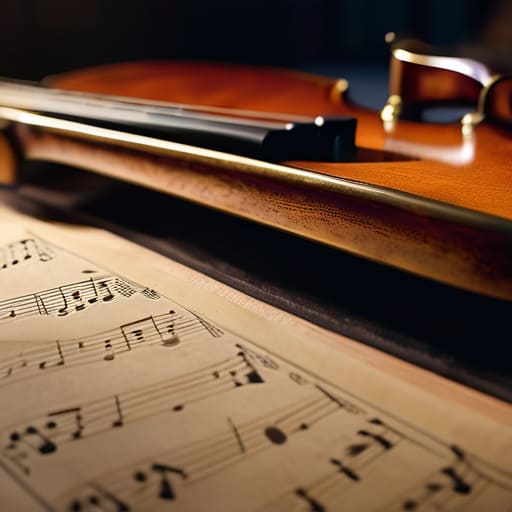
I remember sitting in a cramped hospital corridor during a late shift, the hum of the machines providing a sterile, rhythmic backdrop to a family’s grief. In those moments, the grand, sweeping narratives we hear about music through the centuries—the idea that it is a linear progression of “improvement” or “sophistication”—felt utterly hollow. We are often sold the lie that musical history is a ladder we are climbing, moving from primitive chants to the divine complexities of the Baroque, as if each era were simply a more polished version of the last. But I’ve learned that music doesn’t move in a straight line; it moves in circles of survival, repeating the same desperate attempts to capture what it means to be human.
I have no interest in giving you a textbook lecture or a sanitized timeline of composers who have long since been turned into marble statues. Instead, I want to look at the cracks in the record—the places where the music actually met people in their darkest hours. I promise to offer you an honest account of how these sounds shaped our communities, not through the lens of academic hype, but through the lived experience of those who actually had to sing through the pain.
The Evolution of Musical Instruments and Their Limits
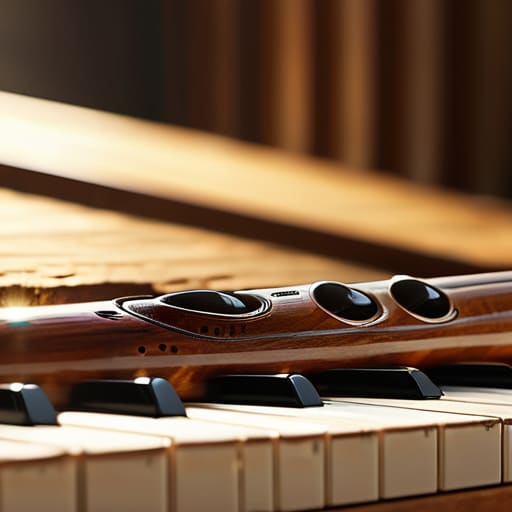
I spent many afternoons in the quiet of the chapel, watching how the light hit the old organ pipes, thinking about how much weight we place on the tools of our expression. When we look at the evolution of musical instruments, it is easy to get swept up in a sense of progress—as if a modern synthesizer is somehow “better” than a wooden flute. But I’ve always found that progress is often just a trade-off. We gained precision and volume, certainly, but we frequently lost that peculiar, breathing imperfection that makes a piece feel alive.
There is a specific kind of ache in the transition from baroque to romanticism, where the instruments themselves began to demand more from the human hand. As they grew larger and more complex, they offered a wider palette of emotion, yet they also began to distance the player from the raw, tactile simplicity of earlier ages. We see this same tension in the way the impact of technology on music continues to unfold today; we are constantly building more sophisticated vessels for our songs, yet I find myself wondering if we are occasionally making the vessel so heavy that the song itself struggles to breathe.
The Unreliable Grace of Classical Music Eras
I often think of the various classical music eras not as a neat ladder of progress, but as a series of different ways to handle the weight of being alive. There is a certain comfort in the mathematical rigor of the Baroque, a sense that if one could only balance the counterpoint perfectly, perhaps the chaos of the world might finally settle. But as we move through the musical composition history, that order begins to fray. You can feel the tension rising during the transition from baroque to romanticism, where the architecture of the music stops trying to contain human emotion and instead starts to surrender to it.
It is a precarious shift. While we often celebrate this as an era of greater expression, I have always found a certain loneliness in the Romantic swell. It is the sound of a soul demanding to be heard in a room that is increasingly empty. We tend to view these shifts as inevitable triumphs of art, yet I suspect they were often just desperate responses to a changing world—attempts to find a melody that could hold the grief that formal structures could no longer contain.
The Weight of the Song
We often mistake the complexity of an arrangement for the depth of its truth, but I have found that a melody’s real value isn’t in how much it can impress the ear, but in how much of our shared, quiet suffering it is brave enough to carry.
Alasdair Renwick-Hale
The Unfinished Song
Looking back through these centuries, I find myself less interested in the technical triumphs of the harpsichord or the mathematical perfection of a Bach fugue, and more struck by what we have lost in the pursuit of polish. We have tracked the evolution of instruments from bone flutes to digital synthesizers, and we have watched musical eras rise and fall like tides, each claiming to be the pinnacle of human expression. Yet, as I reflect on the shifting textures of sound, it becomes clear that progress is rarely a straight line upward. Instead, it is a series of trade-offs, where we often exchange raw, trembling honesty for the sake of technical precision and the comfort of a predictable melody.
Perhaps the lesson isn’t found in the grand archives of musicology, but in the quiet spaces between the notes. We don’t need music to be a perfect monument to our intelligence; we need it to be a vessel for our shared frailty. As I sit here with my ink-stained fingers and my old books, I am reminded that the most enduring songs are not those that conquer the world, but those that linger in the silence after the performance has ended. May we continue to seek out the melodies that refuse to be tidied up—the ones that dare to be uncertain alongside us.