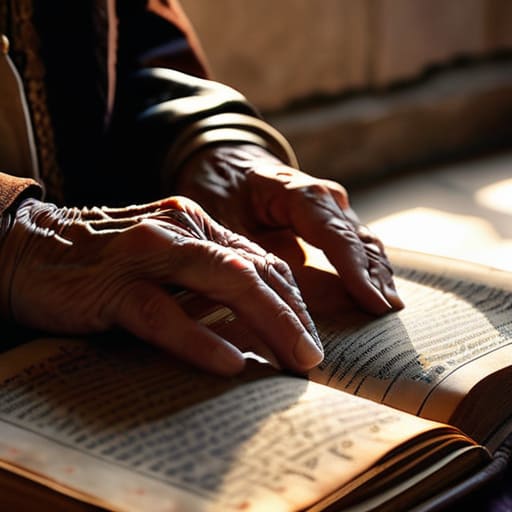
I remember sitting in a dimly lit hospice room during a particularly brutal winter, watching a man struggle to find breath between the heavy, rhythmic cadences of a prayer service. There is a certain kind of modern religious marketing that suggests liturgy and repeated words act as a sort of spiritual magic wand, a way to bypass the messiness of human grief through sheer mechanical repetition. They sell it as a way to “achieve peace,” but I’ve seen too many people find that the words don’t actually fix the ache; sometimes, they just highlight how profoundly empty the silence feels when the chanting stops.
I’m not here to offer you a polished manual on how to perform ritual correctly, nor will I pretend that reciting ancient texts can act as a shortcut to transcendence. What I want to do is look at where these traditions actually hold weight and, more importantly, where they fail us. I want to share what I’ve gathered from thirty years of sitting in the quiet spaces between the prayers, offering an honest account of how we might use these old patterns without losing our grip on the truth.
The Psychology of Repetitive Ritual and Its Fragile Comfort
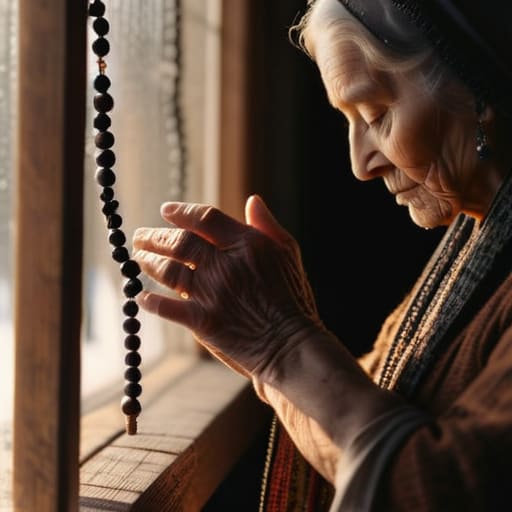
I remember sitting in a small chapel during a particularly long winter, watching an elderly woman recite the Rosary. Her fingers moved with a mechanical precision, almost entirely detached from the words themselves. It made me wonder about the psychology of repetitive ritual; there is a strange, almost biological relief in being told exactly what to say when your own mind is too cluttered to form a coherent thought. We aren’t just reciting lines; we are leaning into a liturgical structure and cadence that acts as a scaffolding for a crumbling interior life.
There is a certain safety in the predictable. When life feels like a series of jagged, unpredictable shocks, the steady pulse of a familiar prayer provides a rhythmic anchor. However, I’ve found that this comfort is incredibly fragile. If the ritual becomes nothing more than a way to bypass the intellect, it ceases to be a bridge to the divine and becomes merely a sophisticated form of distraction. We must be careful that our reliance on the familiar doesn’t become a way to avoid the very questions the ritual was meant to help us face.
Where Sacred Text Oral Tradition Meets Human Exhaustion
There is a particular kind of fatigue that settles in during a long service, a heaviness that has nothing to do with lack of sleep and everything to do with the weight of being human. I remember sitting in the chapel during those final, grueling hours of a night shift, listening to the low murmur of the vespers. There is a profound tension between the sacred text oral tradition—which seeks to lift the mind toward the eternal—and the simple, bone-deep exhaustion of the person sitting in the pew. We are biological creatures, bound by breath and gravity, trying to inhabit a language that feels as though it belongs to the stars.
When the liturgical structure and cadence begins to take over, it isn’t always a soaring spiritual ascent. Often, it is more like a hand reaching out in the dark. The repetition acts as a scaffolding; when our own capacity for thought fails us, the rhythm carries the weight. We stop trying to construct meaning and simply allow ourselves to be held by the pattern. It is in that precise moment, where our intellectual energy runs dry, that the ritual stops being an academic exercise and becomes a necessity.
The Threshold of the Known
There is a specific, heavy kind of grace found in the words we no longer have to think about—the ones that carry us when our own minds have simply run dry—but we must be careful not to mistake the comfort of the rhythm for the presence of the thing itself.
Alasdair Renwick-Hale
The Silence After the Amen
We have looked at how these repeated rhythms act as a scaffold for the soul, providing a structure when our own internal architecture feels as though it is collapsing. We’ve acknowledged that while the words themselves can eventually feel hollow—stripped of meaning by the sheer weight of our exhaustion—there is a peculiar, stubborn grace in the act of showing up anyway. The ritual does not magically fix the brokenness of a life, nor does it provide the easy answers I spent thirty years searching for in hospital corridors. Instead, it offers a shared language for the moments when our own words fail us, marking the boundary where human effort ends and something much more quiet begins.
Ultimately, I have come to find that the value of liturgy lies not in the perfection of the recitation, but in the honesty of the struggle. There is a profound dignity in the way we return to the same ancient phrases, even when we feel we are merely going through the motions. Do not be discouraged when the words feel dry or the ritual feels heavy; that very friction is often where the most meaningful work happens. Perhaps the goal isn’t to find a way to make the words feel new again, but to learn how to sit comfortably within the mystery of their repetition, trusting that the silence that follows is just as sacred as the prayer itself.