I’ve spent many long afternoons in the hospital chapel, sitting in the heavy silence that follows a sudden, violent loss, and I can tell you that no one finds comfort in a textbook summary of history. There is a particular kind of academic arrogance that attempts to distill wars of religion and their lessons into neat, digestible bullet points, as if the slaughter of neighbors could ever be reduced to a mere sociological phenomenon. We treat these centuries of bloodshed like a puzzle to be solved or a cautionary tale to be cited in a lecture, but that approach completely misses the marrow of the tragedy.
I am not here to offer you a tidy moral or a set of strategic takeaways that you can apply to your next debate. Instead, I want to look at the places where the fervor actually breaks—the moments where conviction stops being a guiding light and starts becoming a weapon. My aim is to walk through the wreckage of these conflicts to show you where the human spirit reaches its absolute limit. I offer you no easy answers, only an honest account of what remains when the shouting finally stops.
Lessons From the Thirty Years War When Conviction Becomes Catastrophe
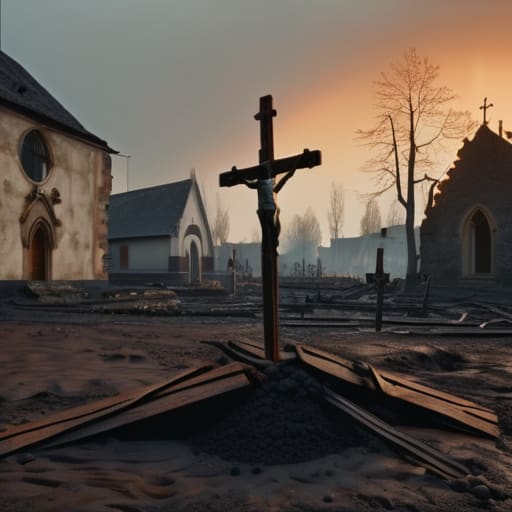
When I look back at the maps of seventeenth-century Europe, I don’t see shifting borders so much as I see the scars of a continent tearing itself apart. The Thirty Years’ War wasn’t just a series of tactical skirmishes; it was a slow-motion collapse of the social fabric. We often talk about the impact of sectarian violence on governance in academic terms, but for the peasant in a Pomeranian village, it meant that the very institutions meant to protect life had become the primary engines of its destruction. It is a terrifying thing to realize that when a person believes they are acting on behalf of the Divine, the usual restraints of human empathy simply evaporate.
We are taught to view the Peace of Westphalia as a tidy conclusion, a neat step toward the modern world. But I see it more as a weary admission of defeat. The real lessons from the Thirty Years’ War aren’t found in the treaties, but in the realization that conviction, when untethered from a recognition of our shared fragility, becomes a blunt instrument of ruin. It wasn’t that people suddenly stopped believing; it was that they finally understood that certainty is a poor foundation for a stable society.
The Exhaustion of Certainty in Historical Religious Conflicts Analysis
When I sit at my desk with a pen in hand, I often find myself thinking about the sheer weight of what remains after the shouting stops. In any serious historical religious conflicts analysis, we tend to focus on the maps, the treaties, and the shifting borders. But the maps rarely tell you about the hollowing out of the soul that occurs when a neighbor decides your salvation is a threat to theirs. We look for grand political shifts, yet we often overlook the quiet, devastating way that communal trust simply evaporates, leaving behind a landscape where even the most basic social bonds have been scorched.
This is where we begin to see the slow, painful evolution of religious freedom. It wasn’t born from a sudden burst of enlightened kindness, but rather from a profound, collective exhaustion. People simply grew tired of the endless cycle of retribution. They realized that if the state continued to act as the enforcer of a single, absolute truth, the state itself would eventually crumble under the weight of its own intolerance. We didn’t embrace pluralism because we all suddenly loved one another; we embraced it because we were too tired to keep killing for the sake of a certainty that never seemed to arrive.
The Cost of the Absolute
We often look back at these wars as if they were merely clashes of theology or maps, but having sat in the quiet of too many sickrooms, I know better; these conflicts are what happens when we mistake our own unshakeable certainty for the voice of God, and in doing so, we lose the ability to see the humanity in the person standing across the line.
Alasdair Renwick-Hale
The Quiet After the Storm
Looking back across these centuries of upheaval, I find no comfort in the idea that we have somehow outgrown our capacity for holy rage. From the scorched fields of the Thirty Years’ War to the more recent fractures of dogma, the pattern remains stubbornly the same: we begin with a pursuit of truth and end with the shattering of neighbors. We have seen how the most beautiful theological convictions can, when stripped of empathy, become the very instruments of our undoing. History does not offer us a roadmap to peace, but it does provide a grim warning about the cost of absolute certainty and the wreckage left behind when we mistake our own righteousness for the voice of the divine.
Perhaps the lesson isn’t found in the grand treaties or the final victories, but in the spaces between the certainties. In my years sitting by hospital beds, I learned that grace rarely arrives in a shout; it usually arrives in the hushed, uncertain questions whispered in the dark. If these wars teach us anything, it is that we must cultivate a certain kind of holy hesitation. We must learn to hold our convictions with a lighter touch, leaving room for the messy, unpolished reality of the person standing right in front of us. In the end, it is not the strength of our arguments that sustains a community, but our willingness to remain present in the midst of the unknown.