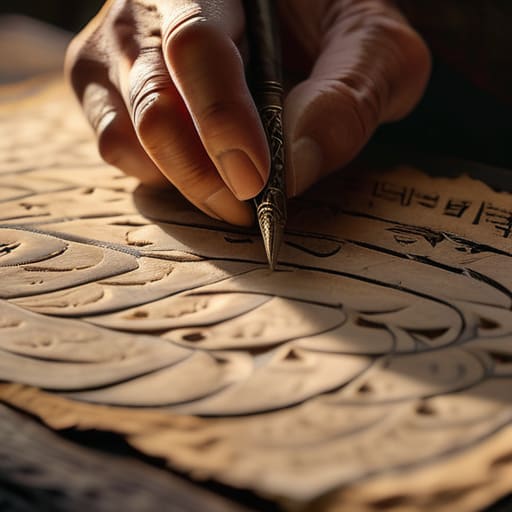
I remember sitting in a dim corner of a university archive years ago, the scent of vanilla and decay thick in the air, watching a young conservator fret over a digital scanning protocol. He spoke with such certainty about how technology would solve everything, yet my eyes were fixed on a sixteenth-century ledger nearby, its leather spine cracking like old bone under the mere weight of the light. We often treat the preservation of texts through centuries as a problem of high-tech vaults and indestructible servers, but I’ve learned that true endurance is rarely found in a gadget. It is found in the quiet, often unremarkable ways that material actually survives the slow erosion of time.
I am not here to sell you on any miracle software or expensive, climate-controlled fantasies that promise immortality. Instead, I want to talk about the messy, tactile reality of what actually works—and, more importantly, where our best efforts inevitably fail. I intend to share what I have gathered from years of handling fragile bindings and studying the long, uneven survival of the written word. We will look at the human element of keeping things alive, moving past the slogans to find what truly holds when the ink begins to fade.
Where Medieval Scriptorium Practices Met Their Breaking Point
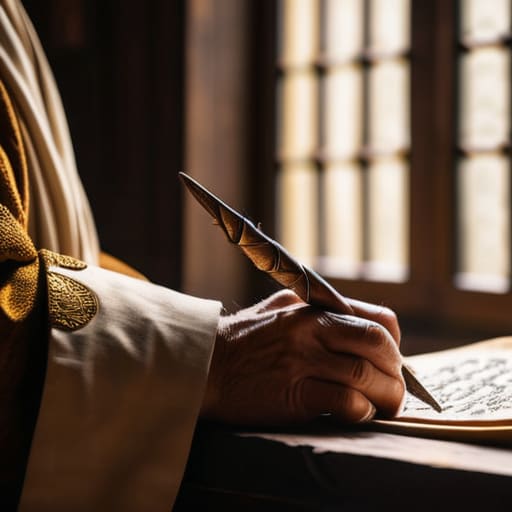
There was a certain rhythm to the medieval scriptorium, a slow, prayerful cadence that felt almost eternal. I often think of those monks not just as copyists, but as the very lungs of our collective memory. Through their meticulous medieval scriptorium practices, they breathed life into ideas, ensuring that a single thought could survive a thousand winters. But even the most disciplined hand has its limits. There is a physical exhaustion that settles into the marrow when one is fighting against the sheer entropy of parchment and ink.
The breaking point usually arrived when the scale of human thought outpaced the speed of the quill. As the demand for knowledge swelled, the careful, singular focus of the scribe began to fray. We see this tension in the evolution of scribal traditions, where the transition from the meditative pace of the monastery to the more frantic, commercialized workshops of the later Middle Ages signaled a shift in priority. It wasn’t just about the accuracy of the word anymore; it was about the volume of the output. In that rush to keep up, the quiet sanctity of the text often surrendered to the practicalities of survival.
Codicology and Paleography Reading the Scars of Time
When I sit at my workbench, working the glue and the leather, I am often thinking about the hands that preceded mine. To understand a book is to look beyond the words and study the physical body of the object itself. This is where codicology and paleography cease to be mere academic disciplines and become a form of forensic empathy. We aren’t just looking at ink on parchment; we are looking at the way a scribe’s hand trembled in the winter chill or how a particular binding style reflects the evolution of scribal traditions across a changing landscape.
Every smudge, every uneven margin, and every slight variation in letterform tells a story of survival. I have often found that the most profound truths about a text are found in its “scars”—the places where the parchment has been scraped thin or where a thumb has worn away a corner through centuries of turning. We often mistake these imperfections for damage, but to me, they are the evidence of life. They remind us that these objects were not meant to sit in sterile vaults, but to be held, used, and weathered by the very people who needed them most.
The Illusion of Permanence
We often mistake the survival of a book for the survival of its meaning, forgetting that a text is not merely a collection of ink and hide, but a fragile conversation held across a widening silence—one that can be broken by a single damp cellar or a moment of profound human indifference.
Alasdair Renwick-Hale
The Weight of the Unspoken
Looking back at the physical journey of these texts, one realizes that preservation is rarely a matter of perfect success. We have seen how the meticulous labor of the scriptorium eventually buckled under the weight of dampness, fire, and the simple, indifferent passage of time. Whether it is the way a scribe’s hand faltered in a moment of exhaustion or the way the very chemistry of ink begins to eat through the vellum, we are reminded that stability is an illusion. We do not truly “save” history; we merely engage in a prolonged act of salvage, trying to hold onto the fragments that haven’t yet succumbed to the elements.
In my years sitting by hospital beds, I learned that meaning often resides not in the grand, unbroken narrative, but in the small, surviving traces of a life lived. The same is true for our written heritage. We must approach these old texts not as static monuments, but as living, breathing entities that require our constant, careful attention. There is a profound, quiet dignity in the struggle to keep a thought alive across a millennium. It is a reminder that while we cannot stop the eventual fading of the ink, the very act of tending to the flame is what makes our shared human story worth telling.