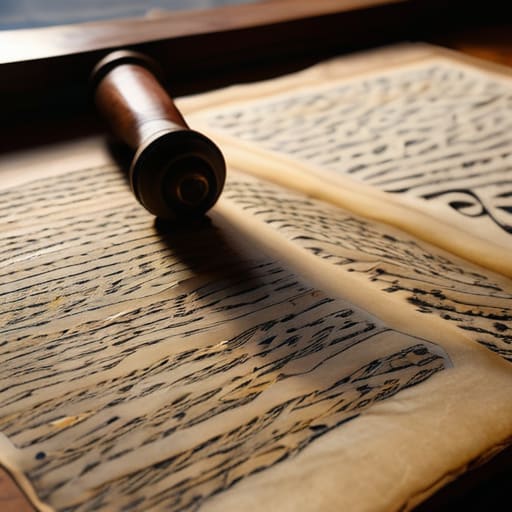
I remember sitting in a dimly lit hospital chapel late one Tuesday, trying to find the right words for a man who had lost everything. He didn’t need a polished, academic lecture; he needed something real. It struck me then how much we struggle when the things we rely on—our texts, our histories, our very foundations—start to shift under our feet. People often approach the subject of textual variants explained as if it were a mathematical puzzle to be solved with a single, clean answer, but that is a lie. The truth is much messier, found in the smudge of an inkwell or the hesitant correction of a tired monk, and it is in those human inconsistencies that the real story lives.
I have no interest in giving you a sterile, textbook definition that ignores the grit and the doubt. Instead, I want to walk you through the labyrinth of how these differences actually happen, drawing on my years spent squinting at old manuscripts and navigating the complexities of historical truth. I won’t offer you the comfort of easy certainty, but I will offer you an honest account of what we can know, and more importantly, where our knowledge reaches its limit.
Scribal Errors and Variations Where the Human Hand Fails
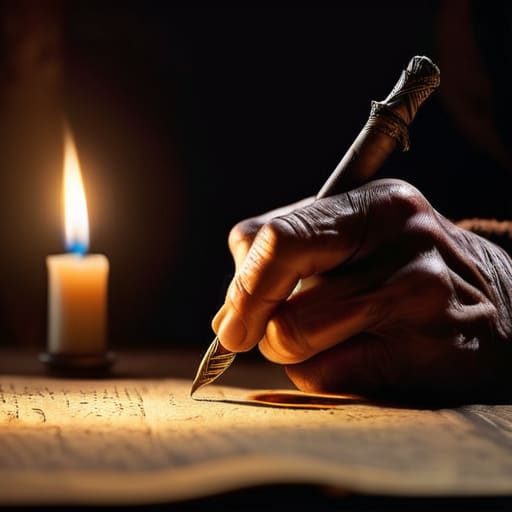
I often think of the scribes not as faceless machines, but as tired men sitting by candlelight, perhaps rubbing weary eyes or fighting the urge to yawn. When we talk about scribal errors and variations, we aren’t just discussing technical glitches; we are looking at the fingerprints of human exhaustion. A monk might skip a line because his eyes jumped from one word to a similar-looking one below—what we call homoeoteleuton—or perhaps a single letter was smudged by a drop of oil. These aren’t just mistakes; they are the moments where the human element intrudes upon the sacred.
In my own studies, I’ve found that a rigorous textual criticism methodology is less about finding a perfect, pristine original and more about mapping the beautiful, messy ways the text drifted. We use tools like codicology and paleography to understand the physical reality of the parchment and the hand that moved the pen. It is a humbling process. It reminds me that even our most cherished truths are carried through time in vessels that are, by their very nature, slightly cracked.
Philological Analysis of Manuscripts and the Illusion of Perfection
When I first began my studies, I harbored a naive hope that if we simply applied enough rigor, we might eventually peel back the layers of time to find a pristine, unblemished original. I thought of it like cleaning an old piece of furniture—remove the grime, and the true grain remains. But the more I leaned into the philological analysis of manuscripts, the more I realized that we aren’t just cleaning; we are trying to solve a puzzle where half the pieces have been sanded down by centuries of use.
There is a certain coldness to the formal process of textual criticism methodology that can feel quite alienating. We speak of “reconstructing original texts” as if we are engineers repairing a bridge, but it feels more like a heavy, necessary sort of guesswork. We pore over the ink, the parchment, and the way a letter leans, searching for a ghost. We must accept that our work is not about achieving a perfect mirror of the past, but about finding the most honest approximation we can manage before the silence takes over again.
## The Fragility of the Word
I have come to realize that a manuscript is less a pristine vessel of truth and more a record of human struggle—a messy, beautiful, and often flawed attempt to hold onto something that, by its very nature, wants to slip through our fingers.
Alasdair Renwick-Hale
The Fragile Thread of Continuity
Looking back at the messy landscape of scribal slips, the fatigue of the philologist, and the sheer weight of these centuries-old deviations, one is tempted to view the history of our texts as a series of fractures. We see the gaps where a tired monk’s eyes drifted, or where a scholar’s desire for order smoothed over a difficult, jagged truth. Yet, these variants are not merely mistakes to be scrubbed away; they are the fingerprints of humanity left upon the parchment. They remind us that our most sacred ideas have always traveled through imperfect vessels, carried by hands that trembled and minds that occasionally faltered. To study them is to accept that certainty is often a luxury we cannot afford when dealing with the lived history of the written word.
In my years sitting by hospital bedsides, I learned that truth rarely arrives in a polished, unassailable package; it usually arrives in fragments, requiring us to lean in closer to make sense of the whole. The same is true for these manuscripts. We must learn to find beauty not in the absence of error, but in the persistence of the message despite it. Do not let the variations discourage you or make the text feel hollow. Instead, let them remind you that even through the fraying edges of time and the clumsiness of human transmission, something enduring still reaches us. We are not just reading ink; we are participating in a long, breathing conversation that refuses to be silenced by a single misplaced letter.