
I remember sitting in a sterile, fluorescent-lit room in the oncology ward, listening to a man describe the specific, hollow ache of a request that had gone ignored for months. He didn’t need a theological lecture or a tidy platitude about “God’s timing”; he needed someone to acknowledge that the silence was deafening. Most people approach the subject of dealing with unanswered prayer by reaching for a spiritual band-aid—some polished, saccharine phrase designed to make the person praying feel less alone and the person listening feel more comfortable. But I have learned that those slogans are often just polite ways of avoiding the truth.
I am not here to offer you a roadmap to a breakthrough or a way to fix your faith. Instead, I want to offer something much more difficult and, I hope, more useful: an honest account of what happens when the sky stays closed. I will share what I have gathered from thirty years of sitting in the wreckage of human expectation, focusing on how we might live with integrity when our most urgent pleas go unheard. This isn’t about finding easy answers, but about learning to endure the silence without losing our humanity.
Why God Says No Beyond the Shallow Slogans
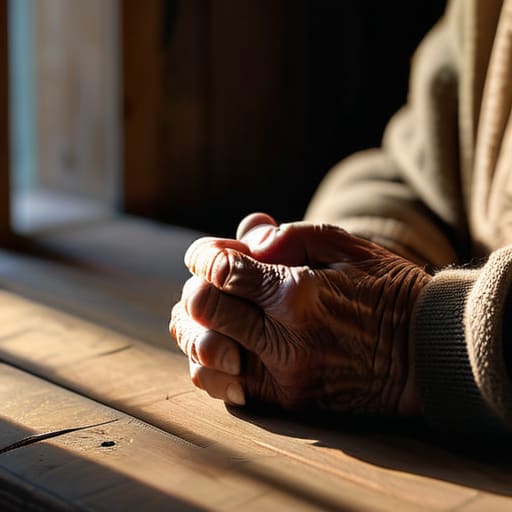
We are often tempted to treat the Divine like a cosmic vending machine—insert a petition, press a button, and receive a predictable result. When the machine stays silent, we scramble for explanations, reaching for those polished, theological band-aids that suggest everything is part of a “perfect plan.” But I have found that these platitudes often do more harm than good. They attempt to bypass the very ache that the silence creates. In my years in the hospital wards, I learned that why God says no is rarely a riddle to be solved with a clever proverb; more often, it is a reality to be endured.
Sometimes, the silence isn’t a cosmic delay or a test of character, but simply a season where the old maps no longer work. We talk about spiritual growth through waiting as if it were a tidy, productive process, like a plant growing toward the light. But true waiting often feels less like growth and more like a slow, grinding erosion. It is a messy, uncomfortable stripping away of our need for control. We aren’t just waiting for an answer; we are learning to inhabit a space where the answers haven’t arrived yet.
Coping With Spiritual Dryness When the Well Runs Dry
There is a particular kind of exhaustion that comes not from doing too much, but from feeling as though you are doing nothing at all. I have seen it in the eyes of patients who had prayed for a miracle for months, only to find themselves staring at a ceiling, wondering if they had simply been shouting into a void. This is the heavy reality of coping with spiritual dryness; it is not a sudden storm, but a slow, creeping drought where the landscape of your soul feels parched and unresponsive.
In those moments, the temptation is to manufacture a feeling—to force a sense of connection that isn’t there. But I have learned that true faith during seasons of silence isn’t found in the performance of piety. It is found in the quiet, stubborn decision to remain present, even when the well is dry. Sometimes, the most honest thing you can do is acknowledge the thirst. We often mistake this emptiness for failure, when in truth, it might be the very space required for a different, more resilient kind of spiritual growth through waiting.
On the Weight of Silence
We often treat prayer like a vending machine, expecting a specific transaction for a specific coin, but the most profound moments of my life haven’t been the answered petitions; they have been the heavy, terrifying silences where I had to learn to sit with a God who refused to perform on command.
Alasdair Renwick-Hale
The Quiet After the Storm
We have spent this time looking at the jagged edges of silence—the way spiritual dryness feels less like a season and more like a desert, and how the most hollow apologies often come from those who haven’t actually sat in the dark with us. I have never found much comfort in the idea that every unanswered plea is part of a tidy, cosmic plan. Instead, we have found that there is a certain, albeit painful, dignity in acknowledging that the well has run dry. To sit with the unanswered prayer is not to fail at faith; it is to move past the shallow slogans and into a space where we can finally be honest about the weight of the silence.
If you find yourself there now, in that heavy, unmapped territory where the words seem to vanish before they even reach the ceiling, please know that you are not wandering alone. There is a strange, quiet strength found in simply staying present when the answers refuse to come. We may not find the resolution we originally sought, but we often find something more durable: a community of those who are also learning to endure the mystery. Do not rush to fill the void with easy certainties. Sometimes, the most profound thing we can do is simply remain in the quiet, trusting that even in the absence of a voice, we are still held.