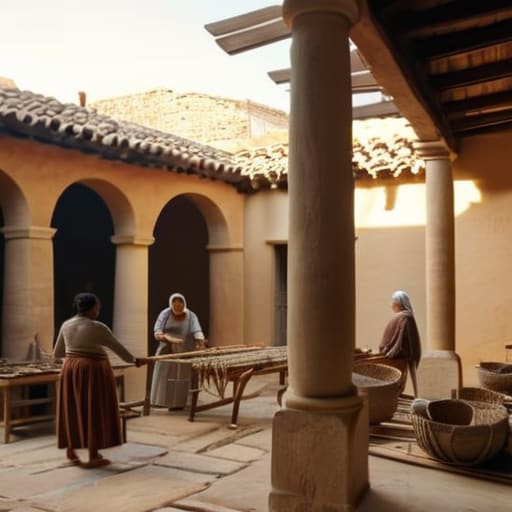
I spent thirty years in hospital wards, sitting at the bedsides of people whose lives were unraveling, and if there is one thing I learned, it is that we have a terrible habit of sanitizing the past. When we discuss family and household in antiquity, we often fall into the trap of viewing it through a lens of marble statues and orderly, idealized hierarchies—as if these ancient homes were mere stages for civic duty rather than the messy, loud, and often desperate places they truly were. We treat the ancient domestic sphere like a museum exhibit, polished and distant, forgetting that behind every grand lineage was a staggering amount of friction, much like the tension I felt in the quiet, heavy moments of a hospital hallway.
I am not here to offer you a lecture on socio-economic structures or to recite dry, academic taxonomies. Instead, I want to walk through the actual doorways of those ancient homes to see where the light failed and where the warmth resided. I promise to give you an honest account of how family and household in antiquity functioned when the veneer of civilization wore thin, focusing on the endurance of the human spirit amidst the chaos of survival.
The Weight of Blood Evolution of Kinship Systems
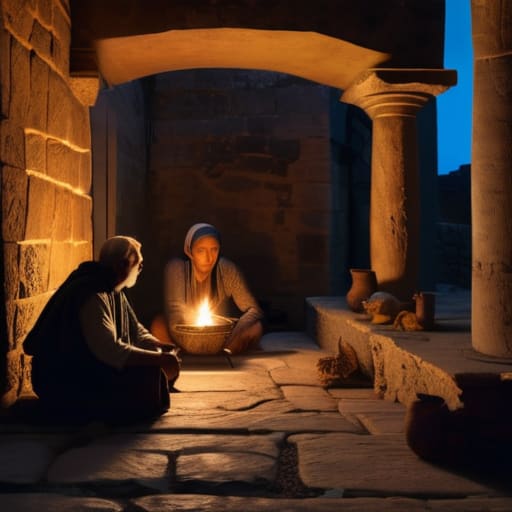
When I look back at the records of the old world, I am struck by how little “family” felt like the voluntary, emotional sanctuary we imagine today. For most, kinship was less about affection and more about a desperate, binding architecture of survival. The evolution of kinship systems wasn’t a steady march toward progress; it was a series of hard-won adaptations to scarcity and the need for stability. In many ways, these lineages functioned as small, self-contained states, where the bloodline served as both a shield and a cage.
We often speak of patriarchal structures in ancient civilizations as if they were mere political abstractions, but in the quiet of a courtyard, they were lived realities. These were systems designed to ensure that property and name moved through specific, controlled channels. This meant that the role of women in ancient households was frequently defined by their capacity to anchor these lineages, often at a profound personal cost. It wasn’t just about who held the keys to the larder, but about how much of one’s own agency was traded to ensure the family name endured another generation.
Domestic Life in Classical Antiquity Where Survival Met Duty
When I think of the Roman or Greek atrium, I don’t see the polished marble of the museums; I think of the smell of woodsmoke and the constant, low-level anxiety of keeping a fire lit. Domestic life in classical antiquity wasn’t a backdrop for grand philosophy; it was a relentless series of chores designed to stave off chaos. The house was less a sanctuary and more a functional unit of survival, where every person—from the eldest patriarch to the youngest unfree laborer—had a specific, unyielding slot to fill.
There is a tendency in modern scholarship to speak clinically about patriarchal structures in ancient civilizations, but that language often strips away the human friction. For the women navigating these spaces, “duty” wasn’t a choice; it was the very air they breathed. Their influence was often quiet, exerted through the management of grain, oil, and the complex web of household dependencies. It was a life defined by a delicate balance: maintaining the dignity of the lineage while managing the exhausting, granular reality of daily sustenance.
The Myth of the Private Home
We often look back at the ancient household through the soft lens of nostalgia, imagining a quiet sanctuary of private affection; but when you peel back the layers of the text, you find something much more demanding—a relentless, communal machine of survival where a person’s very identity was less a matter of the heart and more a matter of their place in the lineage.
Alasdair Renwick-Hale
The Echo in the Empty Room
When we step back from the intricate webs of kinship and the rigid duties of the ancient household, we aren’t left with a simple blueprint for living. Instead, we find a landscape defined by the tension between the individual and the collective. We have seen how bloodlines dictated destiny and how the domestic sphere functioned less as a sanctuary and more as a site of constant negotiation between survival and social expectation. To study these structures is to realize that the ancient family was not a static institution, but a fragile, breathing mechanism designed to weather a world that offered very little mercy to those standing alone.
Perhaps the most humbling lesson I take from these dusty accounts is not how much they differed from our own lives, but how much they mirror our fundamental anxieties. We still struggle with the same questions of belonging, the same heavy burdens of legacy, and the same desperate need to build something that outlasts our own brief flicker of existence. As I sit here with my pens and my half-finished notes, I am reminded that while the rituals change, the human ache for connection remains remarkably constant. We are all just trying to find our place around a hearth that, however ancient, still offers the only warmth we truly know.