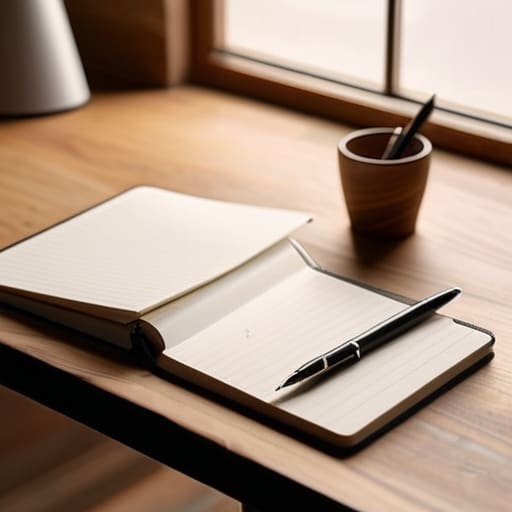
I spent three decades in hospital wards, sitting in the quiet spaces between life and death, where I learned that the most profound truths rarely arrive in a rush. People often come to me looking for a shortcut through their grief or their confusion, much like students today look for a digital miracle to fix their wandering minds. We are constantly bombarded by the promise of efficiency, yet I find that most modern gadgets are merely expensive distractions that keep us from the actual work of thinking. In my search for study tools worth having, I have found that the most effective aids are not those that promise to do the thinking for us, but those that provide a sturdy scaffolding for when our own concentration inevitably falters.
In the following pages, I want to move away from the breathless hype of the latest software and instead look at a few select items that have actually stood the test of time. I have curated a list of seven things—some quite old-fashioned, some quite modern—that I believe offer real substance. My hope is that these will help you find a sense of rhythmic stability in your learning, rather than just another way to feel busy.
The weight of a fountain pen
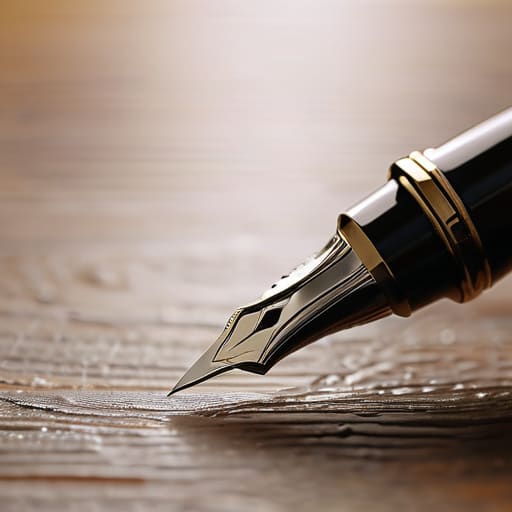
I have always found that the digital screen is a poor substitute for the tactile resistance of paper. There is a certain psychological anchor that occurs when you feel the nib of a good pen meeting a heavy page; it forces a slower, more deliberate pace of thought. When I was studying the complexities of the Reformation, I found that typing often allowed my fingers to outrun my understanding, leaving me with a transcript of words I hadn’t truly digested.
The quiet of a physical timer
We live in an era of “productivity hacks” that promise to optimize every waking second, but I have found that most of them only serve to increase our underlying anxiety. I prefer the old, mechanical kitchen timer—the kind that makes a physical, jarring sound when the time is up. It doesn’t ping with a polite notification or offer a “streak” to maintain; it simply tells you that a period of focus has concluded.
A well-worn secondary text
I often tell my students that a textbook should not be treated like a sacred, untouchable relic, but rather like a trusted companion. I keep a small, portable edition of a core text—something I can carry in a coat pocket—that is allowed to be marked, dog-eared, and stained with coffee. There is a specific kind of intimacy that develops when you can see your own marginalia staring back at you from three months prior.
The sanctity of a dedicated space
It is a mistake to believe that one can find deep focus in the middle of a chaotic living room or a noisy cafe. Over the years, I have learned that our environment acts as a silent tutor, either encouraging or sabotaging our concentration. I have a small corner of my study, occupied by nothing but a sturdy wooden desk and a lamp, that serves as my secular chapel.
Analog flashcards for the long haul
While the apps are certainly efficient, there is something to be said for the slow, rhythmic process of shuffling a deck of physical cards. I recall the many hours spent in hospital chapels, occasionally finding a quiet moment to review notes, where the physical act of flipping a card provided a necessary cadence to my study. The tactile nature of the task helps ground the memory in a way that a glowing screen cannot.
The discipline of a commonplace book
Throughout my life, I have kept what the ancients called a commonplace book—a single, dedicated volume for collecting thoughts, quotes, and observations that strike me as significant. This is not a diary of your feelings, nor is it a formal journal; it is a repository of fragments. When you encounter a sentence that stops you in your tracks, you record it here.
Silence as a primary resource
This may sound like a platitude, but I have come to realize that the most important study tool is often the absence of everything else. We are constantly bombarded by the “noise” of opinion, the hum of technology, and the relentless chatter of our own anxieties. True learning requires a certain level of intellectual stillness that is increasingly difficult to find.
On the vanity of the perfect system
We often mistake the acquisition of a new notebook or a clever application for the act of learning itself, as if the tool could somehow compensate for a wandering mind. But after years of watching people struggle through heavy texts, I’ve found that the only tool truly worth owning is the one that demands you stay present, even when the subject matter is difficult and the inclination is to look away.
Alasdair Renwick-Hale
The Weight of the Work
Looking back over this list, I realize that none of these objects—the well-worn notebook, the steady lamp, or the quiet corner of a library—possess any inherent magic. They are merely scaffolds. Whether you find yourself leaning on the tactile reliability of a fountain pen or the structured silence of a focused digital application, the goal remains the same: to create a space where thought can actually take root. We often make the mistake of searching for a perfect system that will finally banish procrastination, but I have learned through many long nights that tools are only as good as the intention behind them. They are meant to support the struggle, not to replace it.
Ultimately, I hope you find that the most important tool isn’t something you can buy or download. It is the quiet, stubborn permission you give yourself to be a beginner, to be confused, and to move slowly. There is a particular kind of grace found in the middle of a difficult task, in that messy space where the initial excitement has faded and only the disciplined pursuit remains. Do not be too hard on yourself when the tools fail or the focus slips. Just pick up the pen, adjust your light, and begin again. That, more than any gadget, is where the real learning happens.