
I remember sitting in a small, dimly lit room in the oncology ward, the smell of antiseptic heavy in the air, listening to a man describe the sheer, crushing weight of his daughter’s devotion. He wasn’t talking about the joy of service or the nobility of the task; he was talking about the quiet erosion of a life. We are often fed these polished, saccharine narratives about the sanctity of family, but when it comes to the messy, exhausting reality of caring for older members, those slogans tend to fall apart quite quickly. There is a specific kind of loneliness that settles in when you realize that love, no matter how profound, does not magically provide more hours in the day or erase the frustration of a fading memory.
I am not here to offer you a list of life-changing hacks or a spiritual roadmap that promises peace through patience. Instead, I want to talk about the unvarnished truth of what stays when the sentimentality fades. I will share what I have learned from decades of sitting in those quiet rooms—the practical, often difficult wisdom that comes from knowing exactly where our capacity ends and where we must learn to rely on the community instead.
Beyond the Duty Realities of Aging in Place Tips
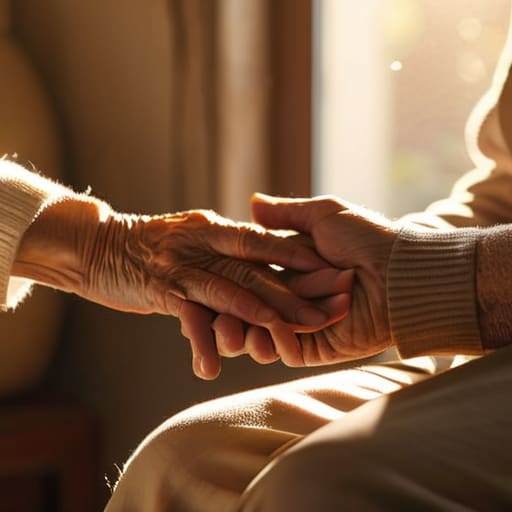
We often talk about “aging in place” as if it were merely a matter of installing grab bars in the shower or ensuring the lighting is sufficient to prevent a fall. But after years of sitting by hospital bedsides, I’ve learned that a house becomes a cage very quickly if the spirit inside is starving. Practical aging in place tips are necessary, certainly, but they are often a hollow substitute for the presence of another soul. We focus so much on the physical safety of our elders that we neglect the quiet, corrosive erosion of their sense of belonging.
If we are to be honest, the most difficult part isn’t the lifting or the medication schedules; it is the weight of the silence. True support requires more than just checking a box; it requires intentional elderly companionship strategies that acknowledge the person behind the patient. We must move past the idea that a weekly visit is enough to satisfy the need for connection. Without consistent social engagement for seniors, the home stops being a sanctuary and begins to feel like a waiting room.
The Quiet Erosion Prioritizing Senior Mental Health Support
There is a particular kind of silence that settles into a house when a person begins to age; it isn’t the peaceful quiet of a library, but rather a heavy, thinning stillness. In my years in the hospital, I saw how quickly the spirit can fray when the world stops asking for one’s opinion. We often focus so intently on the physical—the medication schedules and the mobility aids—that we neglect the internal landscape. True senior mental health support isn’t about finding a way to keep someone “busy”; it is about recognizing the profound grief that comes with a shrinking social world.
When we talk about combating elderly loneliness, we shouldn’t be looking for grand gestures or organized events that feel like chores. Often, the most effective elderly companionship strategies are found in the small, unhurried moments: a shared cup of tea where the silence is comfortable, or a conversation that treats them as a peer rather than a patient. If we only interact with our elders to manage their decline, we inadvertently contribute to that quiet erosion. We must learn to sit with them, not just to monitor them, but to truly see them.
The Weight of the Presence
We often mistake care for a series of logistical triumphs—the right medication, the scheduled visit, the tidy room—but after thirty years in hospital wards, I’ve learned that true care is much messier. It is the willingness to sit in the silence of a fading memory without trying to fix it, and the courage to admit that sometimes, our presence is the only thing we have left to give when the medicine fails.
Alasdair Renwick-Hale
The Weight and the Grace
We have wandered through the practicalities of physical safety and the delicate, often overlooked terrain of the mind, yet I suspect none of these strategies will ever feel entirely sufficient. There is no manual that can truly account for the slow, rhythmic shift of a life moving toward its twilight, nor can a checklist replace the heavy, quiet presence required when a loved one simply needs someone to witness their fading strength. We must accept that our efforts will often feel fragmented and that the perfect care plan is a myth we tell ourselves to stave off helplessness. What remains is the messy, unvarnished reality of showing up—not because we have solved the problem of aging, but because we refuse to turn away from the difficulty of it.
In my years sitting at the bedsides of the weary, I have learned that the most profound dignity is rarely found in the absence of struggle, but in the way we hold one another within it. Do not be discouraged when the slogans of “empowerment” and “seamless transitions” fail to meet the gravity of your situation. Instead, look for the small, unrecorded victories: a shared silence, a hand held firmly, or the simple courage to admit you are tired. It is in these gaps, where our expertise ends and our shared humanity begins, that we find the only kind of grace that actually sustains us. The goal is not perfection; it is presence.