
I remember sitting in a dimly lit hospice room late one Tuesday, the air thick with the smell of antiseptic and unsaid apologies. A man sat by a bed, clutching a crumpled tissue, asking me if there was a specific sequence of words that could fix the decades of silence between him and his brother. He wanted a blueprint, a way to bypass the ache and jump straight to the resolution. It’s a common desire, this hunger for a tidy manual on restoration after wrongdoing, but I have learned through thirty years of listening to the broken that such manuals are almost always fiction. We are sold the idea that if we just say the right thing or follow the right protocol, the damage will simply dissolve.
I am not here to offer you a checklist or a way to scrub the conscience clean. Instead, I want to talk about the long, often quiet work of staying in the room when the apologies feel inadequate and the resentment remains. I will share what I have gathered from a lifetime of watching people navigate the wreckage of their own making—not the polished versions you find in self-help books, but the honest, messy reality of trying to build something new on top of what was lost.
The Limits of Atonement and Making Amends
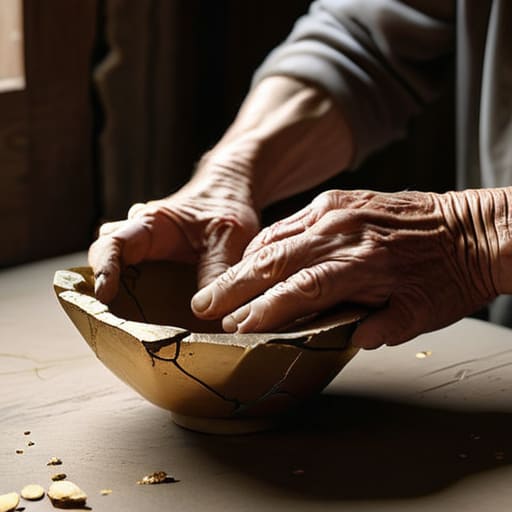
There is a particular kind of exhaustion that settles in when you realize that an apology, no matter how well-crafted or deeply felt, cannot actually undo the past. In my years in the hospital, I sat with many who were desperate to “fix” what had been broken, as if a sufficiently sincere gesture could act as a temporal rewind. But the truth is that the forgiveness and reconciliation process is rarely a straight line from guilt to peace. Sometimes, you can offer everything you have—your time, your resources, your very presence—and still find that the damage remains. There is a certain cruelty in the fact that sincerity is not a currency that can purchase the return of what was lost.
We often talk about reparations and accountability as if they were mathematical equations, where enough restitution eventually balances the scales. But human hearts don’t work like ledgers. You can engage in the most rigorous work of rebuilding broken relationships, yet still encounter a wall of permanent change. I have learned to sit with that silence, acknowledging that while we must strive for atonement, we must also accept the unbridgeable gaps that some mistakes leave behind.
Where Reparations and Accountability Often Fail
We often mistake the mechanics of apology for the actual work of repair. I have seen many people approach reparations and accountability as if they were checking items off a ledger—a formal statement issued, a fine paid, a promise made—expecting that the transaction itself will somehow dissolve the hurt. But you cannot legislate the return of trust. We frequently fail because we treat the victim’s pain as a problem to be solved rather than a reality to be inhabited. When we rush toward a resolution just to ease our own discomfort, we aren’t actually practicing restorative justice principles; we are merely trying to escape the weight of our own guilt.
The failure also lies in the assumption that there is a definitive “end point” to the process. In my years in the hospital, I learned that some wounds do not close; they simply become part of the landscape. True healing from mistakes isn’t a linear climb toward a sunlit summit. It is often a jagged, repetitive cycle of showing up when it is inconvenient and remaining present when the initial fervor of the apology has long since cooled. Sometimes, the most honest thing we can do is acknowledge that some things remain broken.
The Weight of the Unfixable
We often mistake the settling of a debt for the healing of a wound; you can pay back every penny stolen, but you cannot un-break the trust that was shattered in the taking.
Alasdair Renwick-Hale
The Long Shadow of Repair
We have spent some time looking at the jagged edges of this process—the ways in which apologies often fall short, how reparations can feel like mere transactions, and how the weight of what was lost can never truly be balanced by what is given. I have learned through years of sitting in quiet hospital rooms that there is no formulaic ritual that can instantly undo a fracture in trust or a wound to the soul. We must accept that restoration is rarely a closed circle; it is often a broken line that we attempt to trace as best we can, acknowledging that some things remain permanently altered.
Yet, even if we cannot return to the way things were before the damage, that does not mean the effort is wasted. There is a quiet, stubborn dignity in the refusal to walk away from the wreckage. Perhaps the goal isn’t to achieve a perfect, polished state of grace, but to find a way to live meaningfully within the aftermath. If we can commit to the slow, unglamorous work of staying present and being honest about our failures, we might find that a different kind of wholeness is possible—one that is not defined by the absence of scars, but by the courage to carry them.