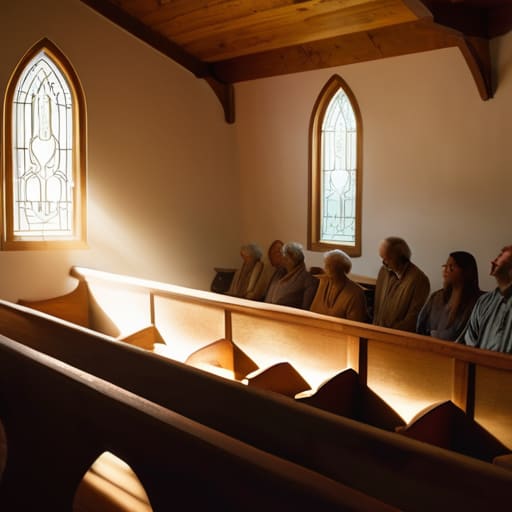
I remember sitting in a small, drafty chapel during my third year as a chaplain, watching a professional choir attempt to carry a service through sheer, polished technicality. The notes were flawless, the harmonies were impeccable, but as the final chord faded into the rafters, the silence that followed felt hollow. It occurs to me often that we have been sold a grand illusion regarding music and communal worship—the idea that if we simply find the right tempo or the most expensive sound system, we can manufacture a sense of the divine. I’ve seen too many congregations mistake a well-rehearsed performance for a moment of genuine connection, and I suspect you have, too.
I am not here to offer you a roadmap to the “perfect” service or a list of songs that are guaranteed to move mountains. Instead, I want to look at the messy, unpolished reality of how we actually gather. I intend to share what I have learned from decades of watching people try to find their voices in the midst of grief and joy, offering an honest account of where the melody succeeds and, more importantly, where it fails.
The Liturgical Music Role in Congregation Beyond the Performance
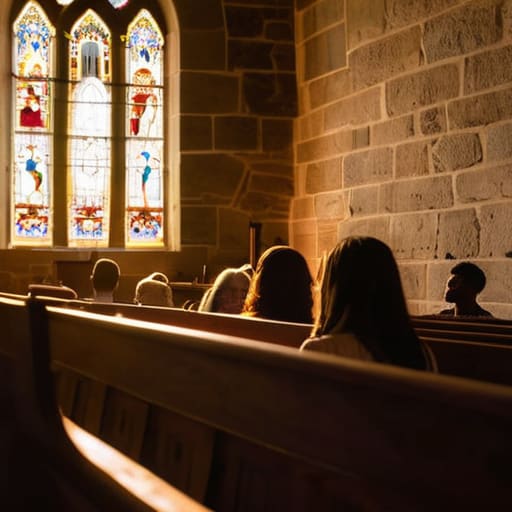
I have often sat in the back pews of various chapels, watching the tension between the professional choir and the people in the stalls. There is a specific kind of vanity that creeps into a service when the music becomes a spectacle to be observed rather than a vessel to be inhabited. When we treat the choir or the soloist as a stage performer, we inadvertently create a divide; the congregation becomes a mere audience, passive and detached. In my experience, the true liturgical music role in congregation isn’t to provide a backdrop of pleasantness, but to invite a collective voice.
It is in that shared, often imperfect, unison that something vital happens. I don’t mean the polished harmony of a recording, but the raw, slightly out-of-tune effort of a hundred people trying to say the same thing at once. This is where the spiritual connection through song actually takes root—not in the technical precision of the melody, but in the shared breath of the room. We aren’t there to be entertained by a display of talent; we are there to find, through the clumsy medium of sound, a way to belong to one another.
Where Spiritual Connection Through Song Meets Human Limitation
I have often sat in the quiet aftermath of a particularly moving service, watching the heavy stillness settle over a room that has just finished singing. There is a certain tension there—a gap between the lofty aspirations of the hymns and the messy, heavy reality of the people sitting in the pews. We speak often of the spiritual connection through song, as if it were a seamless bridge, but I have seen how easily that bridge can buckle under the weight of a grieving heart or a mind too tired to find the melody. Sometimes, the music doesn’t lift us; it simply provides a container for the things we cannot say.
It is a mistake to believe that the liturgical music role in congregation is merely to provide a soundtrack for piety. There is a profound, albeit fragile, human limitation in our attempts to reach the divine through harmony. We strive for unity, yet we remain a collection of fractured voices, occasionally catching the same rhythm by sheer grace rather than design. To expect a well-rehearsed choir to solve the problem of human isolation is a tall order, and I suspect the truth lies in the honest struggle of the unison rather than the perfection of the performance.
The Limits of the Melody
I have sat in many a chapel where the choir was magnificent and the harmonies were flawless, only to realize that a perfectly tuned note can sometimes act as a barrier rather than a bridge, shielding us from the very vulnerability that communal prayer requires.
Alasdair Renwick-Hale
The Quiet After the Last Note
We have spent these pages dissecting the mechanics of melody and the heavy weight of expectation, yet we must return to the central truth: music in worship is not a spiritual shortcut. It is neither a polished performance to be admired nor a guaranteed bridge to the divine. I have seen the most magnificent choirs leave a congregation feeling more hollow than when they arrived, simply because the music was used to mask the silence rather than inhabit it. We must remember that the true value of communal song lies not in its ability to manufacture an emotional peak, but in its capacity to provide a shared language for our collective vulnerability.
As I sit here at my desk, the ink drying on my latest page, I am reminded that the most profound moments of grace often occur when the singing stops. It is in that sudden, ringing stillness—the space where the melody ends and the actual living begins—that we find the room to breathe. Do not seek a worship experience that offers nothing but easy harmonies and swelling crescendos. Instead, look for the community that is brave enough to sing through the discord, and more importantly, the one that knows how to sit together in the quiet when the music inevitably fades.