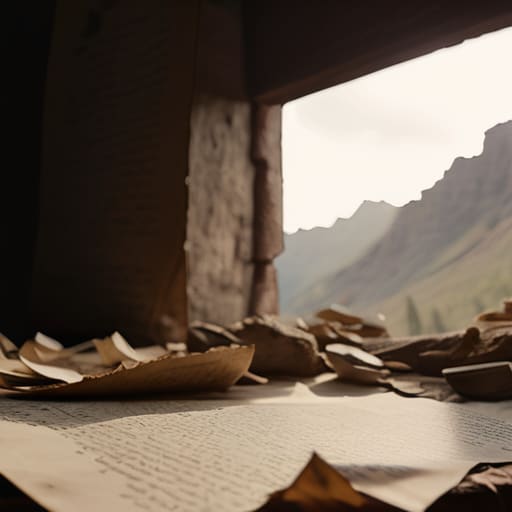
I remember sitting in a damp basement storage room during my final year of graduate school, surrounded by the smell of decaying lignin and old glue. I was looking for a specific set of parish records, convinced that if I just dug deep enough, I would find a perfect, unbroken lineage of truth. Instead, I found gaps. I found letters eaten by silverfish and ledgers where the ink had simply surrendered to the humidity. It was my first real lesson in the messy reality of archives and what survives: it isn’t a grand, curated library of human wisdom, but rather a collection of accidents. We like to pretend that history is a solid foundation, but most of the time, it is just a series of lucky escapes from the bin.
I am not here to sell you on the romantic notion that every scrap of paper holds a sacred secret. What I want to do is look at the cracks in the record and talk about what actually remains when the dust settles. I’ll share what I’ve learned from decades of handling fragile things—both books and lives—to help you understand how to find meaning in the fragments. This isn’t about finding perfection; it’s about learning to read the silence between the lines.
Archival Selection Bias and the Silence of the Unrecorded
I have often thought that the most profound parts of a person’s life are the very things that never make it into a folder. When we speak of archival selection bias, we tend to treat it as a technical error, a glitch in the system of record-keeping. But in my experience, it is much more intimate than that. It is a quiet, structural exclusion. We preserve the ledgers, the formal letters, and the official decrees because they possess a certain weight, a sense of provenance and record integrity that satisfies the historian’s need for order. Yet, the true texture of a life—the whispered apologies, the frantic notes left on a bedside table, the small joys that left no paper trail—is almost always lost to the wind.
This leaves us with a curated version of the past, a narrative built from the scraps that were deemed worthy of survival. We are essentially building a house out of only the sturdiest bricks, while the mortar, the soft and essential bits that actually hold the structure together, simply evaporates.
Historical Preservation Challenges Where the Paper Fails
I often think of the physical struggle of keeping a thing alive. In my workshop, I see how acidity in cheap paper slowly turns a page to brittle lace, a slow-motion combustion that no amount of careful handling can truly halt. We talk about historical preservation challenges as if they are mere logistical hurdles, but they are actually a form of quiet attrition. It is the tragedy of the material itself; the very medium we trust to carry our stories is often the first thing to surrender to the damp or the light.
Even when the paper holds, we face the unsettling reality of digital archival decay. We have moved from vellum to magnetic tape to the cloud, creating a landscape of vanishing data that is far more fragile than the heavy ledgers of my youth. We are building our collective memory on shifting sands, assuming that because a file exists today, it will be readable by a grandchild fifty years from now. I suspect we are leaving behind a much thinner trail than we realize, a series of gaps where the technology simply failed to keep pace with our desire to be remembered.
The Gaps Between the Lines
We often mistake the archive for a mirror of the past, but it is more like a sieve; we spend our lives studying the stones that remained, forgetting that the true weight of history often lies in the sand that slipped through the mesh.
Alasdair Renwick-Hale
The Gaps in the Ledger
In looking at these fragments, we are forced to admit that the archive is not a mirror of the past, but a sieve. We have seen how the bias of the collector and the simple, cruel decay of paper conspire to silence the many in favor of the few. We cannot pretend that a collection of well-preserved ledgers or official decrees constitutes a complete history; rather, they are merely the survivors of a long, unintentional cull. To study the archive is to learn how to listen to the silences as much as the words, recognizing that what is missing is often just as significant as what remains.
Perhaps there is a strange sort of comfort in this incompleteness. It reminds me of my years in the hospital, where no chart or medical record could ever truly capture the weight of a person’s spirit or the quiet dignity of their final hours. History, like a life, is too vast to be contained by ink and binding. Instead of despairing over the gaps, we ought to treat them as an invitation—a call to approach the past with humility rather than certainty. We must learn to hold the fragments we have with care, while always remaining mindful of the vast, beautiful, and unrecorded world that lies just beyond the reach of the page.