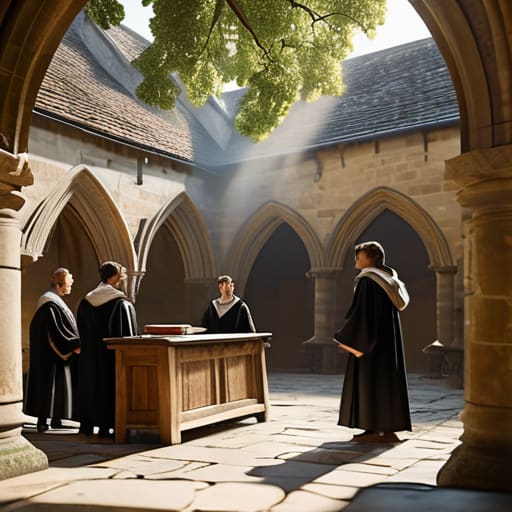
We are often sold this polished, inevitable narrative of academic history—a grand, teleological march from candlelit scriptoriums to the gleaming glass laboratories of today. It is a tidy story, usually used to justify the staggering tuition fees or the untouchable prestige of the modern institution, but it feels fundamentally dishonest. When we look closely at the messy reality of universities and their origins, we don’t find a seamless blueprint for progress; instead, we find a series of accidental collisions between hungry scholars, fickle patrons, and the sheer, stubborn necessity of preserving thought in an unstable world.
I have no interest in reciting the sanitized version you’ll find in a standard textbook. My aim here is to peel back that veneer of institutional inevitability and look at the actual, human scaffolding that held these places together when things fell apart. I want to offer you an account of how these centers of learning actually breathed—not as abstract ideals, but as fragile, human experiments that succeeded more often through grit and luck than through any divine design.
Beyond the Myth From Medieval Cathedral Schools to Reality

We often picture the birth of the university as a sudden, enlightened spark—a grand design to illuminate the dark ages. But when I look into the records of the medieval cathedral schools, I don’t see a blueprint; I see a slow, often clumsy adaptation. These weren’t planned monuments to intellect, but rather practical responses to a growing hunger for order. People were simply trying to find a way to make sense of a world that felt increasingly complex, using the existing structures of the Church to anchor their searching.
It wasn’t a singular moment of creation, but a gradual evolution of higher education born from necessity and local friction. Take the history of Bologna University, for instance. It didn’t emerge from a decree of statehood, but from the sheer, stubborn will of students and masters who needed a way to protect their rights and validate their teaching. It was a messy, human process of negotiation—a way of carving out space for thought amidst the rigid hierarchies of the time. We shouldn’t mistake this organic, sometimes desperate striving for a polished, inevitable march toward progress.
The Evolution of Higher Education and Its Early Fractures
If we look closely at the rise of academic institutions, we see that they didn’t emerge from a sudden burst of enlightenment, but rather from a desperate need for order. As the old medieval cathedral schools began to stretch at the seams, the sheer volume of inquiry outpaced the capacity of any single bishop or monastery to contain it. This tension birthed the first true universities—not as polished temples of thought, but as fragile, legal experiments in how to organize human curiosity.
The evolution of higher education was often a messy affair of competing jurisdictions. Take, for instance, the history of Bologna University; it wasn’t founded by a royal decree of wisdom, but by students who essentially went on strike, demanding more control over their own instruction. This early friction between the scholars and the civic authorities created a blueprint for the modern university that we still struggle with today. We often forget that the very foundation of our academic life was built upon these early fractures, where the pursuit of truth collided head-on with the rigid demands of the state and the church.
The Architecture of Uncertainty
We tend to look back at the birth of the university as if it were a deliberate blueprint for enlightenment, but it feels more like a collection of people huddled together in the dark, trying to find a common language for the things they weren’t quite sure they understood.
Alasdair Renwick-Hale
The Unfinished Architecture
Looking back at these centuries of shifting purpose, it becomes clear that the university was never a singular, inevitable invention. We have seen how these institutions began not as polished monuments to reason, but as fragile, often chaotic clusters of scholars seeking common ground amidst the wreckage of old empires. From the monastic cells to the sprawling lecture halls of the Renaissance, the history of higher education is less a straight line of progress and more a series of necessary, messy improvisations designed to preserve what we thought was worth knowing. We must stop viewing them as static pillars of truth and instead see them as the restless, evolving structures they have always been.
Perhaps the most important lesson we can draw from this long, winding history is that the pursuit of knowledge has never been about reaching a final, tidy destination. It is a vocation of staying in the room when the answers become difficult and the certainties begin to fray. As we move into an uncertain future, I hope we do not lose sight of that original, somewhat desperate impulse: the desire to gather together, despite our differences, to wrestle with the profound. The university is not a fortress to protect us from the unknown, but a shared space for the struggle itself.