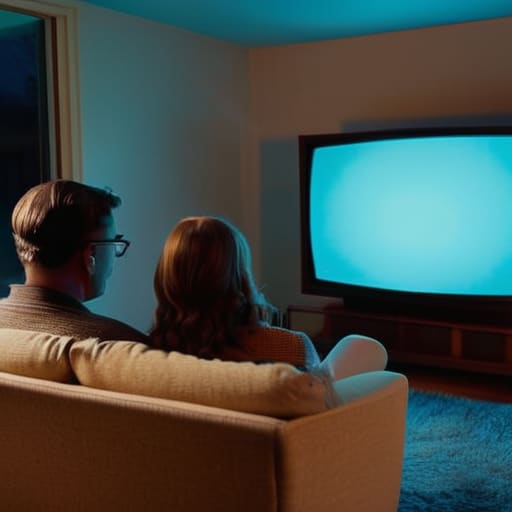
I remember sitting in a cramped, dimly lit hospice room during my final year of chaplaincy, watching a family try to find common ground through the flickering glow of a news broadcast. There is a pervasive, almost frantic idea in our modern discourse that television and cultural change function like a sudden chemical reaction—that a single program or a shift in programming can instantly rewrite the moral fabric of a nation. We treat the medium as if it were a lightning bolt, capable of striking the soul into a new shape, but I have found that human nature is far more stubbornly resistant to such sudden shifts than the pundits would have us believe.
I am not here to offer you a lecture on media theory or to join the chorus of those mourning a lost age of innocence. Instead, I want to look at what actually happens in the quiet spaces between the broadcasts. I intend to share what I have gathered from years of listening to people in their most vulnerable moments—an honest account of how these screens actually shape our perceptions, and more importantly, where that influence fails to touch the things that truly matter.
Representation in Television History a Half Truth of Inclusion
We often point to the slow, stumbling evolution of television programming as a triumph of progress, a steady march toward seeing ourselves reflected on the screen. In my years in the hospital, I heard stories of patients finding solace in seeing a character who shared their struggle or their skin. There is a genuine, quiet power in that. But we must be careful not to mistake a change in casting for a change in heart. For decades, representation in television history has often felt less like an act of empathy and more like a checkbox—a way to signal virtue without actually challenging the underlying structures of the stories being told.
It is easy to celebrate the arrival of diverse faces, yet we frequently overlook whether those faces are granted the dignity of complexity. Too often, we see characters relegated to the periphery, existing merely to validate the protagonist’s journey rather than inhabiting their own messy, complicated lives. When we settle for these shallow mirrors, we aren’t truly expanding our social norms and broadcast media; we are merely polishing the surface of an old, familiar room. Real inclusion requires more than just presence; it requires the courage to let the narrative become truly unpredictable.
The Psychological Effects of Television Consumption and Fatigue
I often think of the flicker of the screen not as a window, but as a sort of low-grade fever. In my years in the chaplaincy, I saw how people would retreat into the blue light of a television when the silence of their own lives became too heavy to bear. There is a specific kind of exhaustion that comes from the constant, rhythmic pulse of the broadcast—a weight that isn’t quite sadness, but a profound diminishment of presence. We aren’t just watching stories; we are absorbing a cadence of urgency that never truly allows the nervous system to settle.
The psychological effects of television consumption are rarely found in a single, dramatic moment of influence. Instead, they settle like dust in an old library. It is the slow accumulation of being told, a thousand times over, how one should feel, how one should look, and what one should fear. This constant stream creates a strange sort of cognitive fatigue, where the ability to sit with a complex, unscripted thought begins to wither. We have become experts at consuming, yet we find ourselves increasingly unskilled at being.
The Mirage of Progress
We often mistake the changing faces on a screen for a change in the human heart, forgetting that a more diverse cast can still broadcast the same hollowed-out myths that leave us feeling more alone than before.
Alasdair Renwick-Hale
The Quiet After the Broadcast
We have spent much of this reflection tracing the jagged edges of the medium—how the flicker of representation often offers a mere veneer of progress without the substance of true belonging, and how the sheer weight of constant consumption leaves us in a state of profound, quiet fatigue. I have come to realize that television is neither the grand architect of our morality nor the simple villain of our decline; it is more like a mirror that has been slightly warped by the heat of its own light. It reflects our struggles back to us, but often in a way that feels hollowed out, leaving us with the sensation of having seen everything while truly understanding very little of the human condition.
Perhaps the remedy is not to demand more from the screen, but to demand more from the spaces between the programs. If we are to find meaning in a world saturated by digital noise, we must be willing to step back into the unscripted silence of our own lives and communities. Cultural change will never be a product delivered through a subscription service; it is something forged in the slow, difficult work of looking one another in the eye. Let us not mistake the glow of the television for the light of the world, but rather use the moments of stillness it leaves behind to reclaim our capacity for genuine connection.