
I remember sitting in a cramped, dimly lit community center years ago, watching a well-meaning instructor distribute glossy, color-coded workbooks to a group of adults who had spent their lives working with their hands. There was a palpable, heavy silence in the room—not the silence of deep learning, but the silence of profound exhaustion. It struck me then that most modern education and literacy movements are designed by people who have never actually sat in a chair that felt uncomfortable, or felt the specific, quiet shame of failing to decode a simple sentence. We tend to treat literacy as a technical problem to be solved with better software or more funding, rather than a deeply human struggle for dignity.
I have no interest in peddling the polished success stories you see in annual reports. Instead, I want to talk about the friction—the places where these grand initiatives rub up against the messy, unscripted reality of human lives. I won’t offer you a roadmap to perfection, but I will offer an honest account of what actually works when the bright lights are turned off and the manuals are put away. We are going to look at where these movements succeed, and more importantly, where they run out.
Global Literacy Rates Impact a Statistical Mirage
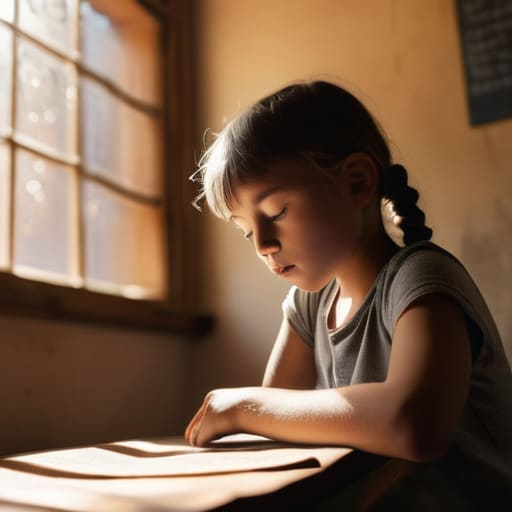
We tend to treat the rising percentages in international reports as a sort of moral triumph, a steady climb toward a more enlightened world. But when I look at those spreadsheets, I can’t help but feel we are mistaking a metric for a reality. There is a profound difference between a person being able to sign their name on a government form and a person possessing the agency to navigate their own life. When we discuss the global literacy rates impact, we often gloss over the fact that a high number can mask a devastating lack of comprehension. A child might sit in a classroom for six years, yet leave without the ability to truly interrogate a text or think critically about the world around them.
The truth is that these statistics often ignore the stubborn, unyielding socioeconomic barriers to education that keep a person tethered to the margins. You can teach a man to decode phonemes, but if he is hungry, or if the local economy demands his labor before the school bell rings, that literacy remains a fragile, theoretical thing. We celebrate the achievement of the data point while ignoring the quiet struggle of the individual who remains functionally sidelined despite the numbers.
Socioeconomic Barriers to Education the Walls We Ignore
It is easy to look at a spreadsheet of rising literacy numbers and feel a sense of triumph, but those figures rarely account for the quiet, heavy weight of poverty. I have often thought that we treat education as if it were a simple matter of providing books and teachers, ignoring the fact that a hungry child or a parent working three jobs is not merely “underserved”—they are barricaded. We speak of socioeconomic barriers to education as if they were mere inconveniences, but in reality, they are thick, invisible walls that make the mere act of showing up a feat of extraordinary will.
Even when we introduce modern tools, we often miss the mark. We push for digital literacy empowerment in regions where the electricity is as temperamental as the local economy, or where the cost of a data plan is equivalent to a week’s worth of grain. It isn’t enough to simply hand out tablets; if the structural foundations of a person’s life are crumbling, the most sophisticated curriculum in the world becomes little more than a cruel reminder of what they cannot reach.
The Difference Between Knowing and Being
We often mistake the expansion of a literacy rate for the expansion of a soul; we celebrate the ability to decode a sentence while forgetting that the true purpose of learning is to find the courage to live within the questions that sentence uncovers.
Alasdair Renwick-Hale
Beyond the Ledger
We have spent much of this time looking at the architecture of the problem—the statistical illusions that suggest progress is a straight line, and the invisible walls of poverty that make a classroom feel more like a fortress than a gateway. It is easy to get lost in the data, to believe that if we simply move the needle on a literacy percentage, we have somehow solved the human crisis. But my years in the hospital taught me that you cannot treat a wound by merely documenting its depth; you have to address the environment that caused it. Literacy movements often fail not because they lack funding or passion, but because they attempt to impose a standardized solution upon a world that is fundamentally, and beautifully, unpredictable.
So, where does this leave us? Perhaps we must stop viewing literacy as a mere commodity to be distributed, like grain or medicine, and start seeing it as a slow, communal cultivation. It is not about checking a box on a global report; it is about the quiet, difficult work of helping a person find their own voice within the noise. We must move past the easy slogans of “empowerment” and instead commit to the uncomfortable presence required to walk alongside those the system has overlooked. True education is not a destination we reach, but a steadfast way of being in the world together.