
I remember sitting in a sterile hospital corridor at three in the morning, the air smelling of industrial floor wax and stale coffee, listening to a man weep because he felt utterly alone despite being surrounded by a dozen nurses and a dozen grieving relatives. We are constantly fed this glossy, modern narrative that togetherness is a cure-all, as if simply being in a room with others magically mends a fractured mind. But in my years as a chaplain, I learned that mental health in community is rarely about the warmth of a crowd; more often, it is about the terrifying vulnerability of being truly seen by people who cannot fix you.
I have no interest in offering you the polished slogans of wellness influencers or the hollow promises of “connectivity” apps. What I intend to do instead is look at the messy, often uncomfortable reality of how we actually hold one another up when the lights go out. I want to share what I have gathered from thirty years of sitting in the quiet spaces between people—the parts that work, the parts that fail, and the honest limits of what a neighbor can truly do for a soul in distress.
Where Peer Support Networks Often Falter
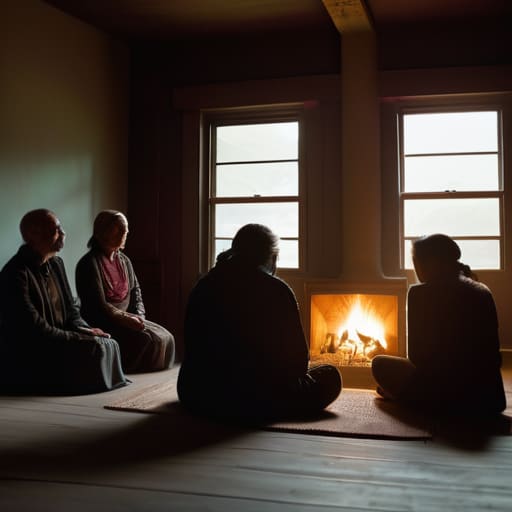
There is a certain warmth in the idea of peer support networks—the notion that those who have walked through the fire are best equipped to guide others through it. In my years in the hospital, I saw many people find a lifeline in these shared experiences. However, there is a quiet danger in assuming that shared suffering automatically translates into shared wisdom. Sometimes, these groups can inadvertently become echo chambers of despair, where the weight of collective grief becomes so heavy that no one is actually looking toward the exit. We often mistake proximity of experience for the clinical or emotional capacity to actually facilitate healing.
Furthermore, we must be honest about the structural gaps. We talk much about reducing social stigma around mental illness, yet we often expect well-meaning neighbors to step into roles they aren’t trained for. When a person is in the throes of a genuine mental health crisis intervention, a sympathetic ear is a grace, but it is rarely a substitute for professional care. There is a fine line between offering a hand and accidentally overstepping the boundaries of what a layperson can safely manage. We must ensure that our desire for connection doesn’t mask the desperate need for more robust, professional resources.
The Limits of Accessing Community Psychological Support
There is a certain kind of exhaustion that comes from navigating the bureaucracy of care. We often speak of accessing community psychological support as if it were as simple as walking into a local library, but for many, the door is either locked or guarded by a labyrinth of paperwork and waiting lists. I remember sitting with a young man in the hospital years ago who had tried every local mental health resource in our county; he wasn’t looking for a miracle, just a consistent presence. Instead, he found a fragmented system where the hand-offs between agencies felt less like a relay race and more like a shuffling of responsibility.
Even when the services exist, there is the quiet, heavy weight of the threshold itself. We talk endlessly about reducing social stigma around mental illness, yet the actual experience of seeking help remains a deeply isolating endeavor. There is a gap between the theoretical availability of community-based mental health services and the lived reality of a person who feels too broken to navigate the very systems designed to mend them. Sometimes, the bridge between isolation and support is simply too long to cross alone.
The Weight of Being Seen
We often mistake the presence of others for the presence of peace, but I have learned that a crowd can be a lonely place if no one truly knows how to sit with your silence without trying to fix it.
Alasdair Renwick-Hale
The Quiet Work of Staying Present
We have spent these few pages picking apart the scaffolding of communal care—examining why peer networks stumble under the weight of trauma and how institutional support often feels more like a bureaucratic hurdle than a helping hand. It is easy to become cynical when we see these structures fail, and I suspect a part of me always will. We must acknowledge that community is not a panacea; it cannot cure a chemical imbalance, nor can it instantly mend a shattered psyche. There is a profound inadequacy in our current models, and to pretend otherwise is to do a disservice to those sitting in the dark. We have to accept that even the best-intentioned systems have breaking points.
Yet, if we are to find any hope, it lies not in the perfection of the system, but in the stubbornness of the individual. In my years in the hospital, I learned that while a community cannot always fix a person, it can certainly refuse to leave them alone. Perhaps the goal isn’t to build a flawless net of psychological support, but to cultivate a space where it is okay to be broken without being rushed toward a “solution.” We may never find the perfect way to carry one another, but there is a quiet, sacred dignity in simply refusing to look away.