
I remember sitting in a dim hospital room in the late nineties, the smell of antiseptic thick in the air, listening to a man grapple with a loss that no amount of “perspective” could fix. He wasn’t looking for a clever debate or a well-constructed argument; he was looking for something true. It struck me then that our modern obsession with the mechanics of forming opinions responsibly is often just a sophisticated way of avoiding the messy, uncomfortable weight of reality. We treat it like a logic puzzle to be solved with enough data or a better algorithm, but in the quiet corners of human suffering, those tidy intellectual frameworks tend to crumble.
I am not here to give you a checklist or a set of mental gymnastics to help you win an argument. Instead, I want to offer something a bit more uncomfortable: an account of what happens when our certainties fail us. I will share what I have gathered from decades of listening to people in their most broken moments, focusing on the slow, often frustrating work of building a viewpoint that actually holds weight. This isn’t about being right; it’s about learning how to live with the truth.
The Trap of Media Literacy and Information Consumption
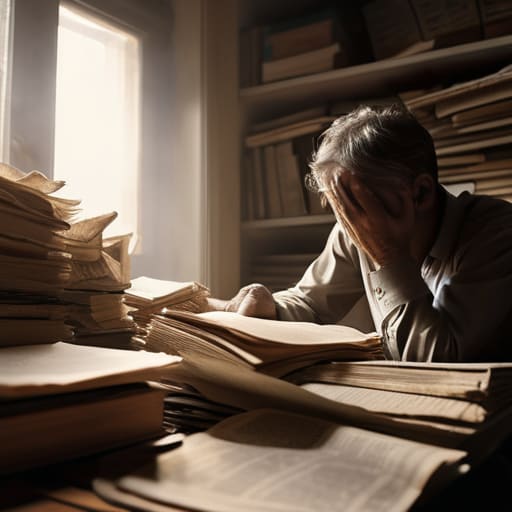
We are often told that the remedy for our modern confusion is a more rigorous application of media literacy and information consumption. The prevailing wisdom suggests that if we simply sharpen our tools—if we master the art of evaluating source credibility or learn to spot a logical fallacy from a mile away—the fog will lift. But I have found that you can possess a vast library of facts and still be utterly lost. There is a peculiar kind of exhaustion that comes from treating every news cycle as a forensic investigation, as if a high enough score in critical thinking skills for decision making could somehow shield us from the weight of being wrong.
The danger lies in mistaking the mechanics of information for the substance of truth. You can check a source, verify a date, and cross-reference a quote, yet still fall straight into the trap of a curated reality. It is quite easy to become a highly efficient collector of data while remaining entirely blind to one’s own cognitive bias awareness. We become so preoccupied with the technicalities of the “how” that we forget to ask the “why,” turning our intellect into a sophisticated filter that only lets in what we already suspect to be true.
Evaluating Source Credibility Beyond the Surface Level
We often mistake a polished website or a professional-sounding tone for authority. In my years in the hospital, I learned that the person speaking most calmly isn’t always the one holding the truth; sometimes, they are simply the most practiced at masking their own shadows. When we talk about evaluating source credibility, we shouldn’t just look at the credentials on a page, but at the intent behind the words. Is the author trying to illuminate a complex reality, or are they merely trying to recruit you into a camp?
True discernment requires more than just checking a fact; it requires a certain level of intellectual humility in discourse. I have found that the most reliable voices are often those that admit where their knowledge ends. If a source presents a world of perfect, unbroken logic without any room for nuance or doubt, I tend to step back. We must cultivate the habit of looking for the gaps—the places where a writer avoids a difficult question or relies on emotional shorthand rather than substance. It is in those quiet, unpolished corners that the real truth usually resides.
The Weight of a Stance
I have found that a well-formed opinion is less like a flag to be waved and more like a heavy piece of furniture; it requires a certain amount of muscle to move, and once you have set it down in a room, you must be prepared to live with the space it occupies.
Alasdair Renwick-Hale
The Quiet Work of Staying Uncertain
We have spent this time looking at the mechanics of the intellect—how to peel back the layers of media spin and how to look beneath the polished surface of a source’s credentials. But as I sit here at my desk, the ink still drying on my latest notebook, I am reminded that these are merely tools, not the destination. You can master the art of fact-checking and still find yourself clutching a conviction that is far too tight for comfort. The danger isn’t just in being wrong; it is in the false sense of security that comes from believing we have finally gathered enough data to be certain. Responsibility, I’ve found, is less about the accumulation of facts and more about the willingness to be corrected by them.
In my years in the hospital wards, I learned that the most profound truths rarely arrive with a fanfare of certainty. They usually arrive in the quiet, uncomfortable spaces where our old certainties fail us. As you move forward, I don’t ask you to become a more efficient consumer of information, but rather a more patient observer of the world. Do not be afraid of the silence that follows a difficult question. It is in that very hesitation—that refusal to jump to a conclusion—where our true character is forged. Let your opinions be living things, capable of growth, rather than monuments built to protect your pride.