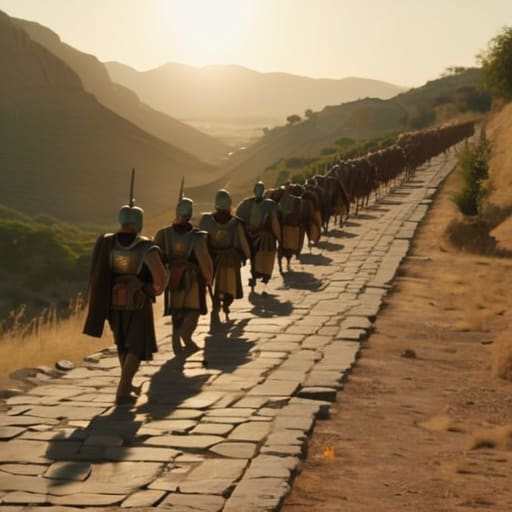
I remember sitting in a cramped, dimly lit hospital corridor years ago, listening to a man describe how his family’s history had been swallowed whole by a distant bureaucracy. He wasn’t interested in the grand, sweeping charts of historians or the triumphant rhetoric of progress; he was mourning the way a single, cold decision could erase a lineage. We often talk about the spread across the empire as if it were merely a matter of logistics, trade routes, and administrative efficiency, but that is a sanitized lie. It wasn’t just ink on parchment or soldiers on a march; it was a slow, heavy pressure that reshaped the very soul of the people it touched, often leaving nothing but a hollowed-out sense of what used to be home.
I have no intention of offering you any polished, textbook explanations for how these things happen. Instead, I want to look at the cracks in the foundation—the places where the official stories fail to account for the human cost. I promise to share what I have gathered from both the archives and the quiet, difficult conversations of a lifetime, offering an honest account of where the grand designs of power meet the messy, unyielding reality of the human spirit.
Imperial Infrastructure Development and the Cost of Connection
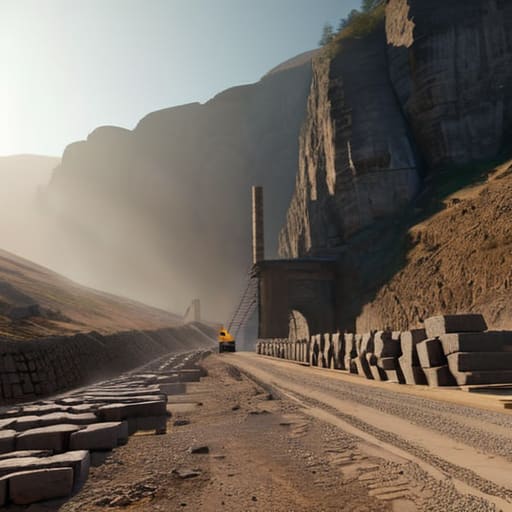
When we look at the maps of the old world, we tend to see lines—neat, purposeful strokes of ink that suggest a certain inevitability to the way things moved. But looking closer at the logistics of empire building, I am reminded of the sheer, grinding physical toll required to bridge those distances. It wasn’t just about moving legions; it was about the sweat and the stone. The imperial infrastructure development that we now admire as a marvel of engineering was, for those on the ground, a relentless imposition of order upon a landscape that didn’t want it.
I often think of the travelers and the merchants who found themselves caught in these widening nets. There is a certain beauty in the idea of ancient trade routes connectivity bringing distant worlds together, but that connection always came with a heavy tax. To build a road is to build a vein, and just as a vein carries both life and poison, these networks facilitated a profound cultural diffusion through networks that often stripped local identities of their nuance. We celebrate the reach, but we rarely sit with the cost of being so thoroughly, irrevocably connected.
Ancient Trade Routes Connectivity Where the Wealth Fails
I often find myself thinking about the sheer physical audacity of those ancient trade routes connectivity projects. We look at the maps and see these elegant, intersecting lines of commerce, but we rarely consider the quiet desperation at the edges. While the great arteries moved silk, spices, and gold, they also functioned as conduits for things much harder to quantify. To me, it always felt less like a triumph of progress and more like a fragile tightening of a knot.
The logistics of empire building were never just about moving goods; they were about imposing a rhythm on people who had lived by different seasons for centuries. You see the wealth pooling in the hubs—the grand villas and the marble markets—but if you follow the dust of those roads outward, the prosperity thins into nothing. I’ve spent enough time studying how communities fracture under pressure to know that when a network is built solely to feed a center, the periphery doesn’t just stay poor; it becomes increasingly alienated from the very systems meant to connect it.
The Illusion of the Map
We often mistake the drawing of a line on a parchment for the taming of a landscape, forgetting that an empire is not built of stone and decree, but of the quiet, exhausting friction between a distant command and the lived reality of a man trying to harvest his grain in a language he does not speak.
Alasdair Renwick-Hale
The Ghost in the Machine
When I look back over these accounts of roads, ports, and the relentless movement of coin, I am struck by the gap between the ledger and the life. We have seen how the infrastructure promised a certain kind of unity, yet we have also witnessed how that very connectivity often acted as a conduit for exhaustion, draining the vitality from the periphery to feed the center. The trade routes did not merely move silk and spices; they moved the heavy, often invisible, weight of imperial expectation. It is easy to admire the engineering of an empire, but it is much harder to account for the quiet erosion of local autonomy that occurred every time a new paved road reached a distant village.
Perhaps the lesson for us, sitting here in the quiet of our own era, is to look more closely at the things we build to connect us. We often mistake breadth for depth, assuming that a more tightly knit world is inherently a more meaningful one. But true community is rarely found in the efficiency of a supply chain or the speed of a transit line. It is found in the unhurried spaces between, in the places where the empire’s reach finally falters and the human soul is forced to stand on its own. Let us strive not just to expand, but to dwell deeply in the places where we already are.