
I’ve sat through countless lectures where academics treat the past like a series of tidy, mathematical equations, as if understanding ancient economies were simply a matter of plugging grain yields into a spreadsheet. It’s a sterile way to look at history, and frankly, it’s a bit of a lie. When we talk about understanding ancient economies, we shouldn’t be looking for clean lines on a graph; we should be looking for the friction—the desperate scramble for a handful of salt, the broken pottery left behind by a trader who simply didn’t make it home, and the sheer, messy unpredictability of human survival.
I’m not here to offer you a polished textbook or a grand, sweeping theory that pretends to have it all figured out. Instead, I want to look at the cracks in those grand theories. I promise to share what I’ve gathered from years of digging through dusty texts and observing the quiet, repetitive patterns of human need, offering an honest account of where the data ends and human struggle begins. We won’t be chasing slogans here; we’ll be looking at how people actually lived when the systems they relied upon began to fail.
The Fragility of Barter Systems in Antiquity
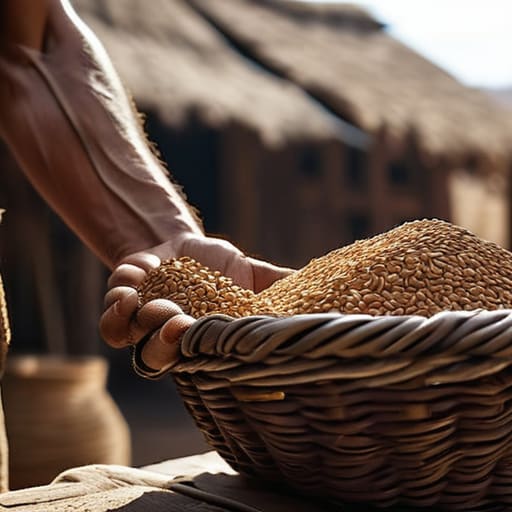
We often talk about barter as if it were a simple, almost poetic exchange—a farmer handing a basket of grain to a weaver in exchange for a cloak. But when I look closely at the records of early civilization resource management, that simplicity begins to fray. It wasn’t just a matter of convenience; it was a constant, exhausting negotiation of value. There is a profound tension in historical commodity exchange because, unlike a coin, a goat has a life, a temperament, and a finite lifespan. You couldn’t simply split a living animal into fractions to pay a debt, and that inherent lack of divisibility created a friction that most modern textbooks gloss over.
This friction often dictated the very shape of a community. In many agrarian societies and trade networks, the inability to easily move or divide wealth meant that survival was tethered to immediate, local needs. I’ve often thought that this is where we see the first real cracks in social stability. When you cannot easily store or transport your surplus, you become vulnerable to the seasons and the whims of your neighbors. It wasn’t just about trading goods; it was about the fragile trust required to believe that tomorrow’s harvest would still be worth the weight of today’s labor.
Where Agrarian Societies and Trade Ultimately Fail
I often think back to the quiet, desperate conversations I had in hospital wards—people realizing that no matter how hard they worked, the systems around them simply weren’t built to catch them when they fell. We see a similar, heartbreaking pattern when we look at the structural limits of agrarian societies and trade. There is a seductive myth in our history books that a surplus of grain or a steady supply of wool could sustain a civilization indefinitely. But a harvest is a fickle thing, and when the rains failed, the entire social fabric tended to fray at the edges.
The problem wasn’t just the lack of food; it was the rigid way resources were managed. As these communities grew, we see the heavy shadow of social stratification and wealth beginning to loom over the landscape. It wasn’t enough to simply produce; one had to possess the leverage to move what was produced. I suspect that the transition toward more complex, centralized control wasn’t always a sign of “progress,” but rather a frantic response to the inherent instability of relying solely on the soil and the seasonal whims of the earth.
The Illusion of Stability
We tend to look back at these ancient markets as if they were clockwork mechanisms, predictable and orderly, but when you sit with the records of their collapses, you realize they weren’t systems of logic so much as they were fragile webs of human desperation, held together by nothing more than the hope that tomorrow wouldn’t be hungrier than today.
Alasdair Renwick-Hale
The Limits of the Ledger
Looking back at these fractured systems, I find myself less interested in the sheer volume of grain traded and more struck by how precarious it all was. We have seen how the simple handshake of a barter system eventually buckles under its own complexity, and how even the most robust agrarian societies find themselves staring into the abyss when the rains fail or the trade routes shift. It isn’t just about math or the movement of goods; it is about the persistent vulnerability of human connection. When we strip away the modern gloss of digital transactions, we are left with the same old truth: our survival has always depended on a fragile web of trust that can be torn apart by a single season of misfortune.
Perhaps the lesson isn’t that these ancient economies were “primitive,” but rather that they were honest about their own limitations. They lacked the illusions of infinite growth that we cling to so desperately today. As I sit here with my notebooks, I am reminded that studying the past isn’t about finding a blueprint for success, but about learning to navigate the inevitable collapses. We cannot build systems that are immune to hardship, but we can strive to build communities that are resilient enough to endure the lean years together. There is a quiet, steady dignity in that kind of preparation.