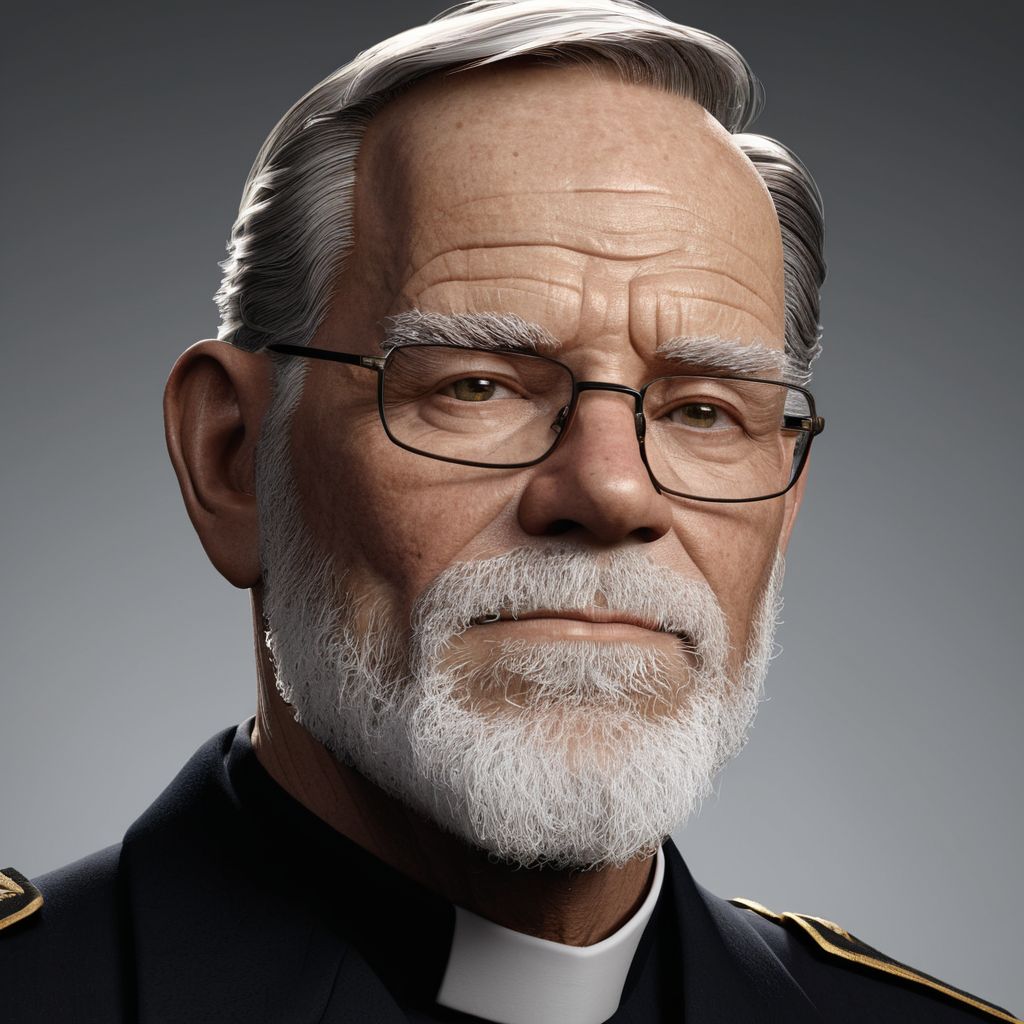
I remember sitting in a small, drafty chapel in the north of Scotland, watching a young vicar try to explain why a ritual that had clearly been invented in the 1970s was actually a “timeless inheritance from the early church.” There was a certain kind of polished, academic confidence in his voice that always made my skin crawl. We are constantly being sold these tidy little packages of history, told that our customs are unbroken threads, when in reality, we are often just looking at a patchwork of convenience. It is a peculiar sort of dishonesty, this way we find how traditions change while claiming continuity, as if admitting to a bit of evolution somehow makes the practice less sacred.
I have no interest in giving you a lecture on sociological theory or a sanitized history of liturgical shifts. Instead, I want to offer something a bit more uncomfortable and honest. I intend to look at the seams where the old ways have been pulled apart and stitched back together with modern thread. My aim is to share what I’ve gathered from decades of watching people cling to the familiar, even when the familiar has become a stranger, and to help you discern where the real roots lie amidst the imitation.
The Invention of Tradition Theory and Our Collective Amnesia
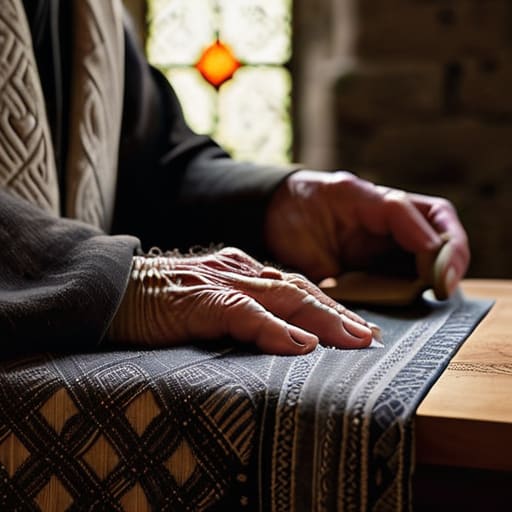
I remember a particular parish in the Highlands where the congregation spoke of their liturgy as if it had been handed down, untouched, from a time before the Great War. Yet, when I looked closer at the actual rhythms of their worship, I saw the seams everywhere. This is where the invention of tradition theory stops being an academic abstraction and starts being a lived reality. We have this peculiar, almost desperate need to believe that the things we do today are echoes of something ancient, even when we are actually just reinterpreting cultural practices to suit our modern anxieties.
It isn’t necessarily a conscious lie, which is perhaps the most unsettling part. It is more of a collective amnesia—a quiet agreement to forget the moments where we pivoted, adapted, or simply gave up on the old way because it no longer served us. We mistake the perceived continuity of a ritual for its historical truth. In my years in the hospital, I saw this often: families clinging to certain mourning customs that felt hollow, yet they insisted they were “the way it has always been.” We use the past as an anchor, even when we’ve already cut the rope.
Perceived vs Actual Tradition the Gap Where Truth Dissolves
I remember sitting in a small parish chapel in the Highlands, watching an elderly woman meticulously arrange flowers for a service that, on paper, followed a liturgy unchanged for centuries. But as I watched her, I realized she wasn’t following a manual; she was performing a private, lived ritual that had drifted far from the Latin texts. This is the crux of the perceived vs actual tradition divide. We tend to treat heritage as a solid, unchanging object, like a stone monument, when it is actually more like a river. We name the river, we map its banks, and we claim it has always been there, but the water passing under our feet is never the same twice.
The gap between what we claim to inherit and what we actually practice is where the social construct of heritage begins to operate. We often mistake the scaffolding for the building itself. We cling to the outward gestures—the specific way a collar is worn or the cadence of a formal greeting—because they provide a sense of anchored identity. However, these are often just the modern shells of much older, more fluid processes. In truth, what we call “tradition” is frequently just a reinterpretation of cultural practices that has been smoothed over by time until the jagged edges of its original change are no longer visible to the naked eye.
The Comfort of the Lie
We tend to treat tradition like an ancient, weathered oak, forgetting that most of what we call ‘roots’ are actually just clever grafts, applied years later to make the new growth feel like it has always been there.
Alasdair Renwick-Hale
The Weight of What Remains
We must eventually face the uncomfortable truth that most of what we call “ancient” is actually a patchwork of recent repairs and well-intentioned revisions. We have seen how the theory of invented tradition reveals our tendency toward collective amnesia, and how the gap between what we claim is old and what is actually being practiced can become a vast, hollow space. To pretend otherwise isn’t just inaccurate; it’s a form of intellectual dishonesty that prevents us from seeing the world as it truly is. When we stop pretending the line is unbroken, we can finally begin to see the actual stitches that hold our communities together.
Perhaps there is a certain grace in admitting that we are constantly reinventing ourselves. I have found, in the quiet corners of hospital rooms and the dusty pages of old manuscripts, that the value of a custom lies not in its age, but in its ability to hold us steady in the present. We don’t need a perfect, unblemished lineage to find meaning. Instead, let us find courage in the honest continuity of our efforts—the way we take the fragments of what came before and try, however clumsily, to build something that might actually sustain us. It is not the antiquity of the ritual that matters, but the sincerity of the hands performing it.