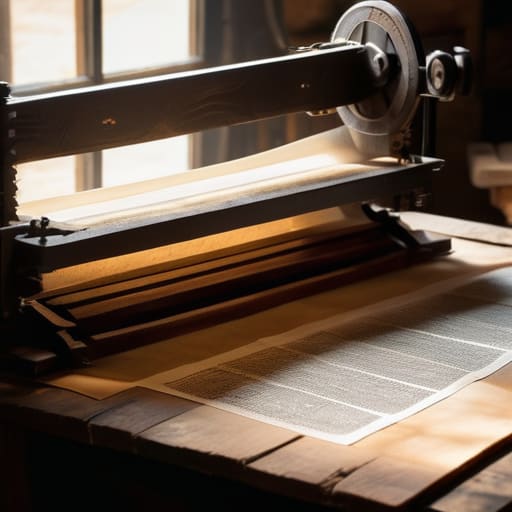
We are often told a tidy, almost celebratory story about how the invention of the movable type machine democratized the world, as if the mere existence of more books somehow automatically cured ignorance. It is a comfortable myth, the kind of polished narrative that historians love because it lacks friction. But when we look closely at the actual mechanics of history, the relationship between the printing press and access was never a straight line from darkness to light. It was a jagged, uneven struggle, where new gates were opened only to have more sophisticated locks installed by those who already held the keys.
I have no interest in repeating those grand, sweeping slogans that ignore the messy reality of how information actually moves through a community. Instead, I want to look at what was actually gained and, more importantly, what was left behind in the rush toward literacy. My aim here is to offer you an honest accounting of that transition—not as a series of inevitable triumphs, but as a complicated shift in power that we are still trying to navigate today.
The Gutenberg Revolution and the Myth of Instant Understanding
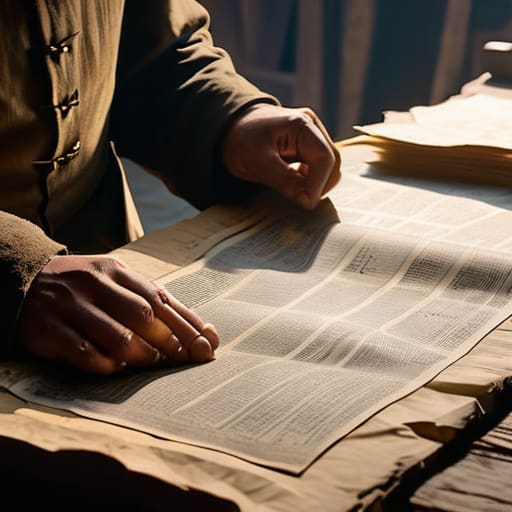
We often speak of the Gutenberg revolution as if it were a sudden, clean break from a dark age, a moment where the lights were switched on all at once. It is a tidy narrative, the kind that fits well in a textbook, but it misses the friction of the actual transition. While the mass production of books certainly broke the monopoly held by the scriptoria, it didn’t immediately grant everyone a seat at the table of intellect. Instead, it created a strange, new kind of distance. We see the democratization of knowledge history through the lens of progress, yet for the person standing in a village square in 1480, the sudden influx of ink and paper was less a bridge to enlightenment and more a cacophony of competing voices that they weren’t yet equipped to decipher.
The reality of the impact of movable type on education was far more uneven than the slogans suggest. Literacy didn’t just happen because the pages became more plentiful; it required a slow, often painful cultivation of new habits of mind. We tend to mistake the availability of a thing for the ability to use it. I think of it like a hospital receiving a shipment of advanced medical texts while the staff is still learning the basics of triage—the tools are there, but the understanding remains a slow, heavy climb.
Where Mass Production of Books Met the Limits of Literacy
We often fall into the trap of assuming that because a tool exists, the capacity to use it follows immediately behind. We speak of the democratization of knowledge history as if it were a dam breaking, but the reality was much more of a slow, muddy seep. Even as the mass production of books began to drive down costs, the ability to actually parse a page remained a guarded privilege. A book sitting on a shelf in a village square is a very different thing from a mind capable of engaging with its arguments.
I often think of the gap between having a text and truly possessing it. While the impact of movable type on education was profound in the long arc of centuries, the immediate effect was often a widening of the divide between the lettered and the unlettered. We see the rise of new ideas, yes, but we also see the frustration of those who could hear the news read aloud in the street but could not grasp the syntax for themselves. It was a period of profound noise, where the sheer volume of available print often outpaced the human ability to make sense of it all.
The Gap Between the Page and the Person
We often mistake the availability of a text for the arrival of an idea, forgetting that a book sitting on a shelf in a village square is no more a revolution than a closed door if there is no one with the tools, the time, or the quietude to truly inhabit its words.
Alasdair Renwick-Hale
The Weight of the Word
In looking back, we see that the printing press did not simply hand us the keys to a kingdom of shared knowledge; it merely changed the shape of the lock. We have seen how the sudden abundance of text often outpaced the human capacity to digest it, and how the gap between having a book and truly understanding its contents remained a wide, treacherous canyon for many centuries. To believe that more pages automatically lead to more wisdom is a comforting fiction, one that ignores the messy reality of how information actually settles in a human soul. We must acknowledge that while the machine could replicate the ink, it could never automate the slow, arduous labor of comprehension.
Perhaps the lesson for us today, as we navigate our own deluge of digital noise, is to stop measuring progress by the speed of transmission. I have spent many hours in the quiet of my workshop, binding pages that have survived much longer than the fleeting trends of any era, and I am reminded that truth requires a certain kind of stillness. Access is a tool, not a destination. If we are to find meaning in the vast libraries of our modern age, we must commit to the patient, deliberate work of reading—not just to consume, but to be changed. We must learn to value the depth of the well more than the width of the river.