
I remember sitting in a cramped, sun-drenched kitchen in a small intentional community outside of Bristol, watching a group of toddlers navigate a shared meal. There was no polished “educational curriculum” in sight—only the chaotic, beautiful, and occasionally exhausting reality of spilled milk and the sudden, piercing wail of a child who simply wanted to be held by someone other than their mother. We often talk about the lofty ideals of raising children in communal life as if it were a seamless tapestry of shared wisdom, but we rarely discuss the sheer, bone-deep fatigue that comes when the “village” is tired, hungry, and losing its patience.
I have no interest in selling you a glossy brochure of utopian living. Instead, I want to look at the actual scaffolding that holds these arrangements together—and more importantly, where that scaffolding tends to buckle. Over the coming pages, I intend to offer an honest account of what it actually looks like to integrate children in communal life, moving past the slogans to examine the quiet friction and the profound, unscripted rewards that only reveal themselves when the novelty has long since worn off.
Where Social Development in Shared Spaces Meets Real Friction
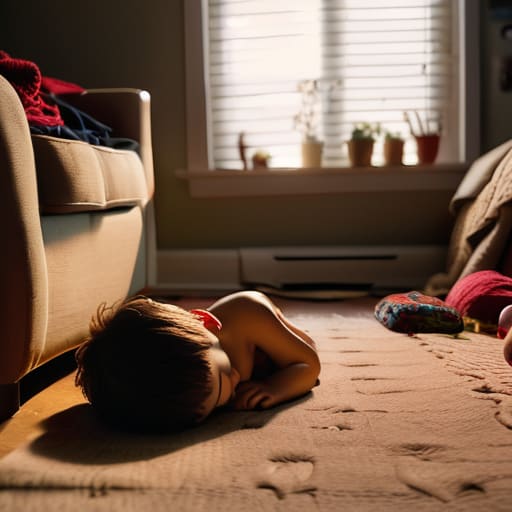
There is a particular kind of exhaustion that comes from the constant, low-frequency hum of other people’s lives. In my years visiting various intentional communities, I’ve noticed that the very thing that makes these spaces beautiful—the proximity—is also the primary source of friction. We often talk about the benefits of social development in shared spaces, imagining a seamless tapestry of mentorship and play. But in the quiet, difficult moments, that tapestry can feel more like a tangle. I have sat in living rooms where the idealism of collective childcare models met the blunt reality of a toddler’s midnight tantrum, echoing through walls that were never quite thick enough to provide the sanctuary a tired parent requires.
It isn’t just about the volume, though managing noise in intentional communities is a practical hurdle that can fray even the most patient nerves. It is deeper than that. It is the subtle, often unvoiced tension when one family’s rhythm clashes with another’s. We want to believe that shared living naturally breeds empathy, yet I have seen how easily the friction of proximity can turn a communal dream into a series of small, simmering resentments.
The Heavy Weight of Collective Childcare Models
There is a certain kind of exhaustion that comes with the idealism of collective childcare models. I remember sitting in a small community hall years ago, listening to a group of young parents discuss the logistics of shared shifts, their eyes bright with the hope of finally escaping the isolation of the nuclear family. But as the months turned into years, the conversation inevitably shifted from the beauty of shared labor to the unrelenting friction of differing parenting philosophies. When you move from a private home to a shared one, you aren’t just sharing a kitchen or a garden; you are sharing your very definition of discipline and boundaries.
The weight of this responsibility often settles most heavily on those who try to bridge the gap between individual needs and the group’s rhythm. I have seen how difficult it becomes to maintain a sense of peace when managing noise in intentional communities, where a toddler’s tantrum isn’t just a private family moment, but a communal event that demands a response. It isn’t that these models fail; it’s that they require a level of emotional stamina that we rarely account for in our initial, hopeful blueprints.
The Quiet Cost of the Collective
We often speak of community as if it were a seamless garment, but for a child, it is more like a crowded room; there is a profound beauty in the shared laughter, yet one cannot ignore the subtle, exhausting necessity of constantly negotiating one’s own small space against the tide of everyone else.
Alasdair Renwick-Hale
The Quiet Middle Ground
We have looked at the friction of constant proximity and the sheer, bone-deep exhaustion that comes with trying to distribute the labor of raising a human being. It would be easy to walk away from this topic with a neat verdict—either a rejection of the collective or a blind embrace of the utopia. But my years in the hospital taught me that life rarely offers such clean exits. The reality of communal living for children is found in the messy, unscripted space between idealistic structure and the inevitable breakdown of individual boundaries. We cannot ignore the weight of the responsibility, nor can we pretend that the social richness these children gain isn’t worth the struggle.
Perhaps the goal isn’t to find a perfect system that eliminates the friction, but to build communities that are brave enough to be imperfect. If we stop chasing the slogan of the “seamless village” and instead prepare for the reality of the tired parent and the loud child, we might actually create something lasting. It isn’t about achieving a flawless collective; it is about the grace we extend to one another when the communal model inevitably falters. In that small, difficult gap between our intentions and our actions, is where true community actually begins to breathe.