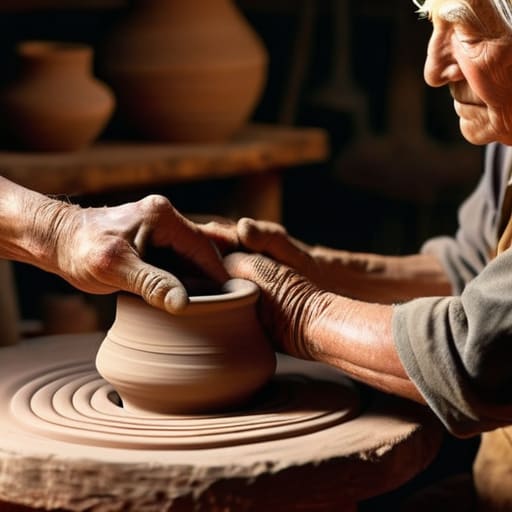
I remember sitting in a cramped, sterile hospital room at three in the morning, holding the hand of a man who had lost everything but his dignity. He didn’t want a lecture on cultural heritage or a sermon on the sociological benefits of ritual; he simply wanted to know why the small, familiar ways we mark our lives still mattered when the world felt so hollow. We often talk about the role of tradition as if it were some grand, architectural blueprint for a stable society, but in the quiet, dark hours of human suffering, that definition feels utterly hollow. It isn’t about preserving dusty museum pieces or performing empty gestures to satisfy an ancestral ghost.
I am not here to sell you on the romanticized idea that the past is a perfect compass. Instead, I want to look at the grit and the bone of it—to discuss where these old ways actually offer us a hand to hold, and where they become nothing more than heavy, useless chains. I promise to share what I have gathered from decades of listening to people in their most broken moments: an honest account of when ritual heals and when it merely gets in the way.
Cultural Heritage Preservation and the Cost of Stagnation
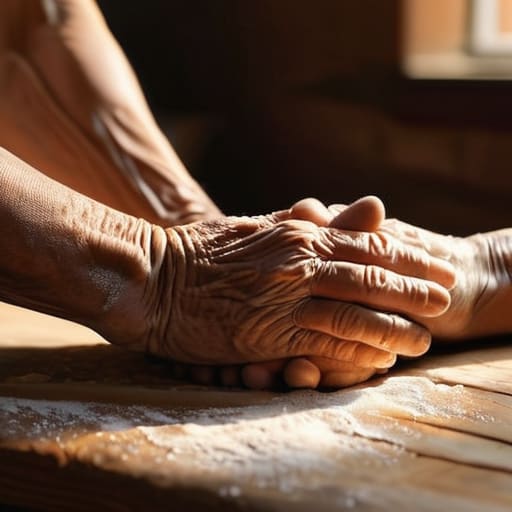
There is a particular kind of grief in watching a community lose its grip on the things that once anchored it. When we speak of cultural heritage preservation, we often frame it as a museum project—something to be dusted, catalogued, and kept behind glass. But real heritage isn’t a static object; it is the living, breathing pulse of how we relate to one another. I have seen, in the quiet corners of hospice wards and parish halls, how social cohesion through ritual provides a scaffolding for the soul. When those rituals vanish, we aren’t just losing “old ways”; we are losing the shared language that allows a stranger to become a neighbor.
However, there is a heavy price to pay when we mistake preservation for paralysis. There is a fine line between honoring a lineage and becoming a mausoleum. If we refuse to allow for the natural evolution of customs, we risk turning our most sacred practices into hollow shells—performances of a past that no longer speaks to the living. We must find a way to pass down the essence of our values without demanding that the next generation wear the exact same heavy, ill-fitting clothes we did. To truly honor what we inherit, we must allow it to breathe and change.
The Impact of Tradition on Identity and Personal Truths
I often think back to the bedside vigils I kept in the hospital—those quiet, liminal hours where the grand structures of life seemed to dissolve. In those moments, I noticed that people rarely reached for abstract philosophy; instead, they reached for the small, inherited ways of being. There is a profound impact of tradition on identity that we often overlook in our rush toward “authenticity.” We are told that to be true to ourselves, we must break every mold, yet I have seen that many find their footing only when they lean into the shapes their ancestors left behind.
It isn’t that these old ways are inherently correct, but they offer a scaffold. When we engage in the intergenerational knowledge transfer of a family recipe or a specific way of mourning, we aren’t just performing a task; we are locating ourselves in time. We are saying, “I am part of a sequence.” Of course, the danger lies in using these customs as a shield against growth, but when used rightly, they provide a sense of continuity that prevents the self from drifting into a lonely, formless void.
The Anchor and the Chain
Tradition is rarely the grand, sweeping river of history we imagine it to be; more often, it is the quiet, stubborn habit of a people trying to remain recognizable to themselves in a world that refuses to stand still. It can be an anchor that keeps us from drifting into the void, but we must be careful to know when that same anchor has become a chain, tethering us to a version of ourselves that no longer exists.
Alasdair Renwick-Hale
The Living Thread
We have wandered through the tension between the comfort of the old ways and the suffocating weight of stagnation. We’ve seen how tradition can act as both a scaffold for our identity and a cage that prevents us from seeing the truth of our own changing lives. It is not a simple matter of choosing between progress and preservation; rather, it is about recognizing that our rituals are often just clumsy attempts to hold onto meaning in a world that is constantly slipping through our fingers. We must acknowledge that while some customs offer us a necessary anchor, others are merely ghosts of a past that no longer serves the living.
In my years sitting by hospital bedsides, I learned that people rarely find peace in perfect doctrines, but they often find it in the small, shared rhythms of a community. Tradition, when it works, is not a museum piece to be polished and stared at, but a living, breathing conversation between those who came before us and those who will follow. It is an invitation to participate in something larger than our own brief anxieties. So, let us hold onto the things that ground us, but let us also have the courage to let go of what has become hollow, making room for a faith and a fellowship that can actually withstand the coming winter.