I remember sitting in a cramped, sterile consultation room during my final year as a chaplain, listening to a man try to explain why his entire sense of self had vanished alongside the closure of the local mill. He wasn’t looking for a sociological lecture on how memory and community identity function as structural pillars; he was mourning a ghost. We often treat our shared history as if it were something we can archive in a museum or preserve in a tidy textbook, but I’ve learned that a community’s soul isn’t found in its monuments. It lives in the unspoken rhythms of how we recognize one another, and it is far more precarious than any historian would care to admit.
I have no interest in offering you polished theories or the kind of grand, sweeping narratives that pretend everything is interconnected and harmonious. Instead, I want to look at the cracks. I promise to share what I’ve gathered from decades of sitting in the quiet spaces where stories fail us, offering an honest account of how we actually hold onto each other when the shared ground begins to shift.
Where Collective Memory and Social Cohesion Fail
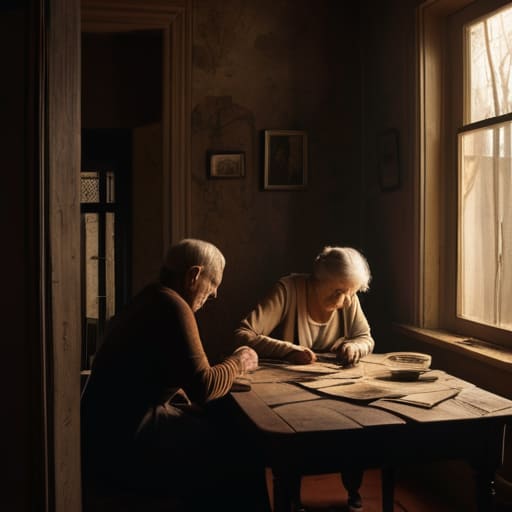
There is a particular kind of silence that settles over a room when people realize they no longer share the same foundation. In my years in the hospital, I saw it often—not in the grand political sense, but in the quiet fracturing of families who could no longer agree on what their shared past actually meant. We like to think that shared historical narratives act as a sturdy floor beneath our feet, but they can just as easily become a ceiling that keeps us from seeing one another. When the stories we tell ourselves to feel whole begin to diverge, the cohesion we thought was permanent starts to feel like a thin veneer.
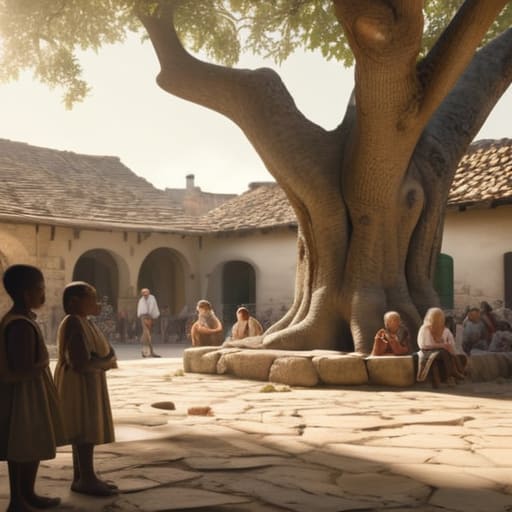
The failure usually happens when we mistake a monument for a living thing. We try to freeze our history in place, treating cultural heritage preservation as if it were a matter of polishing old brass rather than tending to a garden. But memory isn’t a static archive; it’s a process of constant, often painful, negotiation. When we stop allowing for the messiness of new perspectives, we don’t actually preserve our identity—we merely stifle the very breath that keeps a community alive.
The Fragility of Shared Historical Narratives
I often think of our shared historical narratives not as solid stone foundations, but as something more akin to the silk threads I use in my bookbinding—strong enough to hold a volume together, yet prone to snapping if pulled too tight. We tend to speak of these stories as if they are immutable truths handed down through the ages, but in my time sitting by hospital bedsides, I’ve seen how quickly a person’s sense of self can fracture when the stories they relied upon no longer ring true. When the version of the past we tell ourselves begins to clash with the lived reality of our neighbors, the very concept of intergenerational knowledge transfer becomes a source of friction rather than a bridge.
It is a delicate thing, trying to balance the need for a unified story with the messy, often contradictory truths of individual experience. We strive for a certain kind of stability through communal storytelling traditions, hoping they will anchor us, yet we often find that these narratives are more easily broken than we care to admit. When a community realizes its “truth” was merely a convenient simplification, the resulting disorientation can be profound. We are left wondering if we are actually building something lasting, or if we are merely stitching together a beautiful, but ultimately hollow, facade.
The Weight of What We Choose to Forget
“We often mistake a shared history for a shared identity, but a community isn’t built on the polished statues we erect to our past; it is built in the quiet, uncomfortable spaces where we acknowledge the parts of our story that don’t quite fit the legend.”
Alasdair Renwick-Hale
The Quiet Work of Remembering
We have spent these pages tracing the cracks in our shared histories, acknowledging that the stories we tell to bind ourselves together are often as much about what we choose to forget as what we choose to celebrate. I have seen how a community’s reliance on a single, polished narrative can become a brittle shield, one that shatters the moment a truth that doesn’t fit the pattern emerges. We must accept that our collective memory is not a grand, immutable monument, but rather a living, breathing, and deeply flawed process. To build something lasting, we cannot rely on the easy comfort of slogans; we must be willing to sit with the discomfort of our own contradictions and the gaps where our history has failed us.
Perhaps the hope lies not in finding a perfect story that satisfies everyone, but in our willingness to keep listening to the voices that fall through the seams. Community is not found in the strength of a seamless myth, but in the courage to remain present even when the shared narrative begins to fray. It is in the messy, unhurried work of acknowledging one another’s grief and nuance that we find a truer kind of belonging. We may never weave a tapestry that is without flaws, but there is a profound, quiet dignity in continuing to mend the threads, however small, as we move forward together.