
I remember sitting in a drafty parish hall years ago, watching a man struggle with a high-end digital projector while a group of guests stood awkwardly by a lukewarm buffet, staring at their shoes. He had spent a small fortune on the optics of hospitality, yet he had completely missed the quiet, human friction of the room. We have been sold this lie that successful hosting is a matter of logistical perfection or expensive catering, but I’ve found that planning gatherings people attend is rarely about the equipment or the menu. It is actually about the invisible architecture of comfort—the way a room breathes and whether a person feels they have permission to actually be there.
I am not going to offer you a checklist of party tricks or a guide to becoming the most polished host on your street. Instead, I want to share what I have gathered from decades of watching people come together—and more importantly, watching them pull away. I will offer you an honest account of the small, unglamorous realities that make a difference, focusing on the substance of connection rather than the performance of it.
The Illusion of Maximizing Event Turnout
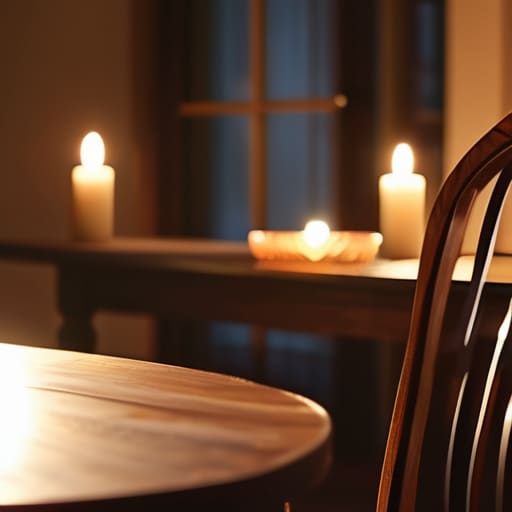
We are often sold the idea that a successful gathering is a mathematical problem to be solved, a matter of maximizing event turnout through sheer force of will and cleverness. I see it in the frantic way people approach their calendars, treating a dinner party or a community meeting like a campaign to be won. There is a pervasive, quiet anxiety in the pursuit of the “full house,” as if a single empty chair is a personal indictment of one’s character or social standing.
But I have learned, often through the quiet observation of empty rooms, that a crowd is not a substitute for a community. You can employ every modern trick of guest list management strategies—the automated reminders, the polite follow-ups, the digital nudges—and still find yourself presiding over a room of strangers who are only there because they felt they had to be. We mistake presence for participation. I have found that the quality of the silence between people matters far more than the number of bodies occupying the space, and chasing a headcount often costs us the very intimacy we claim to be cultivating.
Where Guest List Management Strategies Often Fail
We often fall into the trap of treating a gathering like a logistical puzzle to be solved, obsessing over guest list management strategies that look wonderful on a spreadsheet but fail the moment the first person arrives. I have spent many evenings watching hosts hover over their phones, frantically checking event RSVP tracking methods as if a digital confirmation could somehow guarantee the presence of a soul. They mistake a high headcount for a successful evening, forgetting that a room full of bodies is not the same thing as a room full of people.
The failure usually lies in the distance between the invitation and the actual human impulse to show up. We spend so much energy on the mechanics of maximizing event turnout that we neglect the quiet, underlying reason anyone attends: the desire to be truly seen and heard. When we treat coordination as a series of checkboxes, we inadvertently signal to our friends that the event is a performance to be managed rather than a space to be shared. True connection cannot be engineered through efficiency.
The Arithmetic of Presence
We often mistake a full room for a successful one, forgetting that a gathering isn’t a census to be taken, but a delicate ecosystem of souls; it is far better to sit in a quiet room with three people who are truly present than to host a crowded hall where everyone is merely performing the role of a guest.
Alasdair Renwick-Hale
The Quiet Weight of Showing Up
We often approach the logistics of a gathering as if we were engineers attempting to solve a problem of efficiency. We obsess over the headcount, the timing, and the strategic distribution of invitations, hoping to manufacture a certain kind of energy. But as I have learned over many years of sitting in quiet rooms, a successful gathering isn’t found in the absence of friction or the perfection of a guest list. It is found in the realization that people do not attend events to be managed; they attend to be seen. When we stop trying to optimize for turnout and start planning for genuine presence, we stop treating our friends like statistics and start treating them like neighbors.
In the end, the most meaningful assemblies are often the ones that feel a little bit frayed at the edges. There will be awkward silences, a guest who arrives late, or a conversation that wanders into uncomfortable territory. Do not fear these things. It is in those very gaps—the spaces where our careful plans inevitably fail—that the real work of community begins. If you can provide a space that is hospitable enough to allow for imperfection, you will find that people don’t just show up; they stay. We aren’t building monuments; we are simply building rooms where we can all sit together for a while.