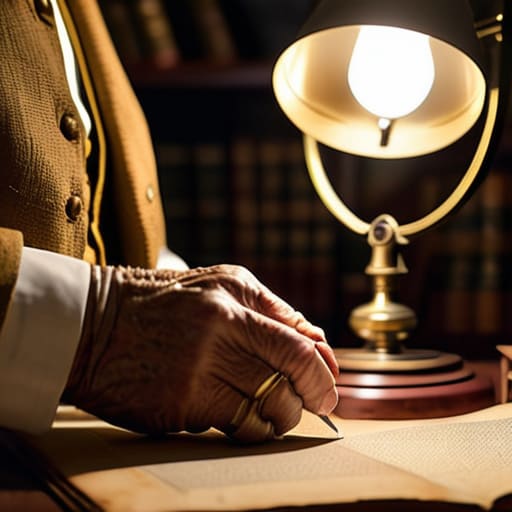
I remember sitting in the hospital chapel during a particularly heavy winter, watching the light fail against the stained glass, and thinking about how much we crave certainty. We want our history to be a series of solid, indisputable facts that tell us exactly who we are and why we are right. But I’ve found that reading historical sources carefully is rarely about finding those clean, comforting answers. In my years of chaplaincy and my even longer obsession with old texts, I’ve learned that the most profound truths usually live in the gaps—in the places where the author’s confidence falters or where the ink begins to fade.
I’m not here to give you a checklist of academic rigors or a lecture on methodology that sounds like it was pulled from a dusty syllabus. Instead, I want to share what I’ve gathered from a lifetime of looking at the cracks in the narrative. I will offer you an honest account of how to approach these old voices, not as a way to win arguments, but as a practice of humility. We will look at where the evidence ends and where the human struggle truly begins.
Evaluating Archival Documents Beyond Their Surface Claims
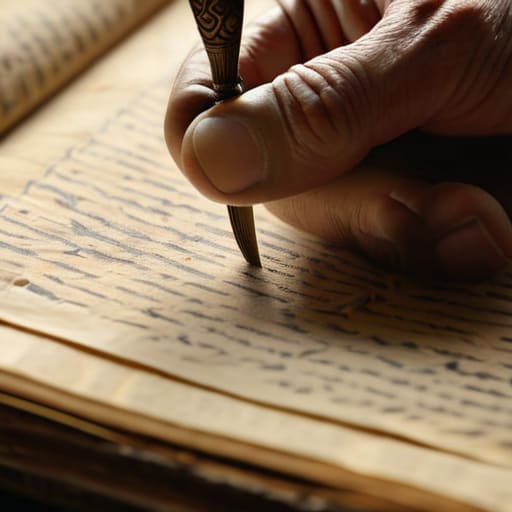
When I was working in the hospital, I learned that the most important thing a person can say is often found in what they cannot bring themselves to articulate. The same is true when you are evaluating archival documents. A ledger, a diary, or a royal decree might present a polished, undeniable truth on its surface, but I have learned to look for the seams—the places where the ink feels a bit too heavy or the sentiment feels a bit too rehearsed. It isn’t enough to simply acknowledge the difference between primary vs secondary sources; one must approach the original document with a certain kind of suspicion, not out of cynicism, but out of respect for the complexity of the human condition.
Often, what we mistake for objective fact is actually a carefully constructed performance. Whether you are detecting historical propaganda or merely observing the biases of a tired clerk, you have to ask: who was this meant to convince? If we treat every scrap of parchment as a direct window into the past, we fall into the trap of believing the very illusions the authors intended to create. True historical methodology requires us to sit with the silence between the lines.
Detecting Historical Propaganda and the Echoes of Bias
There is a particular kind of vertigo that sets in when you realize a document isn’t just a record, but a weapon. In my years studying the early church, I’ve found that many of the most influential accounts were written not to inform, but to persuade or even to silence. When we talk about detecting historical propaganda, we aren’t just looking for lies; we are looking for the shape of the silence left behind. It is the missing perspective, the omitted victim, or the way an author uses a specific adjective to turn a complex human struggle into a simple moral victory.
This requires a certain kind of patience that modern scholarship sometimes lacks. It isn’t enough to simply categorize primary vs secondary sources and move on. One must sit with the text and ask: Who was this meant to satisfy? I have often found that the most telling evidence isn’t in what the scribe shouted from the rooftops, but in the subtle, practiced ways they steered the reader away from the messy, uncomfortable truths of the era. We must learn to listen for the echoes of that bias, for they tell us as much about the past as the facts themselves.
The Weight of the Unspoken
I have found that the most profound truths in a text rarely live in the bolded declarations or the polished certainties; they are usually found in the quiet, trembling spaces where the author’s confidence begins to fray at the edges.
Alasdair Renwick-Hale
The Quiet Work of Staying Present
In the end, what we have discussed isn’t a checklist for debunking old lies, but rather a way of approaching the past with a certain kind of necessary hesitation. We have looked at how to peel back the layers of archival claims and how to recognize the heavy, often invisible hand of propaganda that shapes even our most cherished narratives. It is easy to walk away from a text feeling like we have conquered it, but the real work lies in acknowledging the gaps—the silences where the marginalized were never allowed to speak and the moments where an author’s certainty begins to fracture. We must learn to hold these documents not as absolute truths, but as fragile, human attempts to make sense of a world that was often as confusing to them as it is to us.
I often find myself returning to my bookbinding bench when the weight of these historical uncertainties feels particularly heavy. There is something grounding about the tactile reality of leather and thread, a reminder that even the most profound ideas require a sturdy vessel to survive. As you move forward with your own reading, I hope you don’t seek the comfort of a tidy conclusion. Instead, I hope you find a strange sort of peace in the unresolved questions. To read carefully is to accept that we may never fully grasp the whole story, and there is a profound, quiet dignity in simply refusing to settle for the easy answer.