
I remember sitting in a cramped hospital room during a Tuesday night shift, listening to a man who had spent his entire life building empires of certainty, only to find that none of it mattered when his breath grew shallow. He wasn’t looking for a lecture on virtue; he was looking for a way to exist in the space where he no longer held the answers. We tend to treat humility in everyday decisions as if it were some polished, spiritual achievement—a shiny badge of character we wear to prove how “centered” we are. But after thirty years of watching people face the raw edges of life, I’ve learned that true humility isn’t a performance. It is much more uncomfortable than that.
I have no interest in offering you a roadmap to perfection or a list of slogans to recite when things go wrong. Instead, I want to talk about the messy, quiet reality of admitting when we are wrong, when we are tired, or when we simply do not know the way forward. What follows is an account of what happens when we stop trying to outrun our own limitations and start practicing humility in everyday decisions as a form of honest survival.
Overcoming Ego in Decision Making When the Stakes Rise
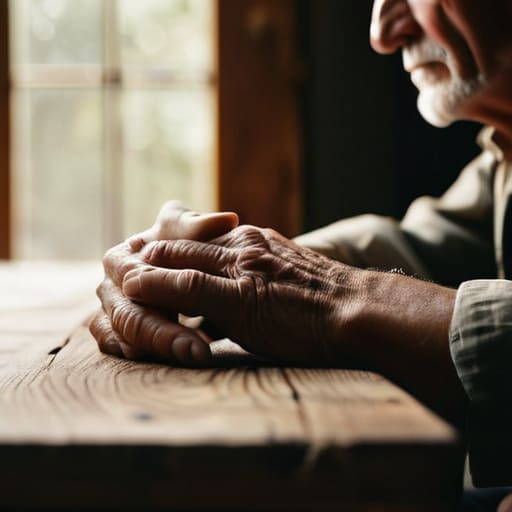
It is easy to remain steady when the choices are trivial—what to eat, which book to pick up, which route to walk. But I have seen how quickly a person’s posture changes when the stakes climb. In the hospital, when a family faced a life-altering medical crossroads, I noticed that the most devastating errors didn’t come from malice, but from a desperate need to feel in control. We often mistake certainty for strength, yet overcoming ego in decision making is rarely about a grand act of will; it is more often a quiet, uncomfortable surrender to the fact that we might be wrong.
When the pressure mounts, our internal narrative tends to tighten. We begin to protect our image rather than seek the truth. I’ve found that the only way to counter this is through a deliberate mindful decision making process—one that involves pausing long enough to let the heat of the moment subside. It isn’t about being passive; it is about developing the emotional intelligence and self-awareness required to realize that our pride is often the very thing clouding our vision. We have to learn to sit with the tension of not knowing.
The Intellectual Humility Benefits of Admitting We Might Be Wrong
There is a particular kind of quietude that comes when you finally stop trying to win an argument in your own head. For years, I thought being “right” was a form of moral standing, but my time in the wards taught me otherwise. When a patient is facing the end, they don’t care about the cleverness of your logic; they care about the truth of your presence. This realization is the bedrock of intellectual humility benefits—the understanding that our minds are not closed loops, but porous things that require constant, sometimes uncomfortable, updating.
Admitting we might be wrong isn’t a surrender; it is a way of clearing the lens. When we lean into a mindful decision making process, we aren’t just being polite; we are actively reducing cognitive bias through humility by acknowledging that our perspective is inherently limited by our own history and biases. It takes a certain amount of courage to look at a cherished conviction and ask, “What if I’ve missed the point entirely?” It is in that gap, between what we think we know and what actually is, that the most honest living happens.
The Quiet Weight of Being Wrong
“I have found that the most dangerous moment in any life is not when we fail, but when we become so certain of our own righteousness that we stop listening to the very people we are trying to serve.”
Alasdair Renwick-Hale
The Quiet Practice of Staying Small
Looking back over these pages, it becomes clear that humility isn’t some lofty, theological concept to be mastered in a vacuum. It is found in the messy, unglamorous moments—the decision to pause when our ego wants to rush, the courage to admit a mistake when the stakes are high, and the willingness to hold our convictions with a loosened grip. We have seen that intellectual humility isn’t about being indecisive; it is about acknowledging that our perspective is, by its very nature, limited. When we stop trying to be the absolute architects of every outcome, we finally leave enough room for the truth to actually emerge.
I often think back to the hospital rooms where I spent my younger years. People rarely asked for grand philosophies in their darkest hours; they simply needed someone to sit in the uncertainty with them. In the same way, our daily decisions don’t require us to be infallible, only to be honest. If we can learn to approach our lives with a sense of gentle curiosity rather than a demand for certainty, we might find that the world becomes a much wider, more forgiving place. It is not about being less than we are, but about being brave enough to be wrong.