
I remember sitting in a small, dimly lit hospital room years ago, holding the hand of a man who had spent his entire life searching for meaning in the scriptures, only to find himself lost in the gaps between them. He wasn’t interested in the academic gymnastics of seeing various interpretive traditions compared in a textbook; he was interested in why the words felt so heavy and so empty all at once. We often treat these frameworks like polished tools in a kit, but in the quiet, difficult moments of a life, they can feel more like shattered glass.
I have no intention of offering you a tidy lecture or a way to “solve” the complexity of how we read our world. Instead, I want to walk through these different lenses with you, looking specifically at where they hold weight and, more importantly, where they begin to fail. My promise is to provide an honest account of what happens when we put these interpretive traditions compared side-by-side, focusing not on which one is “correct,” but on how they actually shape the way we endure the uncertainties of being human.
The Fragility of Qualitative Interpretive Paradigms
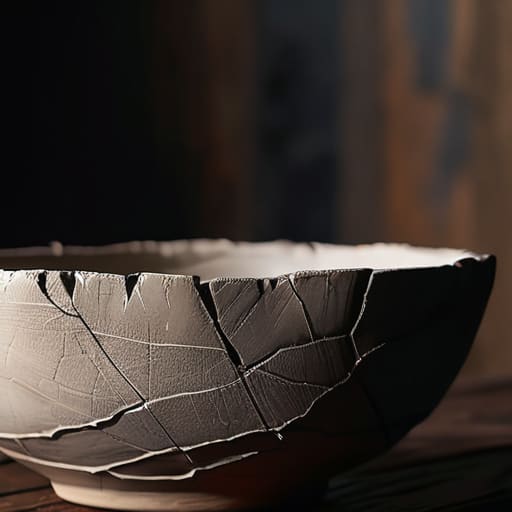
I have often found that when we lean too heavily into a specific set of qualitative interpretive paradigms, we risk mistaking our own tools for the landscape itself. In my years in the hospital, I saw how people clung to certain ways of seeing suffering—frameworks that promised a neat, logical shape to grief—only to find those shapes shattering when the reality of a person’s pain became too jagged. We tend to treat our methods like sturdy vessels, but they are more like thinly glazed pottery. They hold meaning for a time, but they are prone to cracking under the weight of actual, lived experience.
When we engage in a comparative methodology in interpretation, we aren’t just swapping one lens for another; we are acknowledging that every lens has a distortion. I’ve spent a great deal of time looking at how these philosophical approaches to meaning attempt to bridge the gap between the text and the soul, yet I always come back to the same quiet realization: there is a certain unbridgeable distance that no amount of rigorous study can fully close. We must be careful not to let our desire for a cohesive narrative blind us to the fractures.
Where Hermeneutic Frameworks Analysis Meets Reality
In my years in the hospital wards, I learned that a person’s grief rarely adheres to the neat lines of a textbook. You can spend a lifetime studying the evolution of interpretive theory, tracing how we have moved from rigid dogmas to more fluid understandings of truth, but that academic scaffolding often feels thin when you are sitting bedside. We attempt a hermeneutic frameworks analysis to make sense of the chaos, trying to categorize a life lived or a loss endured, but the human element has a way of leaking through the cracks of even our most sophisticated models.
There is a specific kind of friction that occurs when our philosophical approaches to meaning collide with the raw, unvarnished reality of a single moment. We use these tools to build a sense of order, yet I have found that the most profound insights often emerge not from the frameworks themselves, but from the moments where they fail us. It is in that gap—between what we expected to understand and what is actually happening—that the real work of listening begins.
The Weight of the Lens
We often mistake our frameworks for the truth itself, forgetting that a map is not the mountain, and a tradition is merely the particular way we have learned to endure the climb.
Alasdair Renwick-Hale
The View from the Threshold
We have spent some time tracing the lines where our various interpretive frameworks begin to fray. We have seen how the rigid structures of a paradigm, no matter how intellectually satisfying, often stumble when they encounter the messy, unscripted weight of a human life in crisis. Whether we are leaning on historical criticism or a more intuitive, phenomenological approach, we must acknowledge that no single map can capture the entirety of the terrain. To rely solely on one tradition is to risk mistaking the ink on the page for the ground beneath our feet; we must remain aware of the inherent fractures that exist between our theories and the lived reality they attempt to explain.
In my years sitting by hospital beds, I learned that the most profound truths rarely arrive in the form of a completed system or a tidy theological syllogism. Instead, they emerge in the quiet, uncomfortable spaces where our certainties fail us. I suspect that the goal of studying these traditions shouldn’t be to find the one “correct” way to see, but to cultivate a certain kind of humble attentiveness. If we can learn to sit with the ambiguity—to hold multiple, conflicting perspectives without rushing to collapse them into a single answer—we might find ourselves better equipped to walk alongside one another through the unmapped territories of our shared existence.