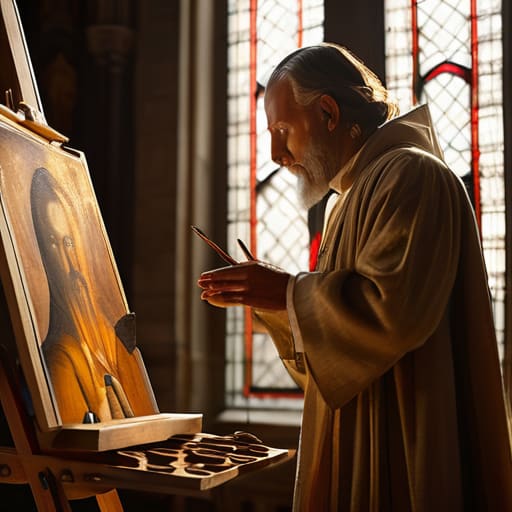
I remember sitting in a drafty stone chapel in the late eighties, watching a young conservator painstakingly clean a sixteenth-century altarpiece. He spoke of the “divine spark” ignited by the wealthy donors of the Renaissance, as if every gilded frame was a pure expression of celestial love. But as I watched the dust settle, I couldn’t help but think of the ledger books. We often romanticize the relationship between art and religious patronage, painting it as a seamless marriage of piety and pigment, but we rarely talk about the heavy, human cost of that arrangement. We forget that behind every saintly fresco was often a merchant trying to buy his way out of purgatory or a bishop asserting a very earthly kind of power.
I am not here to sell you on the grand, sweeping narratives found in glossy coffee-table books. Instead, I want to look at the messy, complicated reality of how money and spirit have collided throughout history. I promise to offer you an account of where these connections flourished and, more importantly, where they failed. We will explore the friction between the artist’s vision and the patron’s purse, seeking a truth that is far more interesting than any convenient myth.
Renaissance Religious Commissions Buying Ones Way to Grace
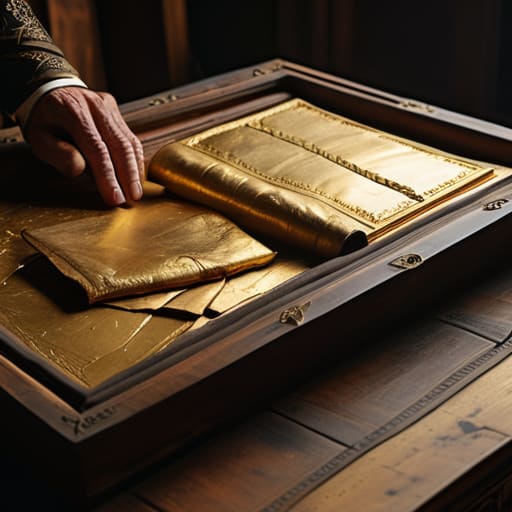
There is a particular kind of tension that arises when you look closely at a Renaissance altarpiece. On one hand, you see the sublime—the attempt to touch the hem of the divine through pigment and gold leaf. On the other, you see the ledger. I often find myself thinking about the sheer pragmatism behind these renaissance religious commissions. It wasn’t merely about beauty; it was a complex transaction of the soul. A merchant or a nobleman wouldn’t just commission a painting to decorate a chapel; they were often attempting to settle a spiritual debt, using their earthly wealth to secure a foothold in the next life.
This was the engine of the era: a sophisticated system of devotional art and donors where the line between piety and vanity became beautifully, and sometimes terribly, blurred. I’ve spent many afternoons turning the pages of old manuscripts, wondering if the artist felt the weight of that duality. Was the painter capturing the essence of a saint, or were they merely fulfilling the contractual obligations of a man trying to buy his way into heaven? It reminds me that even the most sacred objects often carry the heavy, human scent of ambition.
The Fragile Balance of Devotional Art and Donors
There is a particular tension that exists when a prayer is translated into pigment and gold leaf. I have often wondered about the quiet friction between the artist’s intent and the benefactor’s ego. In the complex web of sacred art patronage systems, the donor is rarely just a silent provider; they are often a co-author of the vision. When a merchant family commissions a triptych, they aren’t merely asking for a window into the divine—they are often asking for their own likeness to be woven into the very fabric of the sacred.
This creates a delicate, sometimes suffocating, environment for the creator. You can see it in the way certain figures are positioned, slightly too large or perhaps a bit too well-dressed for the biblical era. While devotional art and donors are inextricably linked, the relationship is rarely one of pure piety. It is a negotiation. One must ask: at what point does the act of giving cease to be a gesture of humility and instead become a calculated attempt to anchor one’s legacy in the eternal? It is a question of whether the art serves the heavens, or merely the hands that paid for it.
The Weight of the Gilded Altar
I often wonder if the saints in those great, gilded altarpieces feel the weight of the gold leaf, or if they are simply suffocated by the sheer cost of being seen by God. We call it patronage, but sometimes it feels more like a transaction where the soul is the currency and the beauty is merely the receipt.
Alasdair Renwick-Hale
The Weight of the Gilded Frame
Looking back at these centuries of commissioned beauty, I find myself caught between two truths. We cannot deny that the heavy hand of the patron often dictated the very shape of the sacred; the donor’s purse frequently decided which saint looked most like their own lineage and which theological nuance was too expensive to explore. Yet, to dismiss these works as mere transactions of vanity would be a mistake. Beneath the layers of gold leaf and the subtle pressures of political piety, there exists a persistent, human yearning to touch the divine through the tangible. The tension between the money that fueled the brush and the spirit that guided it is not a flaw in the history of art, but rather its most honest characteristic.
As I sit here with my notebooks, I wonder if we have lost something in our modern era of total creative autonomy. We prize the “pure” artist, yet we forget that even the most solitary soul requires a community—and sometimes a benefactor—to bring their vision into the light. Perhaps the lesson isn’t to avoid the influence of the world, but to navigate it with a certain kind of grace. We should look at these old masterpieces not as finished products of perfect devotion, but as beautifully flawed attempts to bridge the gap between the earthly and the eternal. In the end, it is the struggle to create something meaningful within the constraints of our own messy, material lives that truly captures the soul.