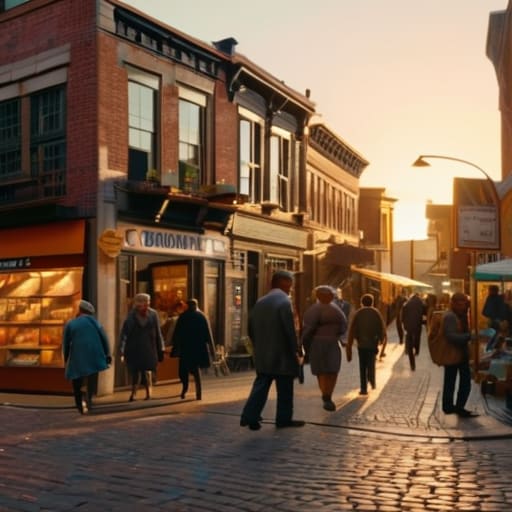
I remember sitting in a drafty parish hall three years ago, listening to a local councillor speak with such polished, academic certainty about the “inevitable benefits” of migration and changing communities. He spoke of demographic shifts and economic integration as if they were mere equations to be solved on a chalkboard. But across the room, I saw the faces of people who weren’t interested in his spreadsheets; I saw the quiet, hollowed-out exhaustion of a man who had lived in the same street for sixty years and no longer recognized the sounds coming from the shop next door, and the trembling hands of a mother who had arrived with nothing but a suitcase and a terrifying sense of displacement.
I have no interest in providing you with those tidy, comfortable statistics that serve only to soothe the conscience of the well-intentioned. Instead, I want to offer something a bit more uncomfortable and honest. In the pages that follow, I intend to look past the political slogans to examine the actual, lived friction of people trying to find footing in new soil. I will share what I have learned from decades of sitting in the quiet spaces between people, offering a record of where our grand theories on community succeed, and more importantly, where they utterly fail.
Beyond the Slogans the Real Sociocultural Impact of Migration
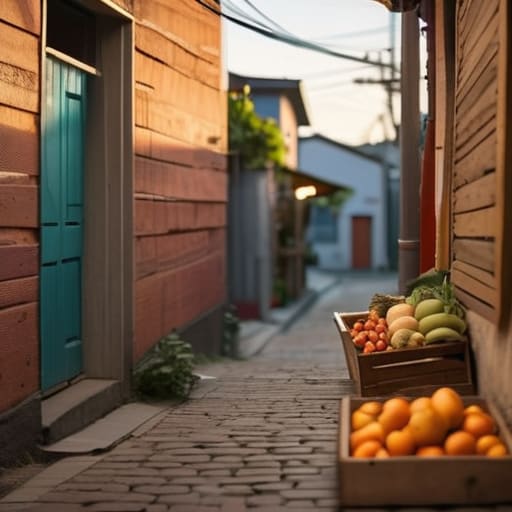
When we speak of the sociocultural impact of migration in our newsrooms or lecture halls, we tend to use language that feels clinical, almost sterile. We talk about urban demographic shifts as if we were describing the movement of tectonic plates rather than the arrival of a family in a rented flat on a Tuesday evening. But the reality is found in the small, friction-filled moments: the way a local grocery store slowly changes its inventory, or the hesitant, polite nods exchanged between neighbors who share a street but no common language.
I have found that true social cohesion in diverse neighborhoods isn’t something that can be engineered by a policy paper or a government mandate. It is a slow, often messy process of learning to inhabit the same space without the comfort of total familiarity. There is a certain quiet exhaustion that comes with this transition—for those arriving and those who have lived in the same postcode for generations. It is not always a seamless blending of cultures; sometimes, it is simply a series of small, necessary adjustments made in the margins of a busy life.
Where Global Migration Patterns Meet Local Friction
I remember sitting in a small parish hall in a coastal town that had, quite literally, forgotten how to change. For decades, the faces in the pews had been the same, a steady, predictable rhythm of lives. But as the global migration patterns shifted, bringing new families into the surrounding streets, that rhythm broke. It wasn’t a sudden explosion, but a slow, grinding friction. You see it in the way people avoid eye contact at the post office, or the way a long-standing local tradition suddenly feels like an awkward, exclusive club. It is a quiet tension, often unacknowledged, that lives in the gap between what we say we value and how we actually behave when our familiar landscape begins to tilt.
When we talk about urban demographic shifts, the data points are clean and clinical, but the lived experience is far messier. I have seen how the social cohesion in diverse neighborhoods can fray not because of malice, but because of a profound, unspoken exhaustion. People feel they are losing their grip on the “known,” and that fear—however misplaced—is a heavy thing to carry. It isn’t just about economics; it is about the terrifying realization that the world is much larger, and much more complicated, than the street outside your front door.
The Weight of the Unseen
We speak of migration in terms of statistics and flows, as if people were merely water moving through a landscape, but I have learned that a community is not a vessel to be filled or emptied; it is a delicate, living fabric, and every time a thread is pulled or a new one is woven in, the entire pattern shifts in ways no policy paper can ever truly predict.
Alasdair Renwick-Hale
The Unfinished Work of Belonging
We have wandered through the statistics and the friction of shifting borders, but those numbers rarely capture the quiet, heavy reality of a changing streetscape. We have seen how the grand narratives of global movement often crash against the stubborn, local realities of old neighborhoods, leaving both the newcomer and the long-term resident feeling somewhat adrift. To speak of migration is not to debate a policy paper, but to acknowledge that our communities are living, breathing, and often aching organisms. We must move past the easy slogans that promise either seamless integration or total loss, and instead sit with the uncomfortable truth that change is rarely tidy, and it is almost never painless.
In my years in the hospital corridors, I learned that healing doesn’t come from a sudden, perfect resolution, but from the slow, patient work of staying present in the mess. The same is true for our changing towns and cities. We cannot wish away the complexity of a world in motion, nor can we pretend the old ways will remain frozen in time. Instead, I hope we find the courage to build something new—not out of a sense of forced duty, but out of a genuine, weary kindness for one another. The strength of a community is not found in its uniformity, but in its capacity to hold space for those who are trying, perhaps for the first time, to call a strange place home.