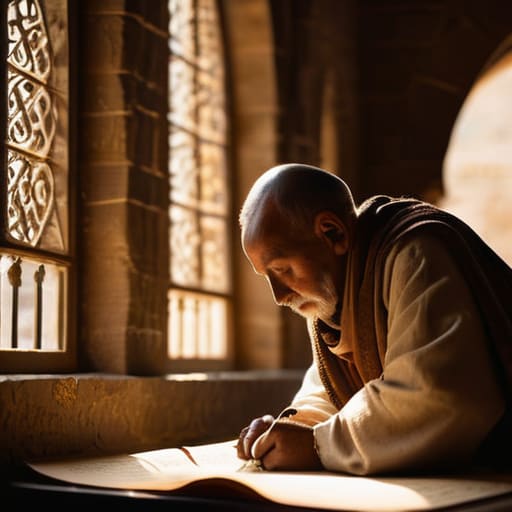
I remember sitting in a small, drafty chapel in the North of England, watching a young man try to explain the role of monasticism as if it were a mere productivity hack for the modern soul. He spoke of “optimization” and “structured silence” with the bright-eyed fervor of someone who had read the brochures but had never actually sat in the dark with their own thoughts. It struck me then, as it does now, how much we tend to sanitize these ancient traditions, stripping away the grit and the struggle to make them fit neatly into our self-help narratives. We treat the cloister like a boutique wellness retreat, forgetting that the true weight of such a life isn’t found in the aesthetic of a quiet room, but in the unrelenting confrontation with oneself.
I have no interest in selling you a polished version of spiritual discipline. What I want to do is look at these traditions through the lens of someone who has seen how they actually hold up when the novelty wears off and the loneliness sets in. I won’t promise you that retreating from the world will solve your problems; instead, I intend to offer an honest account of where these ancient structures succeed, and more importantly, where they ultimately run out.
Spiritual Asceticism and Solitude Where the Soul Meets Its Wall
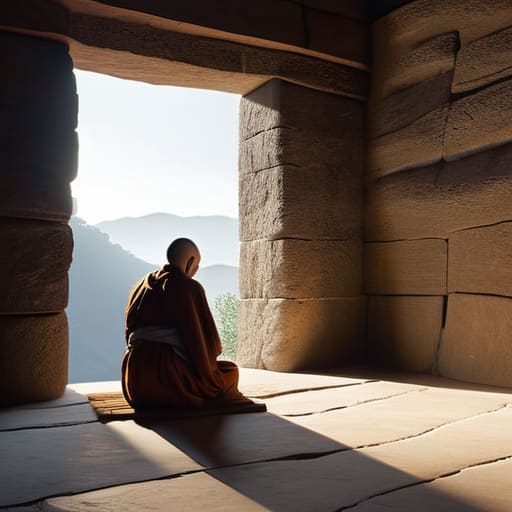
There is a particular kind of silence that settles in a stone cell, one that doesn’t just lack noise, but seems to actively press against the skin. In my years in the chaplaincy, I saw many people try to manufacture this through sudden, radical changes in their lives—stripping away comforts in an attempt to find God or themselves. They mistake the monastic lifestyle and discipline for a simple checklist of privations. But I have learned that spiritual asceticism and solitude are less about what you give up and more about what you are forced to face when there is nothing left to distract you.
When the distractions vanish, you don’t always find a luminous clarity. More often, you find a wall. It is a psychological and spiritual impasse where the ego, stripped of its social armor, begins to fray. I have sat with those who sought this emptiness only to find it was not a void of peace, but a mirror of their own unvarnished restlessness. We often romanticize the hermit’s life, yet we forget that the most profound part of the tradition isn’t the reaching of the summit, but the trembling uncertainty found in the climb.
The Weight of Monastic Lifestyle and Discipline in a Loud World
I often think back to the patients I sat with in the hospice wards—people who had spent their lives chasing the next achievement, only to find themselves suddenly, jarringly, stripped of it all. There is a peculiar kind of friction that occurs when one attempts to embrace a monastic lifestyle and discipline in an era that demands constant, frenetic visibility. We live in a world that treats silence as a vacuum to be filled and stillness as a failure of productivity. To step into a rhythm of prayer and structured labor isn’t just a change of schedule; it is a direct confrontation with the noise that tells us we are only as valuable as our latest output.
It isn’t all poetic stillness, either. I have found that the rigor of religious communal living often brings more friction than most people care to admit. It is easy to romanticize the idea of shared purpose, but the reality involves the slow, grinding work of forgiving a neighbor’s temperament or navigating the stifling weight of shared expectations. We tend to look for the divine in the grand gestures, but I suspect it is actually found in the uncomfortable endurance of these daily, repetitive structures.
The Uncomfortable Mirror of the Cell
We often mistake the monastery for a fortress built to keep the world out, but after years of sitting with those who seek it, I’ve come to see it more as a mirror. It doesn’t offer an escape from our brokenness; it simply strips away the noise so that we are finally forced to sit, quite uncomfortably, with the person we actually are.
Alasdair Renwick-Hale
The Unfinished Threshold
I suspect we often look toward the monastery as if it were a solution to be implemented, a tidy architectural fix for the fragmentation of modern life. But as we have discussed, the reality is far more abrasive. The asceticism that promises clarity often delivers only a raw, unvarnished encounter with one’s own shadows, and the discipline required to sustain such a life can feel less like a sanctuary and more like a slow, steady attrition of the ego. Monasticism is not a shortcut to peace; it is a rigorous, often painful method of stripping away the distractions until there is nothing left but the fundamental, uncomfortable questions of existence. It is a way of living that acknowledges the limitations of the human spirit even as it pushes against them.
Perhaps the true role of the monastic tradition in our age is not to provide us with a blueprint for perfection, but to serve as a persistent, quiet reminder that some things cannot be hurried. We live in a world that demands instant resolution and effortless grace, yet the monk teaches us the value of the long, difficult walk. Even if we never step behind a cloister wall, there is something to be gained in honoring that same commitment to depth—to sitting with the silence, to tending to our small duties, and to accepting that the most meaningful truths are rarely found in the shouting, but in the patient, unhurried waiting.