
I remember sitting in a quiet, sterile room in the oncology ward, holding the hand of a man who was more frightened by the sudden, automated shift in his care plan than by the illness itself. There is a particular, hollow kind of silence that follows when a machine makes a decision that a human being is left to justify. We spend an enormous amount of energy discussing the lofty heights of technology and moral responsibility in academic journals, yet we rarely pause to ask what happens to the human dignity left in the wake of an algorithm. We treat these ethical dilemmas as if they are math problems to be solved with better code, rather than profound wounds to be tended with presence.
I am not here to offer you a polished manifesto or a list of “best practices” handed down from a Silicon Valley boardroom. Instead, I want to look at the places where our tools outpace our wisdom and where the digital veneer cracks. I promise to share an honest account of where our current frameworks fail, drawing on a lifetime of sitting with people in their most difficult hours. We will explore the uncomfortable gaps between what a system can calculate and what a soul requires.
Where Technological Determinism Fails the Human Test
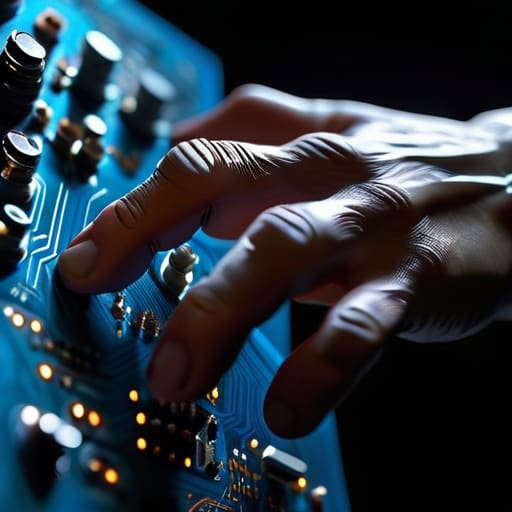
There is a certain modern comfort in the idea of technological determinism—the notion that progress is a runaway train and we are merely passengers, watching the scenery blur past. It’s a convenient way to dodge the weight of our own choices. If the machine is destined to evolve in a certain direction, then we aren’t really responsible for where it lands, are we? But I have spent too many years listening to the quiet, heavy silences of people facing life-altering decisions to accept such a tidy excuse. To suggest that the trajectory of our tools is inevitable is to perform a kind of moral sleight of hand.
When we discuss the tension between technological determinism vs social constructivism, we are really talking about whether we still possess the grit to steer. If we treat every new advancement as an unstoppable force of nature, we surrender our digital ethics and human agency to the very things we claim to own. We cannot simply shrug and say the algorithm made the choice. A machine may process data, but it cannot bear the burden of a conscience; that remains entirely our vocation.
The Fragile Edge of Digital Ethics and Human Agency
We often speak of digital ethics and human agency as if they are two separate gears in a machine, one driving the other. But in my years sitting by hospital beds, I learned that agency isn’t found in the grand architecture of a system; it is found in the small, often messy moments of choice. When we outsource our decision-making to a set of pre-programmed weights and measures, we aren’t just increasing efficiency—we are slowly eroding the muscle of our own conscience.
There is a seductive comfort in the idea of a “responsible innovation framework,” a way to box in the chaos of progress with enough rules to make us feel safe. Yet, the real struggle lies in the gaps where the code cannot reach. We talk about algorithmic bias and accountability as if they are mere technical bugs to be patched in the next update, but they are actually profound failures of empathy. If we treat these issues as purely mathematical errors, we ignore the fact that every line of code carries the unexamined prejudices of its maker, and no amount of data can substitute for the heavy, necessary burden of being human.
The Ghost in the Machine
We often treat technology as an incoming tide—something inevitable that we must simply learn to navigate—but that is a convenient way of dodging the weight of our own choices. Responsibility isn’t found in the code itself, but in the quiet, uncomfortable moment when we decide whether to let the machine make our decisions for us.
Alasdair Renwick-Hale
The Unfinished Work of the Soul
We have spent these pages peeling back the polished veneer of technological inevitability, only to find that the old questions of right and wrong remain stubbornly intact. We cannot simply code our way out of a moral crisis, nor can we blame a machine for the choices we facilitate through our own passivity. Whether we are wrestling with the drift of algorithmic bias or the slow erosion of our own attention, the reality is that responsibility cannot be outsourced. It is a heavy, unquantifiable weight that sits squarely on our shoulders, regardless of how many layers of digital abstraction we place between ourselves and the consequences of our actions.
In my years sitting by hospital beds, I learned that the most profound moments of human connection often happen in the gaps where logic and efficiency fail. Technology will continue to accelerate, moving faster than our ability to legislate it or even fully comprehend it, but it will never possess the capacity for true empathy or moral courage. As we move forward into this increasingly automated landscape, my hope is that we do not trade our capacity for struggle for the convenience of a seamless life. Let us hold tight to the messy, difficult, and deeply human task of deciding, every single day, what kind of people we intend to be.