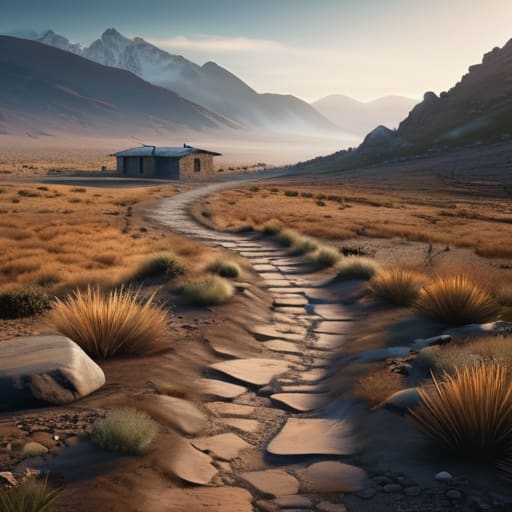
I remember sitting in a cramped hospital corridor in the mid-winter of ’94, listening to a young man describe how he felt utterly trapped by the very town he called home. He wasn’t talking about maps or political boundaries; he was talking about the way the steep, grey hills seemed to press inward, dictating who he could become and who he could ever hope to meet. We often treat the study of geography and its role as something found in a sterile textbook, a collection of latitudes and longitudes meant to explain trade routes or climate shifts. But in my experience, geography isn’t a set of coordinates; it is the unyielding weight of the land itself, the way a riverbed or a mountain pass can quietly decide the fate of a community long before any politician ever draws a line on a page.
I have no interest in offering you the grand, sweeping theories that make academics feel important. Instead, I want to talk about the friction between human will and the physical world. I intend to share what I have gathered from years of watching people struggle against—and sometimes within—the limits of their surroundings. What follows is an honest account of how geography and its role shapes our very souls, stripped of the usual academic gloss and pretension.
The Impact of Physical Environment on Culture
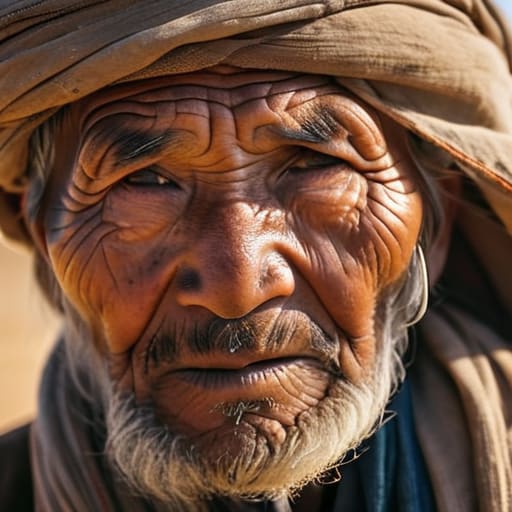
I recall a conversation with a man from the high steppes of Central Asia, a man whose face seemed etched by the very winds he described. He spoke of his people not as subjects of a map, but as a response to the horizon. It struck me then that we often fall into the trap of environmental determinism vs possibility—the idea that a landscape dictates a destiny with mathematical certainty. But it is rarely that simple. A desert doesn’t just provide heat; it shapes the very way a community gathers, how they value water, and how they perceive the concept of a neighbor.
When we look at the impact of physical environment on culture, we aren’t just looking at resources or climate; we are looking at the slow, quiet molding of the human soul. The mountains don’t just block movement; they create a sense of seclusion that breeds specific dialects, unique folklore, and a particular kind of inward-looking piety. I have found that the geographical influence on human history is best understood not through grand conquests, but through the small, stubborn ways people adapt their rituals to the rhythms of the land they inhabit.
Geographical Influence on Human History and Its Limits
I often think of the great migrations—those slow, heavy movements of people across continents—not as lines on a map, but as a series of negotiations with the earth. When we discuss the geographical influence on human history, there is a temptation to treat it like a predictable machine: mountains rise, so a civilization becomes insular; rivers flow, so trade flourishes. But history is rarely that tidy. I’ve found that while the terrain sets the stage, it doesn’t write the script. It provides the constraints, yes, but it cannot account for the stubbornness of the human spirit or the sheer, irrational luck of a single decision made in a moment of crisis.
There is a persistent tension in our studies between environmental determinism and possibility. The former suggests we are merely products of our soil and climate, while the latter argues for our agency. In my years sitting by hospital beds, I learned that while a person’s biology might set the boundaries of their struggle, it never dictates the character of their response. The same applies to nations. A desert might dictate where you plant your crops, but it cannot dictate whether you build a temple or a fortress. We must be careful not to mistake the container for the contents.
The Limits of the Map
We often speak of geography as if it were a blueprint for destiny, but after thirty years of sitting in rooms where the world had narrowed to the size of a single bed, I’ve learned that a landscape can dictate how a man survives, but it can never quite dictate how he loves or how he grieves.
Alasdair Renwick-Hale
The Limits of the Map
We have spent these pages tracing how the tilt of a continent or the scarcity of a river can dictate the rise of empires and the quiet rhythms of a village’s faith. It is easy to look at a map and see a blueprint for destiny, but my years in the hospital wards taught me that humans are rarely as predictable as our terrain suggests. While geography provides the stage—the mountains that shield us and the droughts that break us—it is not the whole play. We must acknowledge that while the land sets the boundaries of our possibilities, it does not possess the final word on our character or our capacity for grace.
In the end, I find myself returning to the small, unmapped spaces of the human heart. We are creatures of soil and climate, certainly, but we are also creatures of stubborn, inexplicable hope that often defies the very environment meant to suppress it. As you look out your window at the landscape that shaped you, do not see a cage of circumstance. Instead, see a partner in a long, difficult conversation. The terrain may dictate where we walk, but it can never truly command where we are going.