
I remember sitting in a cramped, dimly lit consultation room during my final year at the hospital, watching a young man crumble because he had “failed” his family’s expectations. He wasn’t mourning a loss of wealth or status; he was drowning in the silent, suffocating weight of being seen as a disappointment. We often talk about honour and shame cultures as if they are mere sociological curiosities or academic abstractions found in dusty textbooks, but they are never abstract when you are the one feeling the heat of a thousand judging eyes. They are the invisible architecture of how we belong to one another, and they can be just as lethal as any physical ailment.
I have no interest in giving you a polished lecture on tribal dynamics or offering some tidy, sociological solution that sounds good in a seminar. Instead, I want to look at the messy, human reality of what happens when the need to belong collides with the need to be true to oneself. I promise to offer you nothing more than an honest account of what I have observed—the places where these ancient social codes provide a sense of stability, and the much more common places where they simply run out of mercy.
Where Collectivist vs Individualist Social Norms Collide
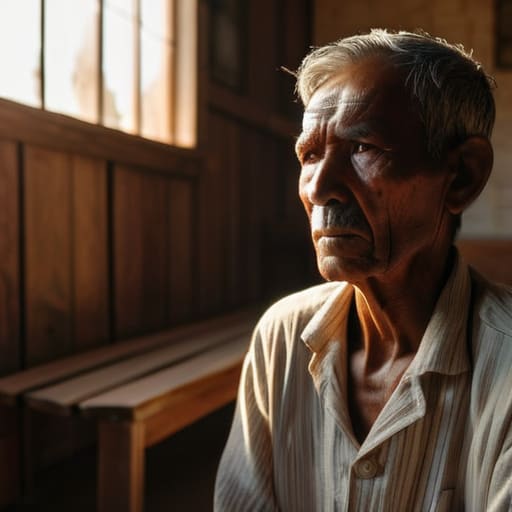
I remember sitting in a small clinic in a coastal village, watching a young man struggle to explain a mistake to his elders. He spoke with the frantic, apologetic energy of someone raised in a world where the self is a solitary island. In our modern West, we are taught that the individual is the ultimate unit of accountability; if you stumble, you own it, you learn, and you move on. But that logic falls apart the moment you encounter the heavy, invisible architecture of collectivist vs individualist social norms.
In those spaces, a mistake isn’t just a private lapse in judgment; it is a tear in the fabric of the entire group. I saw how the sociological impact of reputation could act more like a physical weight than a mere concept. When you live in a culture where your actions ripple outward to affect your parents, your siblings, and your neighbors, “moving on” isn’t an option. You don’t just fix a mistake; you have to find a way to mend the collective dignity that was bruised by your hand.
The Fragile Architecture of Social Standing and Face Saving
I remember a man in the hospice ward who wouldn’t let us move his chair toward the window, even though the light was better there. It wasn’t about comfort; it was about how he looked to the other families in the room. He was terrified of appearing diminished, of losing that invisible scaffold of dignity he had spent sixty years building. This is the heavy, often unseen reality of social standing and face-saving. It isn’t just a concept in a textbook; it is a physical tension in the chest. When your worth is tied to the eyes of your neighbors, a single lapse in conduct doesn’t just feel like a mistake—it feels like a structural collapse.
In these environments, the sociological impact of reputation acts as a silent, constant regulator. We often mistake this for mere vanity, but it is more akin to a survival mechanism. If the community is the only safety net you have, then losing your “face” is effectively a form of social death. I have seen people endure immense, even unnecessary, suffering simply to avoid the perceived stain of a public error, proving that the architecture of how we are perceived is often far more rigid than the walls of the buildings we inhabit.
The Cost of the Mask
I spent years in hospital wards watching families navigate grief, and I saw how often the need to “save face” for the sake of the lineage acted as a secondary wound, more painful than the loss itself; we often mistake the preservation of a reputation for the preservation of a person, forgetting that a name held high by a broken spirit is a hollow victory indeed.
Alasdair Renwick-Hale
Beyond the Ledger of Reputation
Looking back at how these systems operate, it becomes clear that we aren’t just talking about abstract sociology; we are talking about the very air people breathe. Whether it is the crushing weight of maintaining “face” in a tight-knit community or the lonely, frantic pursuit of individual autonomy, both paths carry a heavy price. I have seen how the relentless need to uphold a collective image can stifle the soul, just as I have seen how the absence of communal accountability can leave a person drifting without an anchor. We often try to categorize these cultures as if they are mere academic puzzles, but in reality, they are the invisible scaffolding that dictates who is allowed to belong and who is cast into the cold.
Ultimately, I suspect the answer lies somewhere in the messy middle, in a space that neither demands perfection nor permits total isolation. We must learn to build communities that value the person more than the performance of virtue. It is a difficult, slow work—much like the slow binding of a heavy volume—but it is the only way to ensure that our social structures serve humanity rather than merely policing it. May we find the courage to be seen, not for our status or our ability to save face, but for our honest, fractured, and deeply human selves.