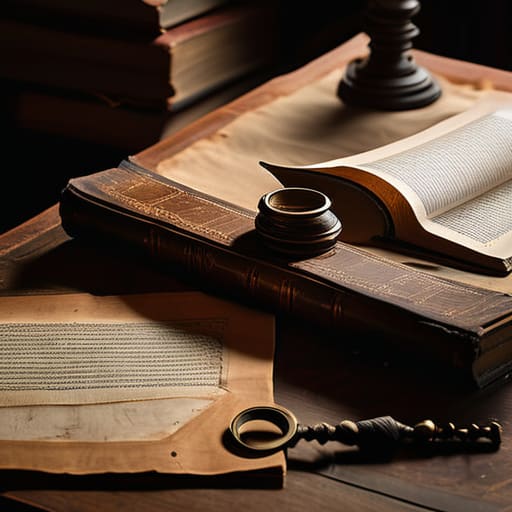
I remember sitting in a drafty university library years ago, surrounded by heavy, leather-bound volumes that promised to explain everything about the ancient world. There was a certain arrogance in those books, a sense that if we just catalogued enough broken pottery or translated enough inscriptions, the human soul of the past would simply reveal itself. But after thirty years of sitting in hospital rooms listening to people grapple with the inexplicable, I’ve learned that we often mistake data for meaning. We tend to treat historical background and archaeology as if they were a puzzle to be solved, when in reality, they are more like a conversation with a ghost who refuses to speak plainly.
I am not here to offer you the polished, certainties found in a textbook or the grand, sweeping narratives that ignore the gaps in our knowledge. Instead, I want to look at what those shards and dusty manuscripts actually tell us when we stop trying to force them into a neat little box. My aim is to share an honest account of where the evidence ends and where our own human searching begins. We will navigate the dirt and the documents together, not to find easy answers, but to understand the weight of what was lost.
Where Records Fail the Limits of Historical Context Analysis
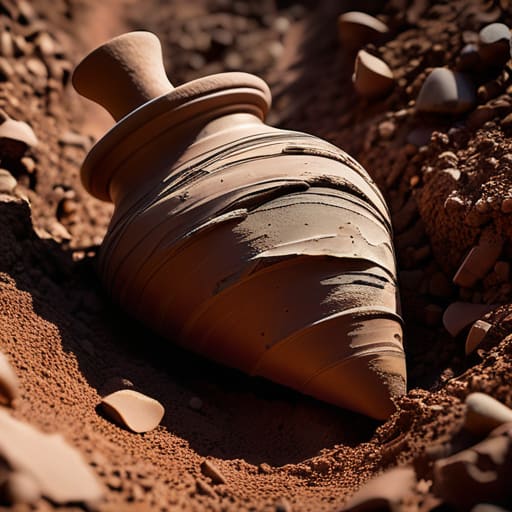
We often treat historical research methodologies as if they were a form of divine revelation, a way to pull the truth out of the ground like a clean, polished stone. But I’ve found that even the most meticulous historical context analysis can only take us so far. You can map out the layers of soil and master the nuances of stratigraphy in archaeology, yet you are still left staring at a silent object. We find a broken amphora or a rusted blade and we immediately begin to construct a narrative, a tidy little story about trade routes or skirmishes, but we must be careful not to mistake our conjectures for certainties.
The truth is, there is a profound silence between the things we find. We can catalog ancient civilization artifacts with clinical precision, but the catalog doesn’t capture the tremor in a mother’s hand or the specific weight of a winter’s hunger. We are essentially trying to reconstruct a symphony by looking at the wood shavings left behind by the luthier. We can see the tools, but the actual music of their lives remains stubbornly, perhaps even mercifully, out of reach.
The Fragile Remnant Ancient Civilization Artifacts and Their Silences
I often find myself sitting at my workbench, working the leather over the spine of a new journal, thinking about how much we rely on the physical to prove the spiritual. We hold these ancient civilization artifacts in our hands—a chipped clay lamp, a rusted bronze needle, a fragment of a broken amphora—and we mistake their presence for a complete story. We assume that because we have found the object, we have found the person. But an object is a lonely thing. It survives the person, the house, and the very era that gave it meaning, leaving us to stare at a remnant that is more silence than speech.
When we look at the results of modern archaeological excavation methods, there is a temptation to believe that the layers of earth are a transparent window into the past. We study the stratigraphy, noting how one era sits atop another like sediment in a tea cup, hoping to find a clear sequence of cause and effect. Yet, even with the most rigorous historical research methodologies, we are often just cataloging the debris of survival. We can map the bones and the broken pottery with exquisite precision, but we remain perpetually blind to the quiet, unrecorded moments—the prayers whispered in the dark or the specific weight of a grief that left no trace in the soil.
The Weight of the Unspoken
We spend so much time cataloguing the shards and debating the dates, as if a precise timeline could somehow bridge the gap between us and the dead; but archaeology can tell us what a person held in their hands, never quite reaching the quiet, heavy truth of why they held it so tightly.
Alasdair Renwick-Hale
The Weight of the Unseen
We have spent these pages tracing the outlines of what we can grasp—the pottery shards, the fragmentary scrolls, and the dates that attempt to tether the past to a timeline. Yet, as we have seen, there is a profound difference between knowing a date and knowing a soul. Archaeology provides us with the bones of history, but it rarely offers the breath. We must accept that our reconstructions are, by necessity, incomplete maps of a much larger territory. The records fail us not because they are poorly kept, but because the most vital parts of being human—the grief, the quiet prayers, the sudden terrors—leave no physical trace for the trowel to find.
Perhaps there is a certain grace in this silence. Instead of viewing the gaps in our knowledge as failures of scholarship, we might see them as invitations to humility. We study the past not to master it or to claim we finally understand the “truth,” but to learn how to sit with the mystery of our own existence. When the artifacts run out and the ink fades, we are left with the enduring reality that we are all, in our own way, navigating a profound darkness. Let us approach the ruins not with the arrogance of those who seek answers, but with the reverence of those who have learned to value the question.