
I remember sitting in a sterile hospital room during a late-night shift, listening to a man try to make sense of a terrifying diagnosis by scouring ancient texts for a sign. He wasn’t looking for a lecture on linguistics; he was looking for a lifeline. It’s a frustration I’ve seen repeated a thousand times: the way we treat prophecy and its original setting as if it were a celestial puzzle box meant to be cracked by scholars in ivory towers. We get so caught up in the mechanics of the “code” that we completely lose sight of the human trembling that prompted the words in the first place.
I have no interest in giving you a polished, academic seminar that ignores the messiness of life. Instead, I want to offer something a bit more grounded. I intend to walk through these texts not as a lecturer, but as someone who has seen how these ancient voices collide with modern suffering. My promise to you is an honest account of what these visions actually meant to the people breathing the dust of their own era, and where our modern attempts to decode them inevitably run out of breath.
Interpreting Ancient Oral Traditions Without the Hype
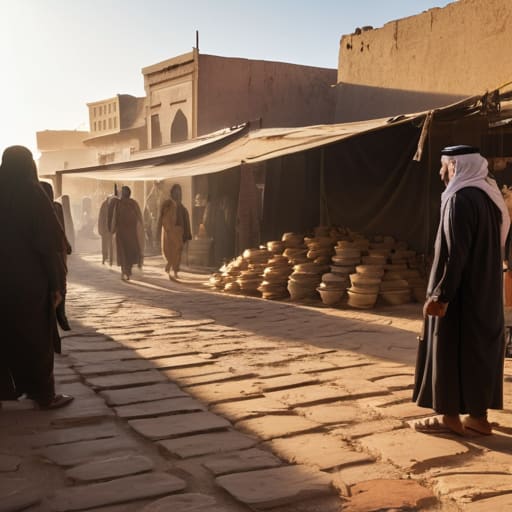
We often approach these texts as if they were dropped from the sky, fully formed and ready for our modern scrutiny. But when I look at the historical context of prophetic literature, I don’t see polished manuscripts; I see voices shouting over the din of crowded marketplaces and collapsing empires. These weren’t just abstract predictions; they were urgent, often messy responses to the immediate socio-political landscape of prophecy. To treat them as mere fortune-telling is to miss the heartbeat of the people who actually heard them.
When we talk about interpreting ancient oral traditions, we have to stop looking for a secret code and start looking for the human listener. These messages weren’t meant to be puzzles for scholars in quiet libraries; they were meant to land in the middle of a crisis. The original audience engagement wasn’t about checking off a list of future events, but about surviving the present. If we strip away the modern hype, we find that these words were less about telling the future and more about demanding a different kind of present.
The Socio Political Landscape of Prophecy and Its Failures
It is easy to look back at these texts as if they were delivered from a vacuum, but they were actually forged in the heat of very messy, very human power struggles. When we examine the socio-political landscape of prophecy, we aren’t just looking at religious fervor; we are looking at people trying to navigate the crushing weight of empire and the whims of kings. Most of these voices weren’t speaking to a polite congregation, but to a populace caught between the demands of their rulers and the terrifying uncertainty of shifting borders.
There is a particular kind of heartbreak in seeing where these visions collided with reality. We often search for a neat line of prophetic fulfillment in antiquity, hoping to find a perfect match between a spoken word and a historical event. But more often than not, the record shows a profound friction. The messages were frequently met with silence, or worse, with the violent dismissal of those who dared to speak truth to power. To understand these texts, we must be willing to sit with that failure—to acknowledge that a message can be deeply sincere and yet still fail to change the course of a collapsing kingdom.
The Distance Between Vision and Reality
We often treat prophecy as if it were a crystal ball dropped into our laps, but when you look at the dust and the politics of the actual setting, you realize these weren’t just predictions; they were desperate, human attempts to find meaning in the middle of a collapsing world.
Alasdair Renwick-Hale
The Quiet After the Vision
When we strip away the modern obsession with predicting the next catastrophe, we are left with something much more grounded. We have seen that prophecy wasn’t a magic trick used to bypass history, but rather a way of interrogating the present through the lens of ancient tradition. It was deeply rooted in the messy, political, and often failed realities of the people who spoke those words. To treat these texts as mere fortune-telling is to miss the point entirely; they were meant to be mirrors held up to a community, forcing them to look at their own fractures and their own responsibilities.
Perhaps the real value of studying these old voices isn’t in finding a roadmap for our own future, but in learning how to sit with the uncertainty of the now. I have found, much like in my years in the hospital wards, that the most profound truths rarely arrive as clear, booming commands. Instead, they arrive as a quiet, persistent nudge toward justice and empathy. May we approach these ancient texts not as seekers of certainty, but as students of human endurance, looking for the strength to remain faithful to our neighbors even when the horizon remains stubbornly dim.