
I remember sitting in a dim hospital corridor at three in the morning, the smell of industrial floor wax heavy in the air, listening to a man weep because he had tried every “proven” method and still found himself alone. There is a particular kind of exhaustion that comes when you realize the glossy brochures have lied to you. We are constantly sold this polished, streamlined version of recovery, as if addiction and community support were merely a matter of attending the right meetings or following a specific, clinical checklist. But those of us who have sat in the quiet, heavy spaces of human suffering know that community isn’t a cure; it is often just a place to sit while the storm passes.
I have no interest in offering you a roadmap to perfection or a list of slogans that sound good on a poster. What I can offer, drawn from thirty years of witnessing both the wreckage and the slow, messy rebuilding, is an honest account of where the institutional safety nets fail and where the actual work of being human begins. We won’t pretend that a group of strangers can fix a broken soul, but we can look closely at how we might actually hold one another up when the lights go out.
Why Peer Support Groups for Recovery Outlast Polished Slogans
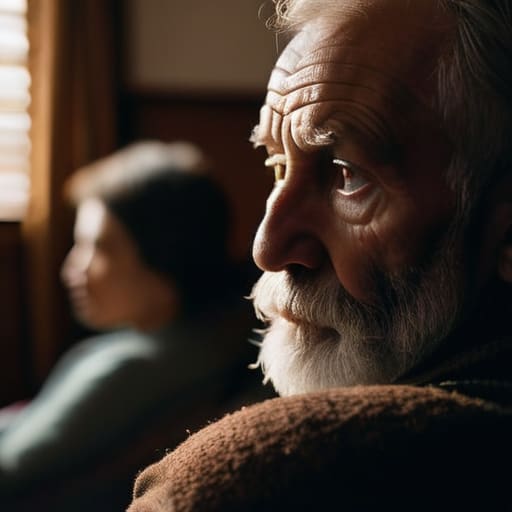
I recall a man I sat with in the oncology ward years ago—not for cancer, but for the slow, quiet erosion of his life through drink. He didn’t need a lecture on the neurological pathways of dependency; he needed to know that he wasn’t the only one staring at the ceiling at 3:00 AM, feeling the weight of his own skin. This is why peer support groups for recovery tend to hold a weight that clinical pamphlets simply cannot. They don’t offer the sterile, polished promises of a brochure. Instead, they offer the messy, unvarnished truth of someone who has actually walked through that particular door.
There is a specific kind of strength found in overcoming isolation during recovery through shared failure rather than shared perfection. In those circles, you aren’t a patient being managed; you are a person being seen. We often mistake “help” for “instruction,” but real healing usually requires something much more uncomfortable: the importance of vulnerability in healing. When we stop trying to perform “wellness” for an audience and start being honest about our stumbles, the slogans finally lose their power, and the actual work begins.
The Brutal Necessity of Building Social Connections in Sobriety
I recall a man in the hospital years ago—not a patient, but a visitor—who told me that the hardest part of staying clean wasn’t the cravings, but the silence that followed them. When you stop using, you don’t just lose a substance; you lose the entire social architecture that was built around it. You find yourself standing in a room full of people and feeling utterly, devastatingly alone. This is why overcoming isolation during recovery isn’t just a “nice to have” psychological goal; it is a matter of survival. Without a way to bridge that gap, the void becomes a vacuum that pulls you right back under.
Real connection, however, is terrifying. It requires a level of exposure that most of us spend our entire lives trying to avoid. To truly succeed, one must accept the importance of vulnerability in healing, which means showing up as your unvarnished self—the version of you that is tired, angry, or frightened. We often mistake mere presence for connection, but true community happens in the small, uncomfortable moments where we allow ourselves to be seen. It is in that shared visibility that the scaffolding of a new life is actually built.
The Limits of the Safety Net
We often mistake the presence of a group for the presence of a cure, but a circle of people sitting in a room is merely a starting point; the real work lies in the quiet, unglamorous moments when the community stops offering platitudes and simply agrees to sit beside you in the dark.
Alasdair Renwick-Hale
The Quiet Work of Staying Together
We have spent these pages stripping away the veneer of easy fixes. We have looked at why the messy, unpolished reality of a peer group often holds more weight than a glossy brochure, and why the simple, terrifying act of building a social life is perhaps the most vital part of the struggle. It isn’t about finding a magical community that sweeps the pain away; it is about finding a place where you can be honestly broken without being discarded. Real support doesn’t offer a cure, but it does offer a witness—someone to sit in the dim light of the difficult hours when the slogans have all failed you.
As I sit here at my desk, looking at the worn edges of my journals, I am reminded that healing is rarely a straight line or a sudden triumph. It is a slow, often frustrating process of weaving oneself back into the fabric of others. Do not look for a community that promises you will never stumble again; instead, look for the one that knows how to sit with you in the dust when you do. There is a profound, quiet dignity in that shared persistence, and in the end, it is the only thing that truly holds.