
I remember sitting in a cramped, poorly lit church basement thirty years ago, listening to two lifelong neighbors argue over a property line while the scent of stale coffee and damp wool hung heavy in the air. They didn’t need a mediator with a laminated flowchart or a seminar on “synergistic dialogue”; they needed someone to acknowledge that their shared history was exactly what made the current dispute so incredibly painful. We often treat conflict resolution in community as if it were a technical glitch to be patched with the right set of protocols, but anyone who has actually lived through a fractured neighborhood knows that you cannot engineer your way out of human resentment.
I am not here to offer you a polished manual of slogans or a list of “five easy steps” that promise harmony by Tuesday. Instead, I want to share what I have learned from the messy, unscripted reality of people actually trying to live alongside one another. I will offer you an honest account of where the standard advice falls short and what it actually looks like to sit in the discomfort of a disagreement without rushing to a false peace.
Where Mediation Techniques for Neighborhoods Meet Human Friction
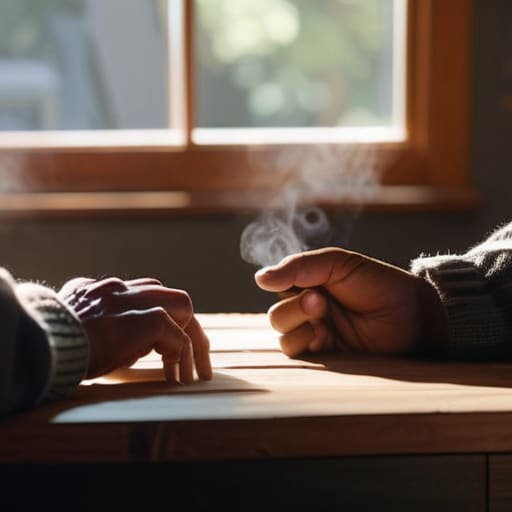
I’ve sat in many living rooms where the air felt thick enough to choke on, watching well-meaning neighbors attempt to deploy various mediation techniques for neighborhoods as if they were reading from a manual. There is a certain clinical coldness to the way we are taught to approach these moments—a suggestion that if we simply apply the right de-escalation strategies for social groups, the anger will evaporate like morning mist. But people are not puzzles to be solved; they are histories of grievance and unvoiced needs. When a dispute over a property line or a noisy dog turns into a standoff, the “correct” procedure often feels like an insult to the depth of the hurt involved.
The reality is that most formal frameworks fail because they prioritize the absence of noise over the presence of understanding. We often mistake a quiet room for a resolved one. I have seen groups attempt to implement restorative justice in local groups, only to find that without a genuine willingness to sit in the discomfort of being wrong, the process becomes nothing more than a performance of civility. True reconciliation requires more than a moderated discussion; it requires the courage to look at a neighbor and acknowledge the messiness of our shared existence.
The Limits of Effective Communication in Community Settings
We are often told that if we simply master the right vocabulary—if we use “I” statements and practice active listening—the friction of living together will simply evaporate. It is a seductive idea, this notion that effective communication in community settings is a technical problem with a technical solution. But I have sat in too many quiet rooms, watching two neighbors stare at the floor after a “successful” mediation, to believe that words alone can mend a fundamental breach of trust. Sometimes, the words are used not to bridge a gap, but to build a more sophisticated wall.
There is a certain exhaustion that comes with trying to apply de-escalation strategies for social groups when the underlying issue isn’t a misunderstanding, but a difference in values that cannot be reconciled. You can follow every protocol in the manual, yet still find yourself standing in the wreckage of a fractured committee or a divided street. We must be honest enough to admit that dialogue has a ceiling; there are moments when the most respectful thing we can do is acknowledge that some silences are permanent, and that no amount of clever phrasing can force a sense of belonging where it has fundamentally withered.
The Mirage of the Clean Slate
We are often sold the idea that conflict resolution is a process of returning to a state of peace, as if we could simply scrub the slate clean and pretend the friction never occurred; but true community isn’t found in the absence of scars, it is found in the quiet, difficult work of deciding to live alongside them.
Alasdair Renwick-Hale
The Long View of Living Together
We have seen, through the lens of both theory and lived experience, that the polished mechanics of mediation often stumble when they hit the uneven ground of actual human grievance. Whether it is the failure of structured dialogue to address deep-seated resentment or the way “effective communication” can sometimes feel like a hollow exercise in politeness, the truth remains: tools are not solutions. We cannot simply engineer our way out of the friction that comes with proximity. Conflict is not a bug in the system of community life; it is a fundamental feature of it, and pretending otherwise only leaves us ill-equipped when the inevitable disagreements arise.
Perhaps the goal should not be the total eradication of discord, but rather the cultivation of a certain kind of endurance. In my years sitting in hospital rooms, I learned that healing rarely arrives in a sudden, decisive burst; it is a slow, often messy process of staying present in the discomfort. Community is much the same. It is found in the quiet, difficult decision to keep showing up to the shared space, even when the air is thick with tension. We may never reach a state of perfect harmony, but there is a profound, quiet dignity in simply refusing to walk away when things get complicated.